7 Min Read
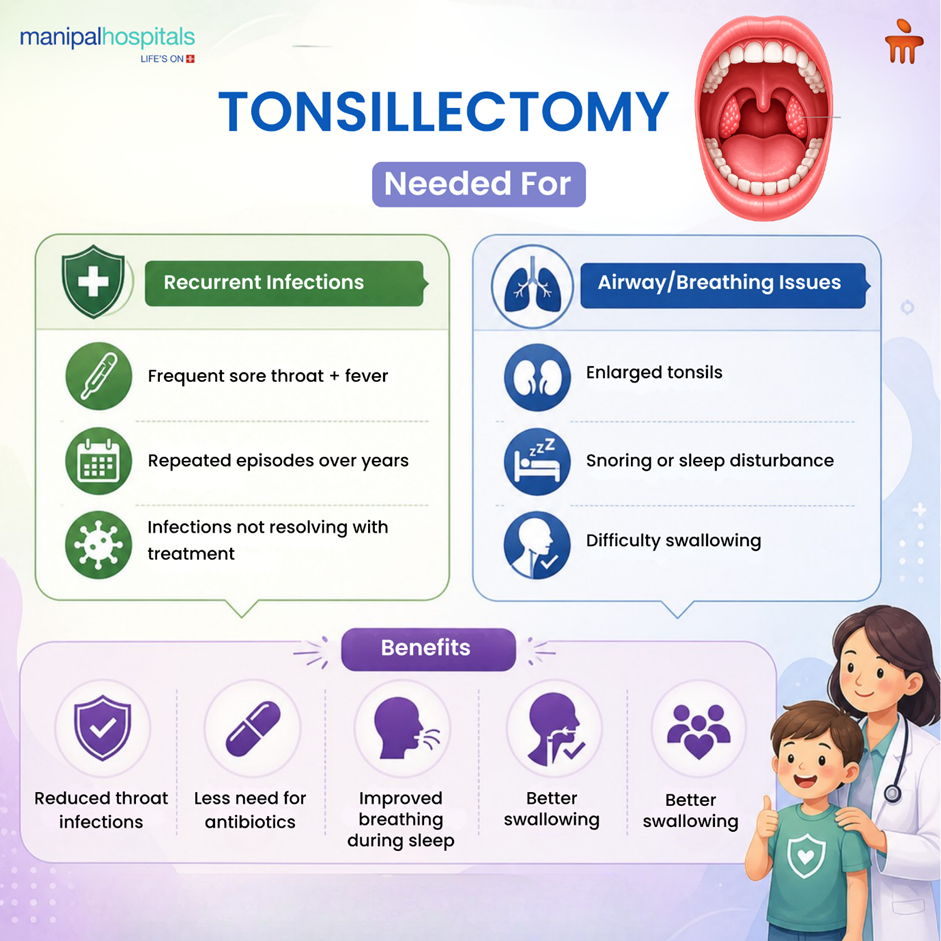
Most of us don't think about our tonsils until they start causing trouble. Located at the back of the throat, these two small pads of tissue are part of the body’s immune system. However, for some, they become more of a liability than a defence. You might find yourself in a cycle of recurring sore throats, high fevers, and that sharp, localised pain that makes every swallow a challenge. Over time, repeated tonsil infections can start to affect daily life, not just during episodes but in between as well. Doctors look at how often they occur and how severe they are. If the problem continues, tonsillectomy surgery may be considered.
The surgery is also recommended if the tonsils become enlarged to a point where the patient has difficulty breathing because of snoring, obstructed airways, or difficulty swallowing.
In this blog, we explain when tonsillectomy surgery may be recommended, the symptoms and complications associated with recurring tonsil problems, and what patients can expect before, during, and after the procedure, with expert insights from top ENT specialists in Doddaballapur, Bangalore, so you can make informed decisions about your care.
Synopsis
What Is a Tonsillectomy and When Is It Needed?
A tonsillectomy is a procedure where the tonsils are removed from the back of the throat. Doctors suggest it when the tonsils stop helping and continue to cause repeated problems. There are two main situations where the procedure is considered:
When infections keep coming back
Some people get throat infections again and again. You may notice a sore throat, fever, and pain while swallowing, and it keeps returning. Doctors don’t look at just one episode. They look at a pattern over time. Surgery is considered when infections happen this often:
-
7 or more infections in one year
-
5 infections each year over two years
-
3 infections each year over three years
In some cases, infections don’t settle properly with medicines, or they lead to complications like a peritonsillar abscess, where pus collects near the tonsil and causes severe pain.
When breathing or swallowing is affected
Sometimes the tonsils become large enough to block the airway. Loud snoring, poor sleep quality, and even pauses while sleeping could be common symptoms. Others might suffer from swallowing difficulties and throat obstruction. In cases where such symptoms persist and interfere with everyday living, it is recommended that one seek surgery to remove the cause of such symptoms.
Tonsillectomy Procedure
The tonsillectomy procedure is done in a controlled operating room setting. You are asleep throughout, and the team monitors you closely from start to finish.
Before the surgery: Preparation begins a few hours before the procedure. You will be asked not to eat or drink for a certain period to ensure safe anaesthesia. Your doctor will also review your medications, especially those that may increase bleeding risk, such as blood thinners or certain painkillers.
During the procedure: Once you are inside the operating theatre, you will be put under full anaesthesia, which means that you will be fully unconscious. Your breathing and vital signs are continuously monitored. The surgeon then inserts an instrument that will hold open your mouth.
The tonsils are removed through the mouth, so there are no external cuts. The method used may vary depending on the case. Methods may include:
-
Cold knife dissection, using surgical instruments
-
Electrocautery, which uses heat to remove tissue and control bleeding
-
Coblation, which uses controlled energy at lower temperatures
Controlling bleeding: After the tonsils are removed, the surgeon carefully controls any bleeding. This step is important to reduce the risk of complications. The procedure usually takes about 20 to 30 minutes.
After the surgery: You will be monitored as you wake up from anaesthesia. Most patients are able to go home the same day once stable, along with instructions for pain management and recovery.
Benefits After Tonsillectomy
Living with repeated throat infections or breathing problems can be exhausting. After the recovery period, many people begin to notice changes that make daily life easier.
-
Throat infections tend to occur less often, so the repeated cycle of pain, fever, and medication reduces
-
The need for frequent antibiotics usually decreases over time
-
Fewer clinic visits are needed for recurring throat problems
-
Breathing, especially at night, becomes easier if enlarged tonsils are causing blockage
-
Snoring may be reduced, and sleep often feels less disturbed
-
You may wake up feeling more rested instead of tired or irritable
-
Swallowing becomes more comfortable, particularly with solid foods
-
In children, eating often improves once pain and obstruction are no longer present
Over time, many people find that daily life feels more manageable without constant throat-related discomfort.
Tonsillectomy Side Effects and Possible Complications
It will be a difficult time during the first few days, particularly while swallowing becomes painful. However, being aware of what is considered normal and what should prompt a visit to your physician is crucial.
-
Throat pain, which can last 1 to 2 weeks and may feel worse in the first few days
-
Ear pain, which is common and linked to throat healing
-
Difficulty swallowing, making eating and drinking harder initially
-
A low-grade fever may occur
-
A white coating at the back of the throat, which is part of normal healing
-
Temporary bad breath, which improves as healing progresses
A few tonsillectomy complications also need quick attention:
-
Bleeding, either soon after surgery or a few days later
-
Dehydration if fluid intake is low due to pain
-
Rare reactions to anaesthesia
-
Infection, which may require medical treatment
Recovery After Tonsillectomy
Most people take about 7 to 14 days to settle, but the first week needs a bit of patience. Pain is not constant in intensity. It often builds up and can feel worse around days 5 to 7 before it slowly starts easing. Other things you can expect:
-
Pain in the throat is expected, and doctors prescribe medicines to help manage it. Taking them on time makes a difference
-
Eating feels difficult in the beginning, so you start with liquids, then move to soft foods, and slowly return to a normal diet as swallowing improves
-
Drinking enough fluids is important, even if it feels uncomfortable. It helps healing and lowers the risk of complications
-
There is a small risk of bleeding, especially in the first 24 hours and again around day 7 to 10 when the healing layer in the throat starts to come off
-
Rest is important during this phase. Strenuous activity, running, or heavy exercise should be avoided for about two weeks
-
Sleep may feel disturbed initially. Keeping the head slightly elevated can help with comfort and breathing
Conclusion
Living with repeated throat infections or constant breathing trouble can slowly wear you down. When medical treatment is no longer effective and infections persist, removing the tonsils becomes a practical option. The procedure itself is well established, and doctors perform it regularly with a clear plan for both surgery and recovery.
If your symptoms are persistent or starting to affect daily life, it’s worth getting checked. You can consult our ENT specialists at Manipal Hospital Doddaballapur, Bangalore, for proper evaluation and guidance on the tonsillectomy procedure in Doddaballapur.
FAQ's
Pain is expected and can last around 1 to 2 weeks. Pain can vary from day to day. Many people feel it more around days 5 to 7 before it starts easing. Pain medicines help, but swallowing may still feel uncomfortable for a few days.
Yes, adults can have the surgery safely. The procedure itself is similar, but recovery can feel slower compared to children. It may take longer for pain to subside, and returning to a normal routine can require more time.
You don’t go back to regular food immediately. It starts with liquids, then soft foods like mashed or easy-to-swallow items. As the throat heals and swallowing improves, you can slowly return to normal meals.
Bleeding can happen when the healing layer at the back of the throat starts to come off. This often occurs a few days after surgery. It can also happen earlier, so any fresh bleeding should not be ignored.
It reduces how often infections happen and how severe they feel. But it does not mean you will never get a sore throat again. The main goal is to break the cycle of frequent, troublesome infections.
Share this article on: