8 Min Read
When the kidneys begin to lose their ability to filter waste, excess fluid, and toxins from the blood, the effects can build up quietly at first and then become increasingly difficult to ignore. Fatigue, swelling, breathlessness, nausea, poor appetite, and changes in urine output may all signal that the kidneys are no longer doing enough of their job. In some situations, medicines and lifestyle changes help slow the problem. In more advanced kidney disease, however, dialysis becomes an important treatment option.
Many people hear the word "dialysis" and immediately think of a major life disruption. While it does require planning and commitment, it is also a life-sustaining treatment that helps people feel better and stay medically stable when kidney function is severely reduced. Understanding the dialysis process can reduce fear and make it easier to prepare for treatment.
This blog, by nephrology experts from a leading hospital for dialysis in Doddaballapur, breaks down how the procedure works, clarifies the differences between haemodialysis vs peritoneal dialysis, outlines potential dialysis side effects, and prepares you for what to expect during your care journey.
Synopsis
Understanding the Kidneys and the Need for Dialysis
Healthy kidneys function as your body's internal filtration system. Every single day, they filter roughly 180 liters of blood to remove waste products, toxins, and excess fluids, which are then excreted as urine. They also play a crucial role in regulating blood pressure and balancing key minerals like potassium and sodium.
When the kidneys lose about 85% to 90% of their functional capacity, a stage known as end-stage renal disease (ESRD) or chronic kidney failure, they can no longer clear these dangerous toxins. This leads to a harmful build-up of waste materials in the blood. When this stage occurs, medical intervention in the form of kidney dialysis or a kidney transplant becomes essential to sustain life.
When is dialysis necessary?
The decision to begin the dialysis process is never based on a single blood test. A nephrologist (kidney specialist) evaluates a combination of laboratory results, overall physical health, and noticeable physical symptoms.
Common signs that indicate your body requires filtration support include:
-
Uremia: A buildup of nitrogenous waste that causes severe nausea, vomiting, loss of appetite, and a metallic taste in the mouth.
-
Fluid Overload: Severe swelling (oedema) in the legs, ankles, or hands and fluid accumulation in the lungs that causes shortness of breath.
-
Hyperkalemia: High potassium levels in the blood that can dangerously disrupt normal heart rhythms.
-
Persistent Fatigue: Extreme exhaustion caused by a combination of toxin buildup and anaemia (low red blood cell count).
If these symptoms are affecting your quality of life and medication is no longer controlling them, your nephrologist will discuss starting dialysis. The goal is never to rush but to start the treatment electively, before an emergency arises.
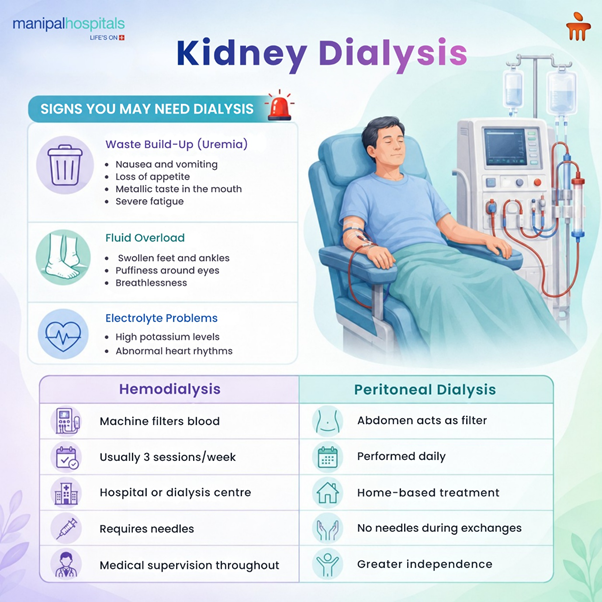
Haemodialysis vs Peritoneal Dialysis
There are two primary methods used to filter the blood, each with its own procedural framework, equipment requirements, and lifestyle implications. Understanding haemodialysis vs peritoneal dialysis helps patients choose the method that best aligns with their medical needs and daily routines.
|
Feature |
Haemodialysis |
Peritoneal Dialysis |
| How It Works |
An external machine (dialyser) filters the blood outside the body. |
The lining of your abdomen (peritoneum) acts as the natural filter inside the body. |
| Access Type |
Requires a vascular access point, usually an AV fistula or graft in the arm. |
Requires a permanent, soft silicone catheter inserted into the abdomen. |
| Treatment Location |
Primarily performed in a specialised hospital or dialysis centre. |
Performed at home, at work, or while travelling. |
|
Typical Dialysis Frequency |
Usually 3 times per week, with each clinical session lasting 3 to 4 hours. |
Performed daily, either continuously throughout the day or overnight using an automated cycler machine. |
| Primary Advantage |
Supervised entirely by trained medical professionals; requires fewer days of treatment per week. |
Offers greater lifestyle flexibility, no needles, and less restrictive dietary limitations. |
What to Expect During the Dialysis Process
The dialysis process differs depending on whether you are in a clinical setting or managing treatment at home. Here is what to expect from each approach:
Haemodialysis: In-Center Care
This method is highly structured and overseen by a clinical team to ensure your safety throughout the session.
-
Setup: Staff first check your weight and vitals to determine exactly how much fluid needs to be removed.
-
Connection: Using your established vascular access (the fistula or graft), a nurse inserts two needles—one to pull blood into the dialyser and one to return it to your body.
-
During Treatment: While you may feel a brief pinch at the start, the process is generally quiet and painless. During the four-hour session, you are free to nap, read, or use a tablet.
-
Active Monitoring: The equipment and staff constantly track your blood pressure. Should you feel any dialysis side effects, such as cramping or dizziness, the team can adjust the machine’s settings in real-time to keep you comfortable.
Peritoneal Dialysis (PD): Home-Based Independence
PD uses the natural lining of your abdomen to filter blood. Once you complete your initial training, you gain significant flexibility.
-
The Exchange: You manually drain used fluid through your catheter and replace it with a fresh, sterile solution. This process typically takes about 30 to 40 minutes.
-
Daily Freedom: Once the "dwell" begins, you are disconnected from any machinery, allowing you to move around and continue your normal daily routine.
-
Overnight Automation: Many patients use a "cycler" machine that handles these fluid exchanges automatically while they sleep, which can be an excellent way to maintain a busy schedule.
Note: Because the procedure involves permanent access to your bloodstream or abdomen, always follow your team’s specific hygiene instructions to keep your access site clean and infection-free.
Managing Potential Dialysis Side Effects
While dialysis is highly effective at cleansing the bloodstream, the rapid shifts in fluid levels and chemical balance can sometimes cause temporary physical symptoms. Being aware of these dialysis side effects allows you to manage them proactively alongside your clinical team.
-
Low Blood Pressure (Hypotension): The rapid removal of fluid during sessions can cause a drop in blood pressure, leading to dizziness, nausea, or blurred vision.
-
Muscle Cramps: Sudden fluid and electrolyte shifts often trigger painful cramping in the calves or abdominal muscles during treatment.
-
Post-Dialysis Fatigue: Many patients experience a temporary "washed out" feeling or extreme exhaustion immediately following a hemodialysis session.
-
Dry or Itchy Skin: Mineral imbalances and high phosphorus levels can cause persistent skin irritation. This can often be managed with specialised medical moisturisers and dietary adjustments.
Life After Starting Dialysis: Adjusting and Thriving
Beginning kidney dialysis is a big life adjustment, but it is the start of a new normal rather than a full stop. Many people continue working, travel with some planning, exercise in moderation, and enjoy family life. A key part of thriving is actively participating in your care: taking medicines as prescribed, following the fluid and diet guidance from your renal dietitian, and communicating openly with your team when something doesn’t feel right.
Emotional health matters just as much. It is normal to feel anger, grief, or sadness. Speaking with a counsellor, joining a patient support group, or simply expressing these feelings to a trusted doctor can lighten the emotional load. The dialysis process, when embraced as a tool that keeps you alive and capable, gradually loses its initial fear and becomes part of a routine that leaves room for joy.
Conclusion
Navigating advanced kidney care requires a reliable clinical partnership and personalised medical attention. The ideal treatment plan depends on your unique health status, your daily lifestyle priorities, and your long-term health goals. If you require specialised chronic kidney disease management or a personalised dialysis procedure in Doddaballapur, consult the experienced nephrology specialists at Manipal Hospital Doddaballapur for comprehensive care, state-of-the-art filtration facilities, and dedicated rehabilitation support.
FAQ's
In some cases, especially with acute kidney injury, dialysis is temporary, and kidney function can improve enough to stop treatment. With chronic end-stage kidney disease, recovery is unlikely, but dialysis sustains life and can serve as a bridge to transplant.
Yes, with planning. Haemodialysis patients can arrange sessions at a centre at their destination. Peritoneal dialysis supplies can be delivered to your travel location. Always talk to your care team well in advance to organise safe travel.
The procedure is generally not painful. Some people feel mild discomfort during the initial drain and fill, or a sensation of fullness. Pain should be reported, as it could signal an infection or catheter issue.
Many people continue working, especially on peritoneal dialysis or home haemodialysis with flexible schedules. In-centre haemodialysis may require adjustments to your work routine, but it’s not automatically disabling.
A nephrologist determines your specific dialysis frequency by calculating your residual kidney function, your body size, your fluid retention levels, and your dietary intake. For standard haemodialysis, the baseline standard is three times per week to ensure metabolic wastes do not rise to toxic levels between sessions.
Share this article on: