6 Min Read
If you are experiencing persistent back or neck pain, numbness, or weakness radiating down your limbs, you might be suffering from nerve compression in your spine. Such conditions can significantly impact your quality of life. At Manipal Hospitals, our expert spine specialists in Delhi are dedicated to diagnosing and treating these complex issues, often recommending advanced surgical solutions like spinal decompression surgery and spinal fusion to relieve pressure and restore stability.
Spinal disorders affect millions worldwide, with conditions like herniated discs, spinal stenosis, and degenerative disc disease being common culprits. These issues can lead to severe pain and neurological deficits, necessitating intervention. Understanding the options available is the first step towards regaining a pain-free life.
Synopsis
What is Spinal Decompression Surgery?
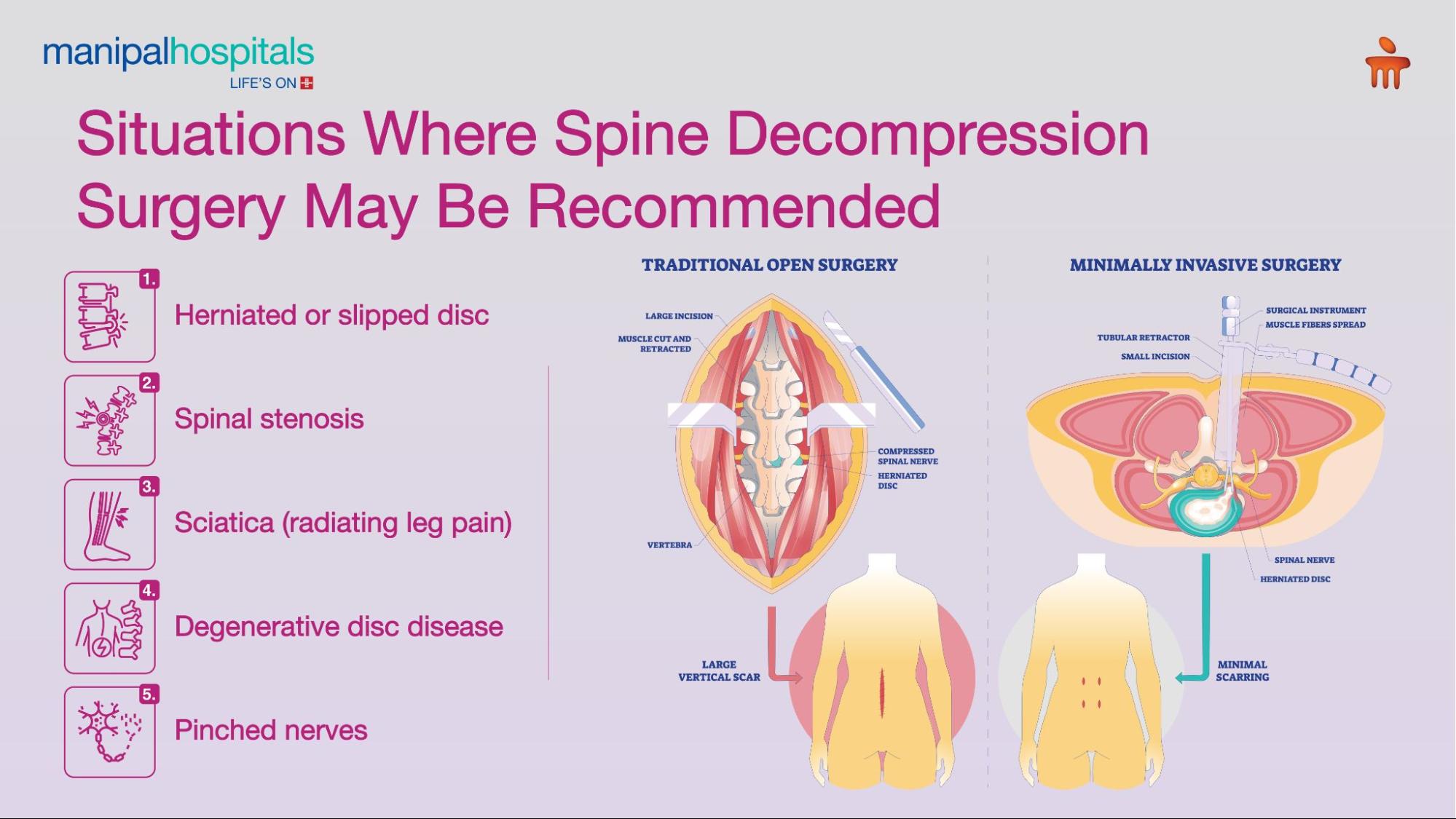
Spinal decompression surgery is a group of procedures designed to relieve pressure on the spinal cord or spinal nerves. This pressure often arises from conditions such as herniated discs, bone spurs (osteophytes), or thickening ligaments within the spinal canal, which narrow the space available for nerves. The primary goal is to create more space, reduce nerve irritation, and alleviate symptoms like pain, numbness, and weakness.
Common types of spinal decompression surgery include:
-
Laminectomy: This involves removing part of the vertebral bone called the lamina to enlarge the spinal canal. It is one of the most common forms of lumbar decompression surgery.
-
Discectomy: Removal of a herniated disc or a portion of it that is pressing on a nerve.
-
Foraminotomy: Enlarging the opening (foramen) where a nerve root exits the spinal canal.
-
b Removal of a vertebral body and adjacent discs to decompress the spinal cord.
Success rates for spinal decompression surgery are generally very high, with studies indicating that up to 85-90% of patients experience significant pain relief and improved function following the procedure, particularly in cases of severe sciatica or spinal stenosis.
Understanding Spinal Fusion
Spinal fusion is a surgical procedure that permanently connects two or more vertebrae in your spine, stabilising them and eliminating motion between them. This technique is often employed when spinal instability, deformity, or severe pain persists after decompression, or when motion between vertebrae contributes to nerve compression. By fusing vertebrae, the surgeon prevents further movement, which can reduce pain and prevent re-compression.
Spinal fusion can be performed in various sections of the spine, including the cervical (neck), thoracic (mid-back), and lumbar (lower back) regions. For instance, spinal fusion surgery neck procedures are common for conditions like cervical disc herniation with instability or severe degenerative changes. The procedure involves placing bone graft material (either from your own body, a donor, or synthetic) between the vertebrae. Over time, this graft fuses with your existing bone, creating a solid, single bone segment.
The Spinal fusion surgery success rate is impressive, with many studies reporting rates between 90-95% for achieving solid fusion and significant improvement in patient symptoms, especially in carefully selected cases of degenerative disc disease, spondylolisthesis, and scoliosis.
When Are Both Procedures Combined?
In many complex spinal conditions, our spine specialists in Delhi may recommend a combined approach: spinal decompression surgery followed by spinal fusion. This is typically done when significant decompression is required, and removing bone or disc material could destabilise the spine. Fusion then provides the necessary stability, preventing future pain and neurological issues that could arise from excessive movement.
For example, a patient undergoing extensive lumbar decompression surgery for severe spinal stenosis might also require fusion to prevent post-operative instability. This integrated approach ensures both immediate nerve relief and long-term spinal stability.
Recovery Journey: What to Expect
The recovery process for both spinal decompression surgery and spinal fusion varies depending on the extent of the surgery, the patient's overall health, and adherence to post-operative instructions. However, certain aspects are common to both.
Spinal Decompression Surgery Recovery Time
Typically, patients can expect to spend 1-3 days in the hospital after spinal decompression surgery. Most individuals can resume light activities within a few weeks and return to normal activities, including work, within 4-6 weeks. Full recovery, involving physical therapy to strengthen back muscles and improve flexibility, can take up to 3 months. Our rehabilitation teams at Manipal Hospitals are committed to guiding you through every step, ensuring optimal recovery.
Spinal Fusion Surgery Recovery
Spinal fusion surgery recovery is generally longer due to the nature of bone healing. Patients usually stay in the hospital for 3-5 days. Initial recovery involves managing pain and gradual mobilisation. The bone fusion process can take anywhere from 3 months to over a year to fully solidify. During this time, activities may be restricted, and a comprehensive physiotherapy programme is crucial. Around 80% of patients regain significant function and experience reduced pain within 6-12 months following successful fusion.
Conclusion
Our dedicated team provides personalised recovery plans, including pain management, physical therapy, and lifestyle advice, to facilitate a smooth and effective return to daily life.
If you are experiencing symptoms of nerve compression or spinal instability, it's crucial to seek timely medical advice. Book an appointment with our expert spine specialists in Delhi today to explore your treatment options and embark on your journey to recovery.
FAQ's
Like all surgeries, there are risks, including infection, bleeding, nerve damage (though rare, occurring in less than 1% of cases), blood clots, and adverse reactions to anaesthesia. For fusion, there's also a risk of non-union (the bones not fusing properly), which occurs in approximately 5-10% of patients.
For most patients, spinal decompression surgery and fusion provide long-term relief. Studies show that a significant majority (over 80%) experience sustained pain reduction for many years. However, spinal degeneration can continue in other segments over time, potentially leading to new issues.
Yes, physical therapy is a critical component of recovery for both procedures. It helps strengthen muscles, improve flexibility, and regain full function. Our specialists will design a tailored rehabilitation programme for you.
Many patients return to an active lifestyle after spinal fusion. While some high-impact activities might be restricted depending on the fused segment, most individuals can enjoy walking, swimming, cycling, and other moderate exercises once fully recovered and cleared by their surgeon.
Microdiscectomy is a minimally invasive type of spinal decompression surgery that primarily involves removing a portion of a herniated disc that is pressing on a nerve. Laminectomy, on the other hand, involves removing part of the lamina bone to create more space in the spinal canal, often for wider decompression in cases of spinal stenosis.
Share this article on:


.webp "Warning Signs of a Spinal Infection")