
 5 Min Read
External haemorrhoids are a common and often uncomfortable condition that can cause pain, itching, swelling, and bleeding around the anal area. While many people hesitate to discuss these symptoms, effective external haemorrhoid treatment options are available, ranging from simple home remedies to medical procedures.
This blog explains what external haemorrhoids are, how they are treated, and when it is important to see a specialist.
Synopsis
What Are External Haemorrhoids?
Haemorrhoids, also known as piles, are swollen veins in the rectum and anus. External haemorrhoids develop beneath the skin around the anal opening. This area contains many pain-sensitive nerves, which is why external haemorrhoids are often more painful and noticeable than internal haemorrhoids.
Symptoms of External Haemorrhoids
External haemorrhoid symptoms can vary depending on their size and severity. As they develop beneath the skin around the anal opening, they may cause noticeable discomfort.
Common symptoms include:
-
A painful or tender lump near the anus
-
Itching or irritation around the anal area
-
Swelling around the anus
-
Pain or discomfort while sitting or during bowel movements
-
Bright red bleeding after passing stool
In some cases, a blood clot may form inside the haemorrhoid, known as a thrombosed external haemorrhoid. This may appear as a firm, tender lump near the anus and can cause severe pain.
How to Treat External Haemorrhoids?
Treatment depends on the severity of symptoms. Many cases improve with simple conservative care, while persistent or severe cases may require medical procedures.
Home Care and Conservative Management
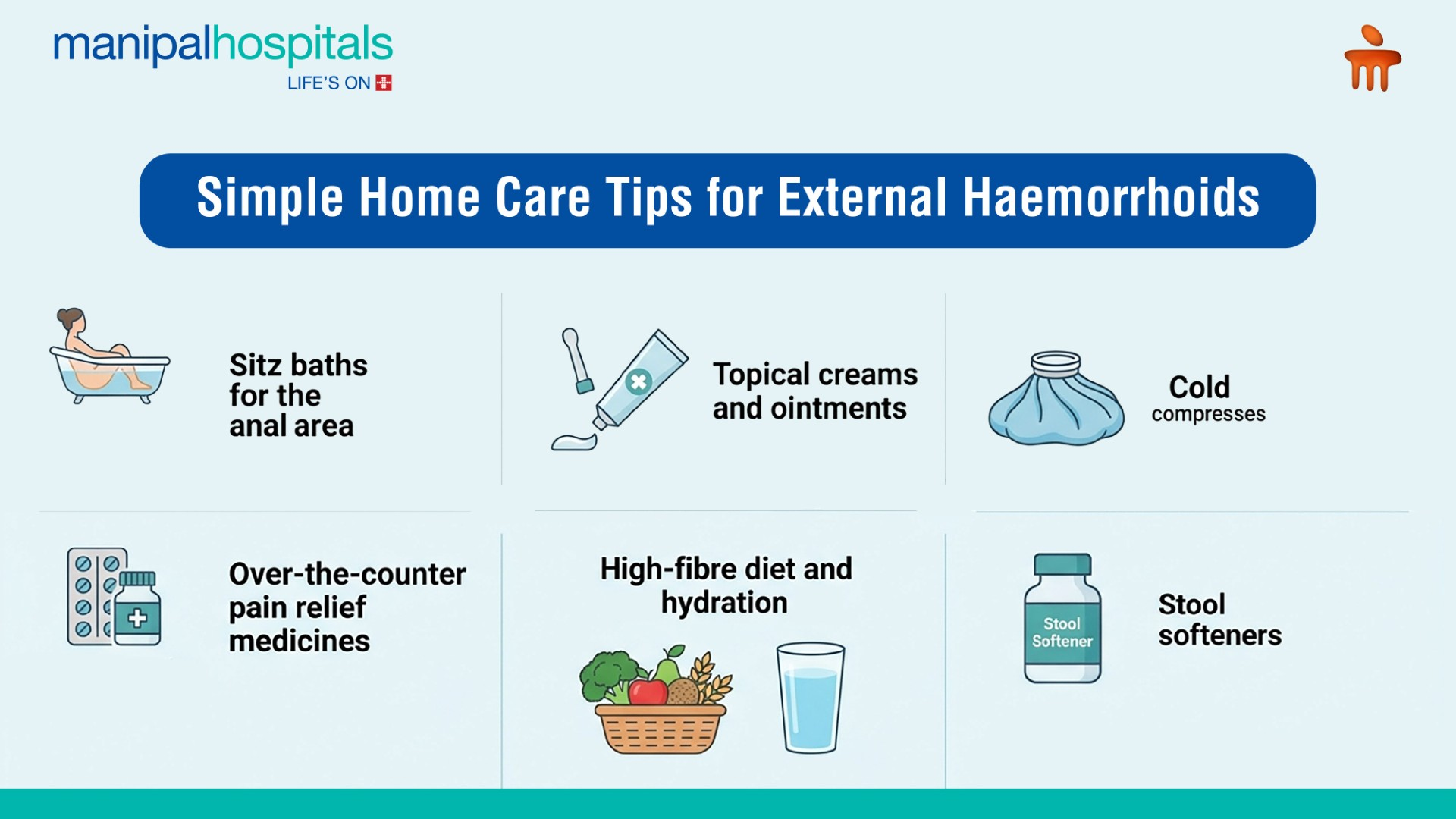
For mild to moderate cases, management of external haemorrhoids often begins with simple measures at home:
-
Sitz Baths: Soaking the anal area in warm (not hot) water for 10–15 minutes, two to three times daily, may help relieve swelling, soothe irritation, and improve comfort.
-
Topical Creams and Ointments: Over-the-counter creams containing mild steroids or soothing agents can temporarily reduce itching and discomfort. These should not be used for more than one week without medical guidance, as prolonged use may cause skin thinning.
-
Cold Compresses: Applying a cloth-covered ice pack to the affected area for short intervals may reduce localised swelling and numb discomfort.
-
Over-the-Counter Pain Relief Medicines: Pain relievers may help manage mild to moderate discomfort during flare-ups.
-
High-Fibre Diet and Hydration: Increasing dietary fibre intake to around 25–30 grams daily and drinking adequate water helps soften stools and reduce straining during bowel movements. This is one of the most important lifestyle changes for long-term haemorrhoid prevention.
-
Stool Softeners: If constipation persists, a short course of stool softeners or bulk-forming agents such as ispaghula husk may be recommended.
Medical and Surgical Treatments
If symptoms persist despite home care or if the haemorrhoid becomes severely painful, medical evaluation is recommended. In some cases, minor procedures or surgery may be required to relieve symptoms.
Two main surgical approaches may be considered for external haemorrhoids.
-
Excision or Drainage of a Thrombosed External Haemorrhoid: If a thrombosed external haemorrhoid is diagnosed early, a doctor may make a small incision to drain the clot. This procedure is usually performed under local anaesthesia and may provide faster pain relief when done within 48–72 hours of symptom onset.
-
Haemorrhoidectomy: This procedure involves the surgical removal of the haemorrhoid. It is usually recommended for large, persistent, or recurrent haemorrhoids that do not respond to conservative treatment. The procedure is typically performed under general anaesthesia.
When to See a Doctor
Medical evaluation is recommended if:
-
Symptoms last longer than a week
-
Pain becomes severe
-
Bleeding occurs frequently
-
A painful lump develops suddenly
-
Bleeding continues despite home treatment
Rectal bleeding should always be evaluated by a doctor to rule out other gastrointestinal conditions.
Conclusion
External haemorrhoids can be painful and uncomfortable, but they are manageable with appropriate care. Many people experience relief through simple lifestyle changes and home treatments, while more persistent cases may require medical intervention.
If you have been experiencing symptoms for more than a week or if the discomfort is worsening, consulting a specialist can help ensure proper diagnosis and treatment.
At Manipal Hospitals, the Gastroenterology team provides confidential and comprehensive care for haemorrhoid symptoms, from diagnosis to treatment and recovery.
FAQ's
Common symptoms of external haemorrhoids include a painful lump near the anus, itching or burning, swelling, discomfort while sitting, and bright red bleeding after bowel movements. The pain may be sudden and more severe in the case of a thrombosed external haemorrhoid.
Small external haemorrhoids may improve on their own within a few days with rest and simple home care. However, recurrent or thrombosed haemorrhoids may require medical treatment to relieve symptoms and prevent complications.
You can reduce the risk of haemorrhoids by:
-
Eating a fibre-rich diet including fruits, vegetables, legumes, and whole grains
-
Drinking adequate fluids throughout the day
-
Exercising regularly
-
Avoiding prolonged sitting on the toilet
-
Responding promptly to the urge to defecate
Common external haemorrhoid causes for recurrent flare-ups include constipation, low fibre intake, dehydration, prolonged sitting, and obesity. Pregnancy, ageing, and genetic predisposition may also increase the risk.
Warm Sitz baths for 10–15 minutes, cold compresses, and over-the-counter pain relief medicines may help ease discomfort. Topical creams can also temporarily reduce itching and irritation.
Share this article on: