



 6 Min Read
Does your skin develop red, itchy, scaly patches that keep coming back no matter what you try? It may be more than just dry skin. These could be signs of psoriasis, a chronic immune-mediated inflammatory skin condition that often appears without warning. Psoriasis doesn’t just affect your skin; it can also impact your confidence and daily life.
According to GBD 2019, approximately 100 million people worldwide live with psoriasis. The condition often follows a cycle of flare-ups and remissions. Understanding psoriasis symptoms and treatment options is essential for early diagnosis, better flare control, and an improved quality of life. In this blog, we’ll explain what psoriasis is, its common symptoms, and what triggers flare-ups so you can manage it effectively.
Synopsis
What Is Psoriasis?
Psoriasis is a common skin condition in which the immune system mistakenly speeds up skin cell production. Normally, skin cells renew every 3–4 weeks. In psoriasis, this process occurs within days, leading to thick, scaly patches on the skin.
There is no permanent cure, but treatment can effectively control symptoms. Psoriasis may cause discomfort, disrupt sleep, and affect concentration. It typically follows a cyclical pattern, with flare-ups lasting weeks or months before subsiding.
Psoriasis is not contagious, but genetic predisposition increases the likelihood of developing it.
Psoriasis Symptoms
Symptoms can vary depending on the type and severity. The most common signs include:
-
Thick, red patches covered with silvery-white scales
-
Dry, cracked skin that may bleed
-
Skin tenderness or pain
-
Itching, burning, or soreness
-
Cracked, pitted, or thickened nails
-
Joint pain or stiffness (in psoriatic arthritis)
Flare-ups may appear suddenly, improve with treatment, and return later.
Understanding Psoriasis Triggers
Managing psoriasis is not just treating visible patches; it also involves identifying and managing triggers that cause flare-ups. Although the exact causes of psoriasis are not fully understood, immune dysfunction, genetics, and environmental factors all contribute.
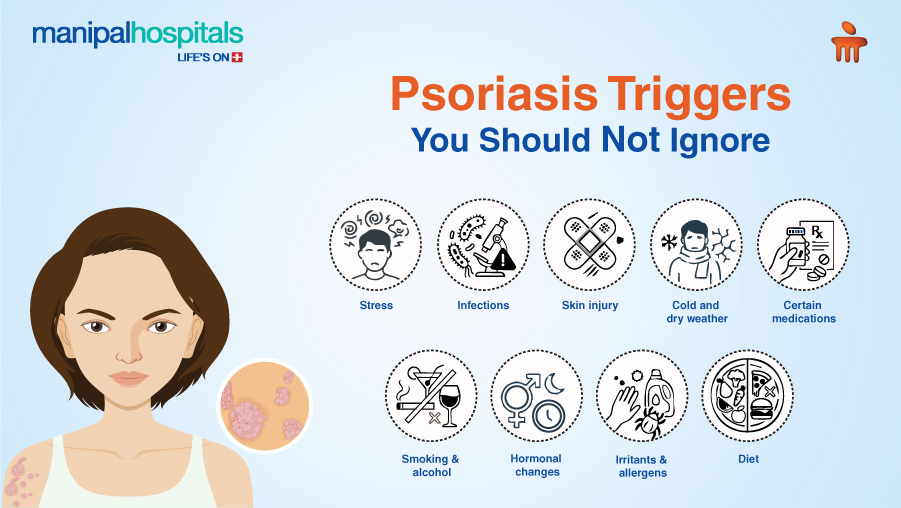
Certain internal and external triggers can worsen symptoms or activate flare-ups:
-
Stress - Emotional stress is one of the most common triggers. It disrupts immune balance and increases inflammation, leading to flare-ups. Practising stress-reducing techniques such as yoga, meditation, or relaxation exercises can help control symptoms.
-
Infections - Certain infections can trigger or worsen psoriasis. Strep throat is strongly linked to guttate psoriasis, especially in children and young adults. Viral, yeast, respiratory, and staph infections may also aggravate symptoms in some individuals. Treat infections promptly and maintain a healthy immune system to reduce flare-ups.
-
Skin Injury - New psoriasis lesions may develop at sites of skin injury, a response known as the Koebner phenomenon. Cuts, scratches, sunburns, insect bites, tattoos, and even vaccinations can trigger flares. Protect your skin and care for wounds properly.
-
Weather Changes - Cold, dry weather can worsen symptoms by drying out the skin. Moderate sunlight often improves symptoms, but sunburn or excessive exposure can trigger flares. Use a gentle moisturiser during winter and sunscreen on sunny days.
-
Certain Medications - Medications such as beta-blockers, lithium, antimalarials, and NSAIDs may aggravate psoriasis in some individuals. If you suspect a drug is triggering symptoms, consult your doctor before making changes.
-
Smoking and Alcohol - Both increase inflammation in the body and are linked to more severe and frequent flare-ups. Reducing or quitting smoking and limiting alcohol can improve overall disease control.
-
Hormonal Changes - Hormonal fluctuations during puberty, pregnancy, menopause, or the menstrual cycle may influence symptoms. Since these changes are natural, focus on managing other controllable triggers during these periods.
-
Allergens and Irritants - Exposure to fragrances, harsh soaps, detergents, chemical irritants, wool, or synthetic fabrics can irritate the skin and worsen symptoms in some people with psoriasis. Choose hypoallergenic and fragrance-free products to minimise irritation.
-
Diet - Certain foods, including processed foods, red meat, and high-fat dairy products, may promote inflammation in some individuals. An anti-inflammatory diet rich in fruits, vegetables, whole grains, and fatty fish may help support overall skin health.
Identifying your personal triggers is key to long-term psoriasis management and reducing flare frequency.
Psoriasis Treatment and Management
Psoriasis management depends on disease severity and overall health. Although there is no permanent cure, appropriate treatment can control inflammation, reduce symptoms, and prolong remission.
Treatment options include:
-
Topical therapies (corticosteroids, vitamin D analogues)
-
Medicated shampoos for scalp psoriasis
-
Regular use of moisturisers (emollients)
-
Phototherapy (narrowband UVB)
-
Systemic oral medications or biologics for moderate to severe cases
-
Lifestyle changes and trigger avoidance
Doctors choose the appropriate psoriasis medicine based on severity, associated conditions, and individual response to therapy. Early diagnosis and treatment help reduce disease progression and allow timely detection of complications such as psoriatic arthritis.
Conclusion
Psoriasis is a chronic but manageable condition. Recognising early symptoms, understanding triggers, and seeking timely care can significantly reduce flare-ups and improve quality of life. With the right approach to psoriasis symptoms and treatment, individuals can control inflammation, minimise discomfort, and prevent complications.
At Manipal Hospitals, experienced dermatologists provide comprehensive evaluation and advanced therapies for psoriasis. They also create personalised care plans to help patients effectively manage the condition and achieve long-term skin health.
FAQ's
Early psoriasis symptoms include red, raised patches of skin covered with silvery scales, itching, dryness, and mild irritation. Some individuals may also notice nail changes, scalp flaking, or small drop-shaped lesions before larger plaques develop.
Psoriasis causes involve immune system dysfunction and genetic predisposition. Environmental triggers such as infections, stress, skin injury, certain medications, smoking, alcohol use, and weather changes can worsen symptoms or activate flare-ups.
The main psoriasis types include plaque psoriasis (most common), guttate psoriasis, inverse psoriasis, pustular psoriasis, and erythrodermic psoriasis. Each type differs in appearance, severity, and the areas of the body affected.
Yes. Psoriasis can also affect the nails and joints. Some individuals develop psoriatic arthritis, which causes joint pain, stiffness, and swelling. Early diagnosis and treatment are important to prevent long-term joint damage.
Psoriasis has no permanent cure, but effective treatment can control symptoms and reduce flare-ups. Management may include topical therapies, phototherapy, systemic medications, and biologic treatments based on disease severity.
Advanced spine care at Manipal Hospitals offers lumbar spondylosis diagnosis in Bhubaneswar through detailed clinical evaluation, appropriate imaging studies, and development of an individualised treatment plan.
Share this article on:






