
 6 Min Read
A sudden sharp pain in your back, burning during urination, or blood-tinged urine can feel frightening and easy to dismiss at first. Many people mistake these signs for dehydration or a minor infection. However, in some cases, they may signal kidney stones and should not be ignored.
Kidney stones are small, hard mineral deposits that form in the kidneys. They often develop slowly and may not cause symptoms at first, which is why many people don’t realise they have them. Kidney stones affect about 12% of people worldwide. In India, prevalence is similar, with higher rates of around 15% reported in northern regions.
While some stones pass with little discomfort, others can cause severe pain and complications if left untreated. Recognising early warning signs can help you seek timely care and avoid longer-term problems. In this blog, we’ll explain kidney stone symptoms and treatment, along with causes and when to seek medical attention.
Synopsis
What Are Kidney Stones?
Kidney stones, also called renal calculi or nephrolithiasis, are solid masses that form when minerals and salts in urine crystallise and stick together. This occurs when urine becomes highly concentrated, allowing these substances to form crystals and gradually grow into stones.
Although kidney stones form in the kidneys, they can travel anywhere along the urinary tract. Many cause no symptoms at first and remain unnoticed until they begin to move. Pain and other symptoms typically start when a stone enters the ureters — the narrow tubes that carry urine from the kidneys to the bladder.
Types of Kidney Stones
Identifying the type of stone helps guide prevention strategies and treatment. Different types of kidney stones form for different reasons. These include:
-
Calcium Stones - The most common type, usually made of calcium oxalate or calcium phosphate.
-
Uric Acid Stones - Form when urine is too acidic, often linked to dehydration, high-protein diets, diabetes mellitus or metabolic syndrome.
-
Struvite Stones - Typically develop after urinary tract infections and can grow rapidly, sometimes becoming quite large.
-
Cystine Stones - Rare stones caused by a genetic disorder called cystinuria, which leads to excessive cystine (an amino acid) in the urine.
Symptoms of Kidney Stones
Kidney stone symptoms usually appear suddenly and can be hard to ignore. They often begin when a stone starts moving or blocks the flow of urine.
The most noticeable symptom is kidney stone pain (renal colic), which can be severe and difficult to ignore. It often starts suddenly and may:
-
Cause sharp pain in the side or back, just below the ribs
-
Spread to the lower abdomen or groin
-
Come in waves, with changing intensity
-
Be accompanied by a burning sensation during urination
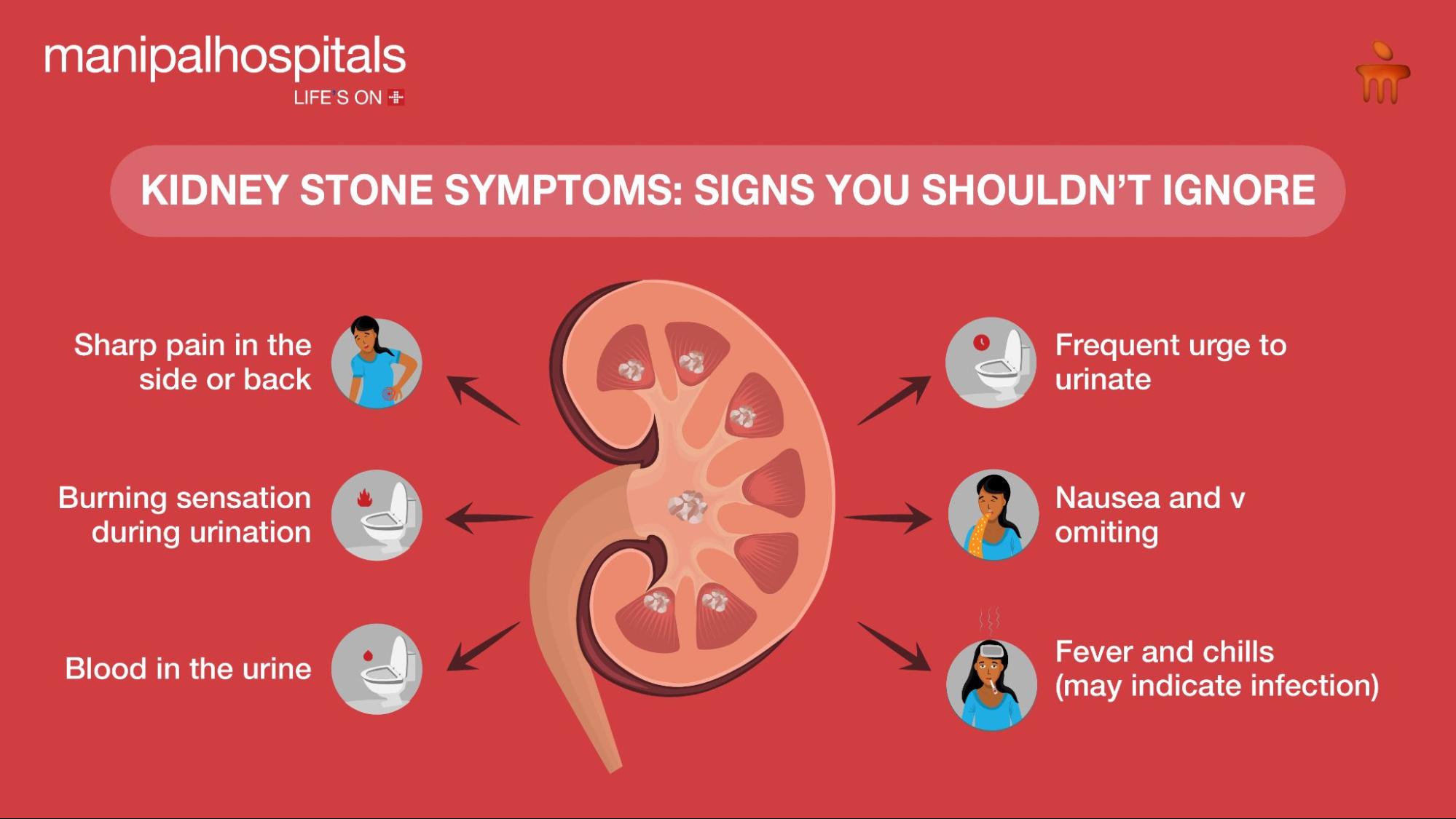
Other symptoms may include:
-
Pink, red, or brown urine (blood in the urine)
-
Cloudy or foul-smelling urine
-
A frequent urge to urinate or passing small amounts
-
Nausea and vomiting
-
Fever and chills, which may indicate an infection and require urgent care
As the stone moves through the urinary tract, the location and severity of pain may shift.
Why Do Kidney Stones Form?
Kidney stones do not have a single cause. Most kidney stone causes are linked to changes in urine composition, particularly high concentrations of minerals combined with low fluid volume. When substances such as calcium, oxalate, or uric acid become highly concentrated, crystals can form and gradually grow into stones.
Certain habits and conditions increase the risk, including:
-
Not drinking enough fluids
-
Diets high in salt, sugar, or animal protein
-
Taking high-dose vitamin C supplements
-
A family history of kidney stones
-
Certain medications, including some diuretics and calcium-based antacids
Some medical conditions can also raise the likelihood of stone formation, including gout, diabetes, obesity, and inflammatory bowel disease.
How Are Kidney Stones Treated?
Kidney stone treatment depends on the size of the stone, its location, and how severe the symptoms are. Options may include:
-
Medications: Many small stones pass naturally with increased fluid intake and time. Medicines are used to relieve pain and nausea, and alpha-blockers may help relax the urinary tract to ease stone passage. Some medications also adjust urine chemistry to reduce the risk of forming future stones, especially in people with recurrent kidney stones.
-
Minimally invasive procedures: If a stone does not pass on its own, medical procedures may be required. Shockwave lithotripsy uses sound waves to break the stone into smaller fragments that can pass in urine. Another option is ureteroscopy, where doctors use a thin scope to reach the stone and remove or break it apart directly.
-
Surgical removal: Very large or complex stones may require percutaneous nephrolithotomy, a minimally invasive procedure that removes the stone through a small incision in the back. Laparoscopic or open surgery is rarely necessary and is reserved for situations where other treatments are not suitable.
Conclusion
Kidney stones may develop quietly, but once symptoms appear, they can quickly become painful and disruptive. Because early warning signs are often mild or easy to overlook, awareness is essential for timely diagnosis and care. Paying attention to persistent pain, urinary discomfort, or changes in urine can help prevent complications and support faster recovery.
Understanding kidney stone symptoms and treatment helps most people manage the condition effectively and lower the risk of recurrence. Manipal Hospitals provides expert urology care, advanced treatment options, and personalised care plans to support early diagnosis, effective treatment, and long-term kidney health.
FAQ's
Yes, kidney stones can develop without causing noticeable symptoms, especially when they are small and remain in the kidney. Many people only discover a stone during a scan done for another reason. Symptoms usually appear when a stone moves or blocks the flow of urine.
Kidney stones are often manageable, but untreated stones can lead to complications. Persistent blockage or infection may damage the urinary tract or kidneys. With timely diagnosis and proper treatment, serious complications can usually be prevented, and most people recover fully.
Yes, the size of the kidney stone can influence symptoms. Smaller stones may pass with little discomfort, while larger stones are more likely to cause blockage, severe pain, or require medical procedures.
Yes, kidney stones can recur. People who have had one stone are at higher risk of developing another, especially if lifestyle or dietary factors remain unchanged. Staying well hydrated and following preventive advice can reduce the risk.
Seek medical care if pain becomes severe or persistent, if you notice blood in your urine, or if you develop fever, vomiting, or difficulty urinating. These symptoms may signal complications and require prompt evaluation.
Share this article on: