



 5 Min Read
Picture a child who stops mid-sentence, stares blankly for a few seconds, then carries on as if nothing happened – no falling, no shaking, just a brief pause. To most people, it may look like the child is simply daydreaming.
But these brief episodes are often absence seizures, a type of epilepsy that is often overlooked. Because the absence seizure symptoms are subtle, they are often mistaken for attention problems or inattentiveness.
This blog explains what absence seizures are, their causes, symptoms, possible risks if untreated, and how they are managed.
Synopsis
What Is an Absence Seizure?
An absence seizure is a brief, sudden episode of lost awareness, typically lasting 5 to 30 seconds. During this episode, the person becomes completely unresponsive and then resumes normal activity with no memory of what occurred. There is usually no confusion or drowsiness afterwards, which is why these seizures can easily be missed.
There are two types of absence seizures, which differ slightly in their clinical features and EEG patterns.
-
Typical absence seizures: These are the most common type. They begin and end suddenly and usually involve a brief blank stare with an abrupt pause in activity. The person quickly resumes normal activity once the episode ends. On EEG, they show generalised 3-Hz spike-and-wave discharges.
-
Atypical absence seizures: These tend to start and end more gradually. They may last slightly longer and can be associated with subtle changes in muscle tone, such as mild head nodding, slowed movements, or a brief loss of posture. On EEG, they show slower spike-and-wave activity (usually less than 2.5 Hz), which may appear irregular.
Signs and Symptoms of Absence Seizures
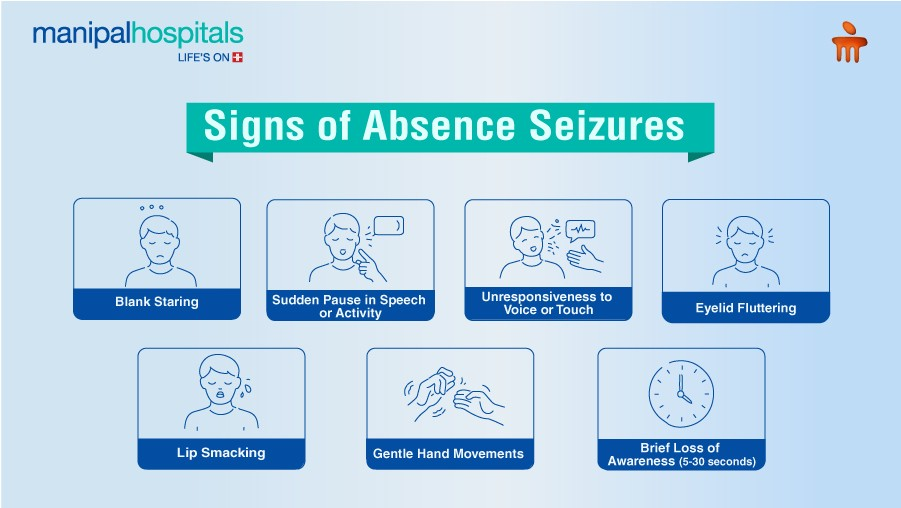
Key symptoms of absence seizures include:
-
Blank staring: A fixed, vacant gaze lasting seconds (the typical stare) is the most consistent feature.
-
Sudden pause in speech or activity: A child may stop speaking mid-sentence or pause during an activity, then resume immediately afterwards.
-
Unresponsiveness: The child does not respond to their name or touch during the episode.
-
Subtle movements: Eyelid fluttering, lip smacking, or gentle hand movements may occur during the seizure.
-
High frequency: Episodes can occur many times a day, sometimes dozens of times, and may go unnoticed.
As absence seizures leave no confusion or visible after-effects, they are often mistaken for inattentiveness or daydreaming, which can delay diagnosis.
Absence Seizure Causes
The causes of absence seizures are most often linked to genetic epilepsy syndromes. They occur due to abnormal, synchronised electrical activity involving both hemispheres of the brain. Unlike some other seizure types, they are usually not associated with structural brain damage.
Certain factors may trigger individual episodes, including:
-
Hyperventilation (rapid or deep breathing)
-
Sleep deprivation
-
Occasionally flickering lights
Hyperventilation is commonly used during EEG testing because it can provoke absence seizures and help confirm the diagnosis.
What Happens If Absence Seizures Go Untreated?
Although absence seizures are usually brief, frequent episodes can have cumulative effects.
-
Learning difficulties: Frequent seizures can interrupt attention and create academic gaps.
-
Memory and concentration problems: Repeated interruptions in awareness may affect classroom participation and concentration.
-
Risk of other seizure types: Some children may later develop generalised tonic-clonic seizures.
-
Safety concerns: Episodes during activities such as swimming, cycling, or crossing the road can increase the risk of injury.
-
Self-esteem issues: Children may be wrongly labelled as distracted or inattentive, which can affect confidence and social interactions.
Absence Seizures Treatment
The treatment for absence seizures usually involves antiseizure medications prescribed by a neurologist. Commonly used medicines include ethosuximide, valproate, and lamotrigine, which help control abnormal electrical activity in the brain. With appropriate treatment, many children achieve good seizure control within a few weeks.
If medications are not effective, doctors may recommend dietary therapy such as the ketogenic diet, a high-fat, low-carbohydrate eating plan that may help reduce seizure frequency.
In rare cases where seizures remain difficult to control, a specialist may evaluate advanced treatment options, including surgery.
Many children with childhood absence epilepsy eventually outgrow the condition during adolescence. When seizures remain well controlled for a prolonged period, doctors may consider gradually reducing or stopping medication under specialist supervision.
Conclusion
Absence seizures can be easy to overlook because the episodes are brief and often mistaken for daydreaming or inattentiveness. However, recognising absence seizure symptoms early is important for timely diagnosis and treatment. Early care can help protect a child’s learning, safety, and overall quality of life.
At Manipal Hospitals, the neurology team provides comprehensive evaluation and personalised epilepsy care to diagnose and manage absence seizures in children and adults.
FAQ's
Absence seizures most commonly begin between 4 and 8 years of age, with a peak onset between 5 and 7 years. They can also occur in adolescents (juvenile absence epilepsy) and, rarely, in adults.
Yes, many children with childhood absence epilepsy outgrow absence seizures during adolescence. However, some may continue to have seizures or develop other seizure types later in life. Regular follow-up with a doctor is important for proper management.
Absence seizures are not known to cause brain damage. However, frequent episodes can affect learning, concentration, and classroom performance if left untreated.
Absence seizures are usually not life-threatening and rarely cause injury. However, episodes during activities such as swimming, cycling, or crossing the road may increase the risk of accidents. Also, frequent seizures can affect learning and social interactions.
Doctors usually diagnose absence seizures using an electroencephalogram (EEG), which records the brain’s electrical activity. During the test, the doctor may ask the patient to hyperventilate, as this can trigger absence seizures and help confirm the diagnosis.
Share this article on:






