8 Min Read
A person may notice ongoing bloating, changes in bowel habits, tiredness, or blood in the stool and assume it is caused by a minor digestive issue. But when these symptoms continue for weeks or keep returning, they should not be ignored. Colorectal cancer is one of the most common cancers affecting the colon and rectum. Colorectal cancer often develops slowly over several years, and it might start from polyps.
Paying attention to colorectal cancer symptoms early can help people get timely medical care before the condition worsens. In this blog, we will discuss the most common colorectal cancer symptoms, early warning signs that should not be ignored, and treatment options.
Synopsis
- What Is Colorectal Cancer?
- Common Symptoms of Colorectal Cancer
- Different Symptoms Based on Tumour Location
- Warning Signs of Colorectal Polyps
- Symptoms in Advanced Colorectal Cancer
- Colorectal Cancer Risk Factors
- Lifestyle Tips to Lower Your Risk of Colorectal Cancer
- Lifestyle Tips to Lower Your Risk of Colorectal Cancer
- When to See a Doctor
- Conclusion
What Is Colorectal Cancer?
Colorectal cancer occurs when cells in the colon or rectum grow out of control. It normally begins as benign polyps that can slowly become malignant over time if left untreated. These symptoms are often mistaken for common digestive problems, which is why many people ignore them in the beginning.
The colon and rectum help process and remove waste from the body. So, when cancer affects these organs, it can interfere with regular digestive processes and overall health.
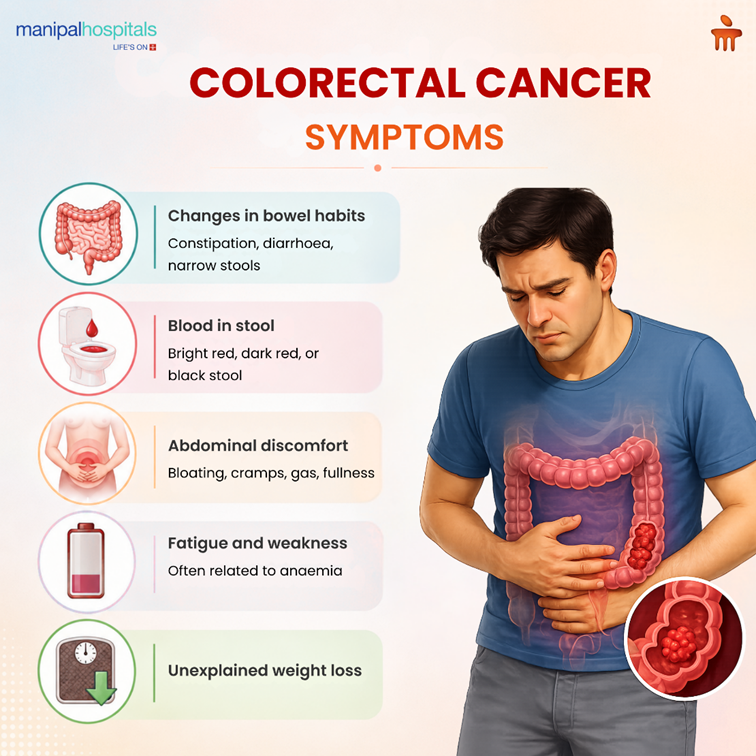
Common Symptoms of Colorectal Cancer
The early symptoms of colorectal cancer can be subtle and hard to detect. But persistent or atypical intestinal changes should never be overlooked:
|
Symptom |
What You May Notice |
|
Changes in bowel habits |
Constipation, diarrhoea, narrow stools, or feeling that the bowel does not empty completely |
|
Blood in stool |
Bright red, dark red, or black-coloured stool |
|
Abdominal discomfort |
Bloating, gas, cramps, or fullness in the abdomen |
|
Fatigue and weakness |
Low energy, dizziness, or tiredness caused by anaemia |
|
Weight loss without changes in diet or exercise |
Different Symptoms Based on Tumour Location
The symptoms of colorectal cancer depend on the location of the tumour.
Symptoms of right-sided colon cancer
-
Tiredness
-
Anaemia
-
Weakness
-
Hidden blood loss
Symptoms of left-sided colon cancer
-
Constipation
-
Loose stools
-
Abdominal cramps
-
Visible bloody stool
Symptoms of rectal cancer
-
Bleeding from the rectum
-
Pain with bowel motions
-
Feeling of incomplete bowel emptying
The pattern of symptoms may help doctors identify the possible location of the tumour.
Warning Signs of Colorectal Polyps
Polyps are abnormal growths that form inside the colon or rectum. Most polyps are benign, but some can turn into cancer over time. Asymptomatic colorectal polyps are common. But bigger polyps might lead to visible colorectal polyp symptoms like:
-
Rectal bleeds
-
Blood in stool
-
Change in bowel habits
-
Abdominal discomfort
-
Anaemia, iron deficiency
It’s vital to get screened regularly by colonoscopy because doctors can remove polyps before they become malignant.
Symptoms in Advanced Colorectal Cancer
Stage 4 colorectal cancer symptoms mean the cancer has spread to other organs, such as the liver or lungs. Symptoms at this stage are often more severe and may affect daily life significantly.
Common Symptoms in Advanced Stages
-
Severe abdominal pain
-
Ongoing nausea
-
Significant weight loss
-
Extreme tiredness
-
Reduced appetite
-
Abdominal swelling
-
Jaundice if the liver is affected
-
Breathing difficulty if the lungs are involved
Colorectal Cancer Risk Factors
The chance of acquiring colorectal cancer is increased by several variables.
-
Age: Though risk increases dramatically after age 50, younger individuals can develop the condition as well.
-
Family history: People who have a family history of colorectal cancer or polyps are at increased risk.
-
Smoking and Alcohol: Tobacco and heavy alcohol usage are associated with colorectal cancer.
-
Obesity and Physical Inactivity: Physical inactivity and obesity are potential risk factors for cancer.
-
Inflammatory Bowel Disease (e.g., Crohn’s disease, ulcerative colitis): Increased risk over the long run.
Colorectal Cancer Treatment Options
Treatment depends on the cancer stage, tumor location, and patient health.
-
Surgery: The most common treatment for cancer that has not spread is surgery to remove the tumour.
-
Chemotherapy: Chemotherapy uses medicines to destroy cancer cells or slow their growth.
-
Radiation therapy: Radiation is routinely used to treat rectal cancer.
-
Targeted Therapy: Targeted therapy focuses on specific changes in cancer cells.
-
Immunotherapy: Some advanced colorectal tumours are responsive to immune-based therapies.
Modern cancer care uses several therapy approaches for better outcomes. If you are looking for advanced gastrointestinal care and expert consultation, consider visiting Manipal Hospitals Whitefield for specialised evaluation and treatment.
Lifestyle Tips to Lower Your Risk of Colorectal Cancer
Good practices may help reduce the risk, but they cannot prevent all cases.
-
Eat a Balanced Diet: Include fruits, vegetables, whole grains, and high-fiber foods.
-
Keep Moving: Regular exercise helps your whole body and your digestive system.
-
Keep a Healthy Weight: Being overweight raises the risk of many diseases, including colorectal cancer.
-
Abstain from Smoking or Alcohol: Use of tobacco and alcohol can increase your risk of cancer.
-
Regular Screenings: Routine checkups might catch problems early.
When to See a Doctor
If your symptoms persist for more than a couple of weeks, see your doctor.
-
Blood in stool
-
Chronic discomfort in the abdomen
-
Sudden change in bowel habits
-
Weight reduction without a known cause
-
Chronic fatigue
-
Anal bleeding
-
Long-term constipation or diarrhoea
Screening can help find colorectal cancer before it spreads. If symptoms persist or you are at risk, consult a gastroenterology surgeon in Whitefield for timely evaluation and appropriate care.
Conclusion
Blood in the stool, constipation or diarrhoea that does not improve, stomach discomfort, and unusual tiredness are symptoms that should be checked if they continue for weeks. Although these signs can feel mild in the beginning, you should still have a doctor check any symptoms that continue for weeks.
Recognising common symptoms of colorectal cancer early and seeking timely medical advice can help with earlier diagnosis and better treatment outcomes. Regular screening and awareness of unusual digestive changes also play an important role in detecting the condition before it progresses further.
At Manipal Hospital Whitefield, we have an ecosystem that offers a comprehensive care pathway, from screening protocols to providing advanced treatment of colorectal cancer in Whitefield, Bangalore – all under one roof.
FAQ's
Common symptoms of colorectal cancer may include changes in bowel habits, abdominal pain or discomfort, exhaustion, weight loss for no known reason, or blood in the stool. They might come on slowly and should never be completely overlooked.
Colorectal tumours can sometimes damage the intestinal lining, causing bleeding that may appear as bright red or dark blood in the stool.
Yes, persistent stomach pain, cramps, bloating, or discomfort might be an indication of colorectal cancer. Proper medical evaluation is important since tumours can obstruct or irritate the intestines, leading to persistent and worsening digestive difficulties.
Frequent diarrhoea, constipation, thin stools, or a sense of incomplete bowel emptying are possible indications of colorectal cancer. Persistent changes in bowel habit lasting several weeks should be medically examined for correct diagnosis and therapy.
If you experience symptoms such as rectal bleeding, unexplained weight loss, persistent abdominal discomfort, exhaustion, or bowel abnormalities that last for weeks, a doctor should be seen since early discovery can dramatically improve treatment outcomes for colorectal cancer.
Share this article on: