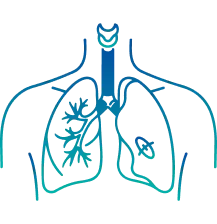
Single Lung Transplant
Manipal Hospitals offers advanced lung transplants in India, providing specialised care for patients with end-stage lung diseases. The hospital performs both single and double lung transplants using modern surgical techniques and strict perioperative management. With experienced transplant surgeons, dedicated transplant ICUs, skilled respiratory therapists, and comprehensive rehabilitation support, Manipal Hospitals ensures safe and effective treatment. Structured follow-up, infection control, and long-term monitoring help improve survival, lung function, and overall quality of life for patients undergoing complex lung replacement procedures.
Hospital Locations
-
Old Airport Road - Bengaluru
-
.webp)
Mysuru
-

Mangaluru
-
Dwarka - Delhi NCR
-

Patiala
-

Jaipur
-
Vijayawada
-
Salem
-

Salt Lake - Kolkata
-

Baner - Pune
-

Bhubaneswar
-
Siliguri
-
Ranchi

How It Works
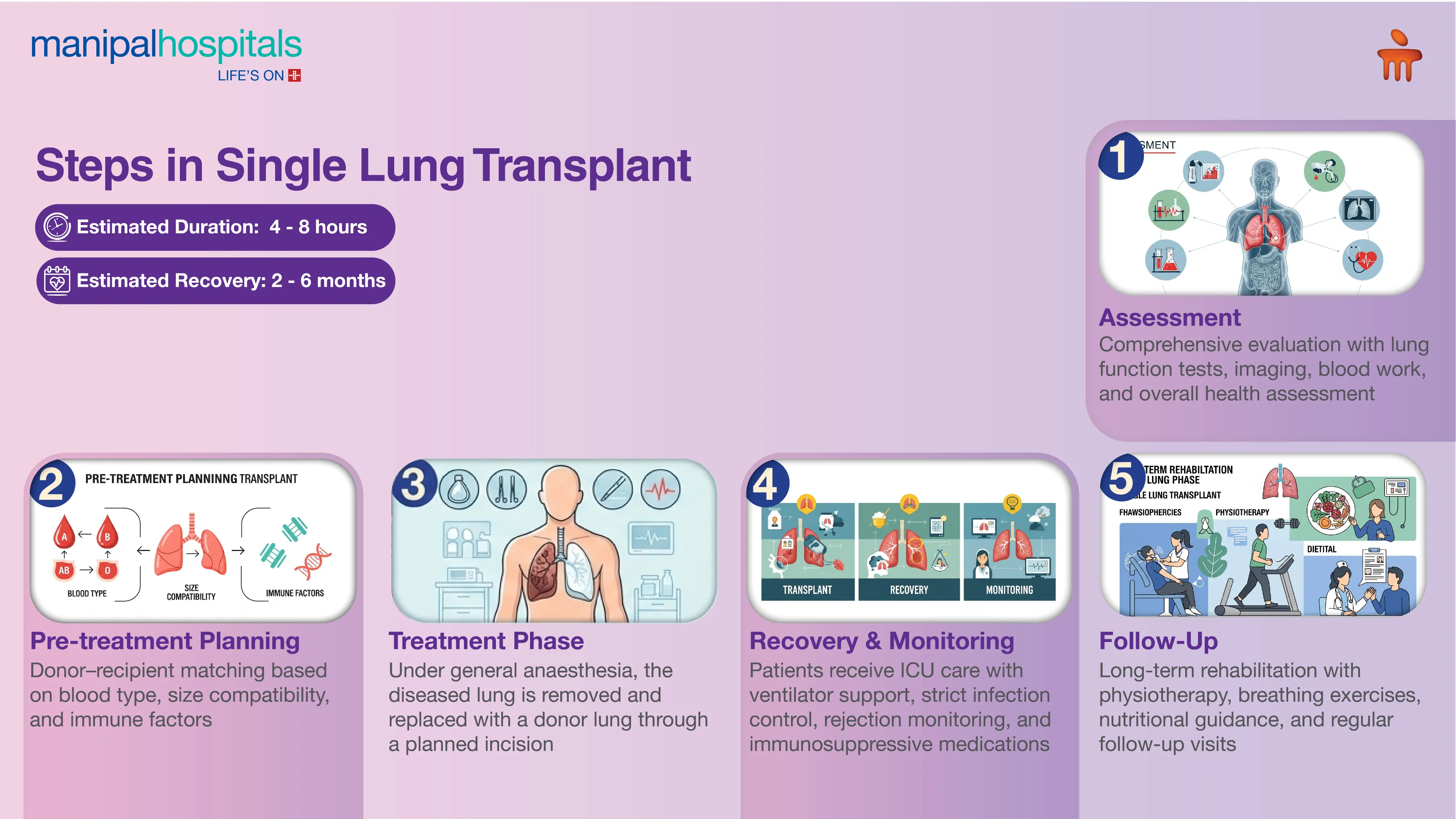
A lung transplant replaces a severely diseased lung with a healthy donor organ to restore breathing capacity and prolong life. At Manipal Hospitals, patients undergo a thorough evaluation, including lung function tests, imaging, cardiology screening, and suitability assessments. Based on clinical indications, surgeons may recommend a single or double lung transplant.
A single lung transplant in India is commonly performed for conditions such as pulmonary fibrosis or chronic obstructive lung disease. During the procedure, the diseased lung is removed and replaced with a donor lung under general anaesthesia. The surgical team ensures precise graft implantation and stable airway, vessel, and bronchial connections.
After surgery, patients are shifted to a specialised ICU for ventilator support, organ-function monitoring, and infection control. Immunosuppressive therapy begins immediately to prevent rejection. Rehabilitation starts early, focusing on breathing exercises, gradual mobilisation, and strength recovery. Long-term follow-up includes regular lung function tests, medication adjustments, and lifestyle guidance to maintain graft health and ensure safe, sustained recovery.
Didn’t find what you were looking for?
Request a CallbackBenefits
Choosing lung transplant care at Manipal Hospitals provides the following benefits:
-
Expert transplant surgeons supported by a multidisciplinary team for comprehensive care
-
Modern surgical techniques that enhance safety and improve procedural success
-
Advanced ICU management with strict infection-control protocols for optimal recovery
-
Structured rehabilitation programmes to improve breathing capacity, strength, and mobility
-
Personalised treatment plans tailored to overall wellbeing
What to Expect
Consultation and Diagnosis
Patients undergo a complete evaluation, including lung function tests, CT scans, and cardiopulmonary assessments.
Pre-operative Preparation
Before surgery, donor–recipient matching is performed based on blood type, size, and immunological compatibility.
Treatment Phase (Surgery Day)
On the day of surgery, anaesthesia is administered, and sterile preparation begins. Surgeons remove the diseased lung through a planned incision and implant the donor lung with precise vascular and airway connections. A single-lung transplant typically takes several hours.
Recovery Room / Monitoring
Following surgery, patients receive ventilator support and continuous monitoring in the transplant ICU. Pain control, early infection prevention, and graft surveillance are prioritised to ensure stable recovery during the initial critical period.
Hospital / Clinic Visits
Patients transition from the ICU to the ward as their breathing stabilises and ventilator dependence decreases.
Physical and Supportive Therapy
Rehabilitation begins early with guided breathing exercises, mobility training, and gradual strength-building.
Follow-ups
Routine follow-up appointments include lung function tests, chest X-rays, and bloodwork to track graft health.
Long-term Recovery
Patients receive lifestyle guidance on infection avoidance, nutrition, exercise, and long-term graft protection. Continuous monitoring from the transplant team supports stable lung function over months and years.
Why Manipal Hospitals?
Manipal Hospitals is a leading centre for complex transplant care, offering extensive experience in lung replacement procedures. The hospital features dedicated transplant units, modular operating theatres, and specialised ICUs designed for post-operative critical care. Transplant surgeons work closely with pulmonology, cardiology, anaesthesia, and rehabilitation teams to provide coordinated treatment for end-stage lung diseases.
Before the single lung transplant in India, a thorough evaluation, rigorous donor-matching protocols, and precision-based surgical methods are used. Post-operative care is supported by experienced critical-care teams, the latest ventilator systems, and detailed monitoring for graft stability. Patients also benefit from structured physiotherapy, long-term follow-up, and clear guidance on medication adherence. With its focus on safety, innovation, and patient-centred care, Manipal Hospitals remains a trusted destination for lung transplant services.
Centre of Excellence
The Lung Transplant and Pulmonology Department at Manipal Hospitals specialises in managing advanced respiratory failure through holistic transplant services. Skilled pulmonologists and transplant surgeons provide detailed evaluation, expert surgical care, dedicated ICU management, and structured long-term monitoring. This ensures strong support for patients undergoing complex lung replacement procedures and post-transplant recovery.
Services Offered
Manipal Hospitals provides a wide range of specialised lung transplant services, including:
-
Experienced transplant surgeons perform single and double lung transplant procedures
-
Detailed lung function evaluation and cutting-edge respiratory diagnostics to assess transplant readiness
-
Donor–recipient matching and immunological screening for safe, compatible transplantation
-
Post-operative ICU care with ventilator support, infection control, and continuous monitoring
Facilities & Services
The hospital supports safe and successful lung transplantation with state-of-the-art facilities, including:
-
Modern transplant operating theatres equipped with high-precision surgical systems and sterile airflow technology
-
Dedicated transplant ICUs for intensive post-operative monitoring and respiratory support
-
Ventilators and continuous monitoring systems to track oxygenation, heart function, and graft stability
-
Integrated, multidisciplinary care pathways for managing complex respiratory conditions
Frequently Asked Questions
A single lung transplant replaces one severely diseased lung with a healthy donor lung. It is performed for conditions such as pulmonary fibrosis, advanced COPD, and selected chronic lung diseases. The procedure helps restore breathing capacity and improve long-term respiratory function.
A single lung transplant typically takes 4–6 hours, depending on the complexity of the case. Additional time is often needed for anaesthesia, surgical preparation, stabilisation, and immediate ICU care to ensure a safe recovery and optimal lung function.
Hospital recovery after a single lung transplant usually takes 3–4 weeks, followed by several months of structured rehabilitation. Regular check-ups, lung function tests, and medication adjustments help ensure a stable and long-term recovery.
Patients require lifelong immunosuppressant medication, regular lung function tests, and strict medical monitoring after a lung transplant. These measures help prevent rejection, detect complications early, and maintain long-term graft health, ensuring stable breathing and improved quality of life.
Yes. Many patients experience improved breathing, enhanced quality of life, and extended survival, especially with proper post-transplant care. At Manipal Hospitals, a leading centre for lung transplant in India, specialised teams and structured follow-up programmes further support long-term health and successful outcomes.
Consult our Experts



You’re on Our Indian Website
Visit the Global site for International patient services
'Click' to chat with us
