_13.webp "Root Canal Treatment in India | Manipal Hospitals")
Root canal treatment (RCT)
Manipal Hospitals offers structured, personalised care for patients seeking root canal treatment in India. The unit focuses on relieving pain, preserving natural teeth, and restoring long-term function through precise and safe endodontic procedures. Each case is evaluated using detailed imaging to assess infection severity, nerve condition, and restoration needs. Patients are guided through diagnosis, treatment, and aftercare in a clear, step-wise manner. This approach helps prioritise comfort, reduces anxiety, and supports predictable healing and lasting outcomes.
Hospital Locations
-

Old Airport Road - Bengaluru
-
.webp)
Mysuru
-

Mangaluru
-
Dwarka - Delhi NCR
-

Patiala
-

Jaipur
-

Vijayawada
-
Salem
-

Salt Lake - Kolkata
-

Baner - Pune
-

Bhubaneswar
-

Siliguri
-

Ranchi
How It Works
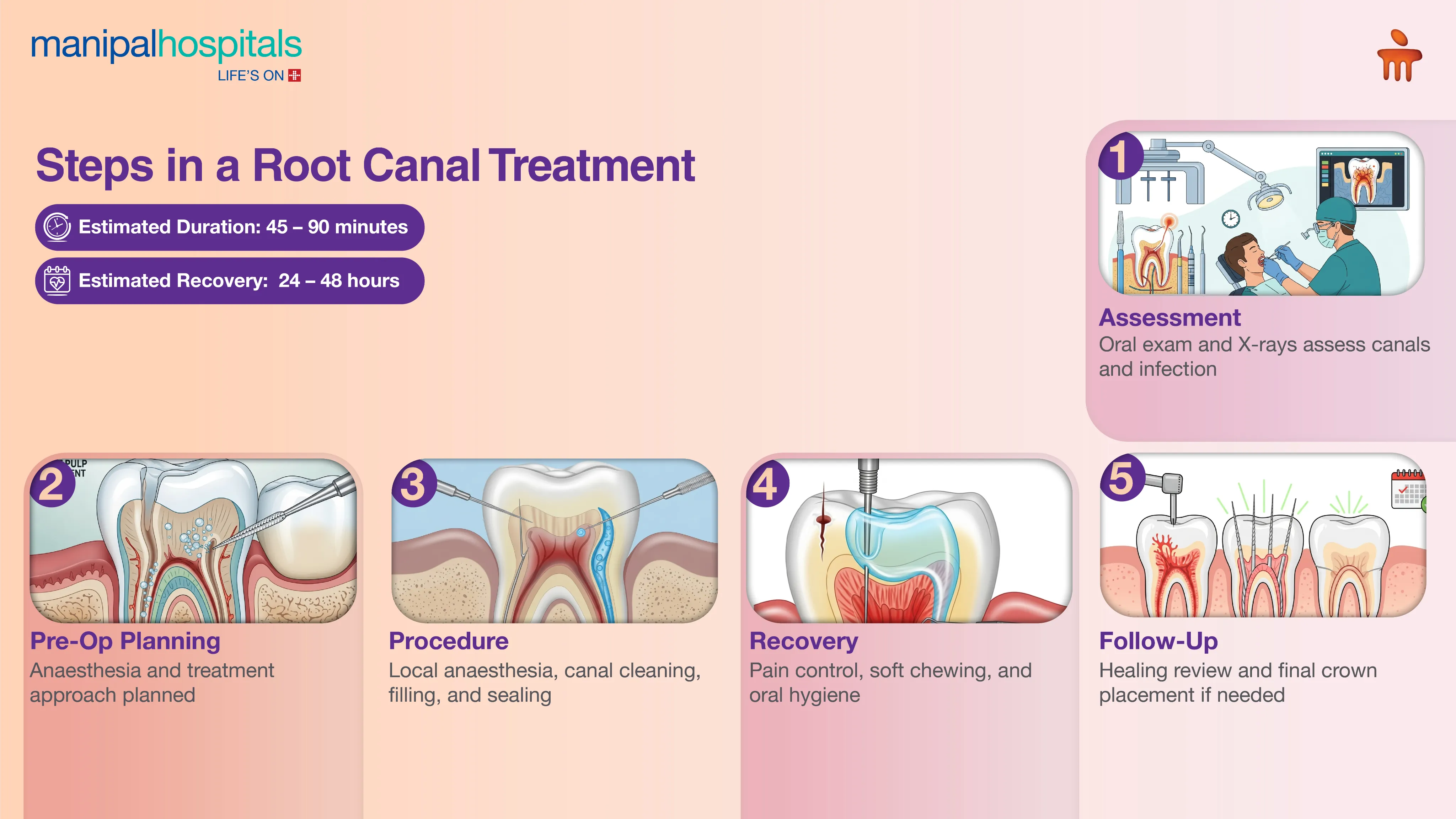
Root canal treatment follows a clear and well-defined sequence to clean the infected tooth and preserve its structure. The process begins with a clinical examination and imaging to assess the root canals, surrounding bone, and extent of infection. The dentist then prepares a treatment plan that outlines the steps, expected healing, and restoration requirements.
During the procedure, the tooth is numbed for comfort. The infected pulp is removed, and the canal system is cleaned and shaped. The space is then filled with a sealing material to prevent reinfection. A temporary or permanent filling is placed based on the tooth’s condition.
In some cases, patients ask about an alternative to root canal treatment in India, such as extraction or other restorative options. Dentists explain these choices clearly, ensuring patients understand long-term implications. A crown may be recommended to strengthen the treated tooth. Follow-up visits help monitor healing and function. This structured approach maintains comfort, control, and clarity at every stage.
Didn’t find what you were looking for?
Request a CallbackBenefits
Root canal treatment at Manipal Hospitals offers multiple clinical advantages that support long-term tooth preservation and comfort:
-
Provides effective relief from dental pain and sensitivity
-
Helps preserve the natural tooth and avoid extraction
-
Prevents deeper infection and protects surrounding tissues
-
Restores comfortable chewing function after healing
-
Supports stable, long-term oral health
-
Includes clear aftercare guidance and structured follow-up appointments
What to Expect
Consultation and Diagnosis
Clinical examination and imaging to assess infection Evaluation of tooth strength, canal anatomy, and restoration needs
Pre-Operative Preparation
Professional oral cleaning if required Anaesthesia planning based on tooth location and sensitivity
Surgery Day
Removal of infected pulp using controlled endodontic techniques Cleaning, shaping, and disinfecting of canals before sealing
Recovery Room Monitoring
Initial pain-relief measures and post-procedure guidance Assessment of numbness and early healing response
Hospital Stay
Most treatments are completed in a single visit Discharge with clear instructions on eating, hygiene, and medication
Oral Function Guidance
Chewing advice during recovery Bite adjustment tips to prevent discomfort
Follow-Up Appointments
Review of canal healing and surrounding tissues Discussion regarding crown placement for long-term strength
Long-Term Recovery
Final restoration placement Advice on care after root canal treatment Discussion of any suitable alternative to root canal treatment in India, if clinically appropriate
Why Manipal Hospitals?
Manipal Hospitals provides systematic endodontic care supported by trained specialists and modern diagnostic systems. The approach includes detailed imaging, careful procedural planning, and step-wise techniques that focus on comfort, infection control, and long-term tooth preservation. Sterile treatment areas and contemporary materials help support predictable clinical outcomes during each stage of therapy.
Patients receive clear explanations from the initial evaluation to the final restoration. Dentists outline the condition, proposed treatment stages, and expected healing timelines so individuals understand the full process. After the procedure, follow-up reviews monitor recovery, ensure the tooth is stabilising, and address any residual discomfort. This organised and transparent workflow delivers a dependable treatment experience for those seeking safe, effective management of infected teeth and long-term oral function.
Centre of Excellence
The Dental Surgery Department manages treatments that restore tooth health, function, and long-term stability. Services include root canal therapy, restorative fillings, and protective crowns designed to support damaged teeth. Each treatment plan is prepared after a thorough examination, ensuring targeted pain relief, controlled infection management, and the preservation of natural tooth structure whenever possible.
Services Offered
Key services available within the Dental Surgery Department include:
-
Root canal therapy for infected or painful teeth
-
Re-treatment of previously failed canals
-
Post and core restorations to strengthen weakened tooth structure
-
Dental crowns for long-term protection
-
Management of acute and chronic dental infections
-
Diagnostic imaging for detailed canal assessment
Facilities & Services
The hospital provides supportive facilities for safe and precise endodontic procedures, including:
-
Digital X-ray systems for accurate assessment of canals and surrounding structures
-
Sterile treatment areas to maintain strict infection control
-
Rotary endodontic tools that improve precision and efficiency
-
Pain-management support to ensure patient comfort throughout treatment
-
Systematic follow-up pathways that guide healing and long-term tooth preservation
Frequently Asked Questions
A root canal can last many years if the tooth is restored properly and maintained with regular dental reviews. Effective oral hygiene and timely crown placement greatly support long-term stability and function.
Most patients feel only mild discomfort during treatment because anaesthesia is used. Some sensitivity may appear after the procedure, but it usually settles with standard pain relief and careful chewing on the opposite side.
Not every tooth can be saved. Dentists assess bone support, crack depth, gum condition, and the extent of infection. If the damage is extensive, other restorative solutions may be considered for long-term function.
Dentists evaluate infection level, tooth strength, fracture lines, and surrounding bone. If the tooth can be restored safely, a root canal is preferred. If survival chances are low, extraction may be recommended.
Patients should understand the treatment steps, the possibility of needing a crown, and the expected healing timeline. Individuals seeking root canal treatment in India can discuss suitability, alternative options, aftercare needs, and future precautions during their consultation.
Consult our Experts



You’re on Our Indian Website
Visit the Global site for International patient services
'Click' to chat with us
