
Robotic Mitral Valve Repair/Replacement Surgery
Manipal Hospitals offers advanced mitral valve surgery in India through its specialised Cardiothoracic Surgery units. Skilled surgeons perform robotic and minimally invasive valve repair or replacement using modern imaging and precision-guided systems. These techniques reduce tissue trauma, support faster recovery, and improve long-term valve performance. With experienced teams and structured cardiac care pathways, Manipal Hospitals ensures high-quality management of complex mitral valve conditions. It is recognised as a trusted centre offering safe and effective treatment.
Hospital Locations
-

Old Airport Road - Bengaluru
-
.webp)
Mysuru
-

Mangaluru
-

Dwarka - Delhi NCR
-

Patiala
-

Jaipur
-

Vijayawada
-

Salem
-
Kharadi - Pune
-

Salt Lake - Kolkata
-

Bhubaneswar
-

Siliguri
-

Ranchi
How It Works
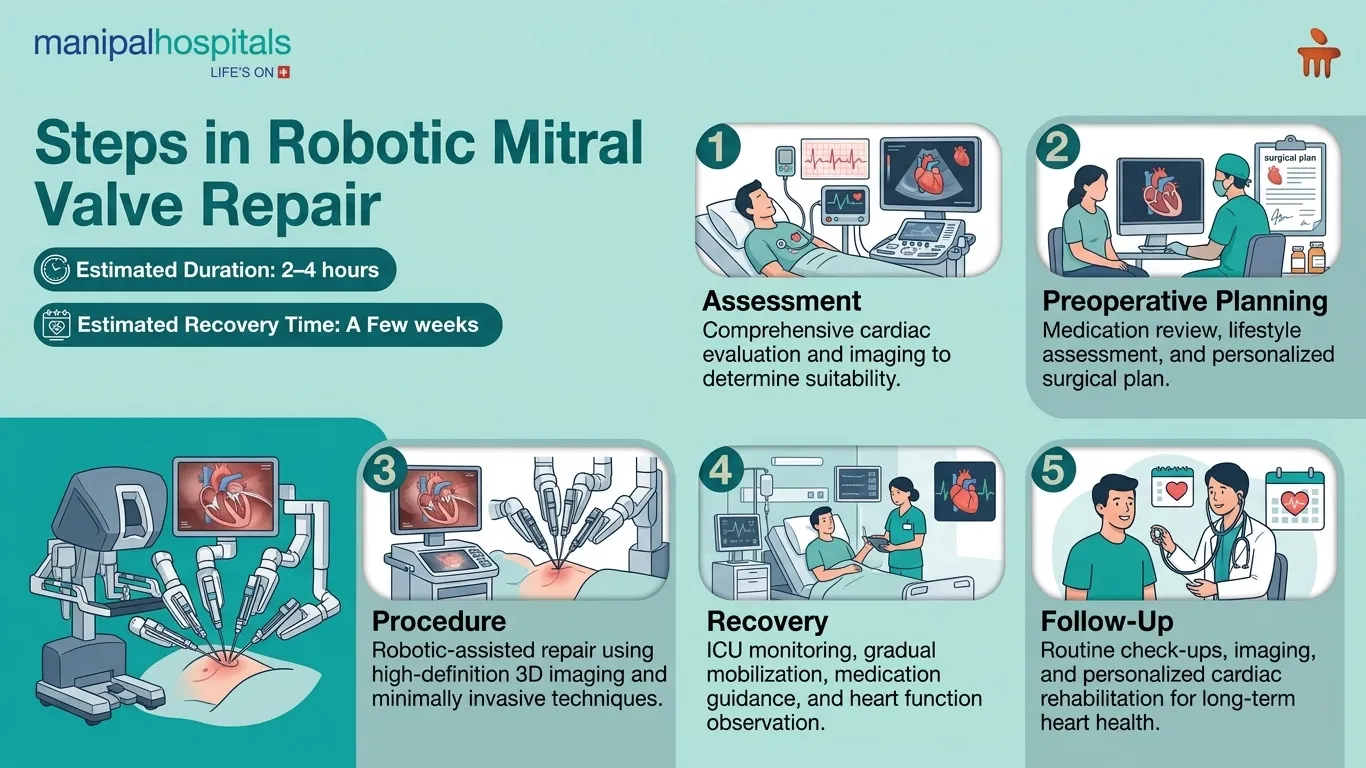
Mitral valve procedures at Manipal Hospitals begin with a detailed cardiac evaluation, including echocardiography, CT scans, and assessment of symptoms. Cardiologists determine whether robotic repair or replacement is most appropriate based on valve structure, severity of regurgitation or stenosis, and overall heart health.
During surgery, small keyhole incisions are made in the chest. Robotic arms and a high-definition 3D camera are inserted through ports, allowing surgeons enhanced visibility and precise instrument control. The surgeon operates from a console, manipulating robotic tools using finely responsive joysticks and pedals. Cardiopulmonary bypass temporarily supports heart and lung function during the procedure.
The damaged mitral valve is repaired through leaflet reshaping, chordal adjustment, or ring fixation or replaced with a mechanical or bioprosthetic valve. Robotic precision helps reduce tissue trauma and enhances surgical accuracy.
Following valve correction, the bypass is gradually withdrawn, incisions are closed, and patients are transferred to the cardiac ICU. Post-operative protocols include pain management, mobilisation guidance, and regular monitoring of heart rhythm and valve function.
Didn’t find what you were looking for?
Request a CallbackBenefits
Choosing robotic mitral valve surgery at Manipal Hospitals offers the following advantages:
-
Smaller incisions with reduced postoperative pain
-
Minimal scarring and quicker healing
-
Lower risk of infections and complications, improving overall safety
-
High surgical precision enabling durable valve repair
-
Faster recovery with shorter hospital stays
-
Continuous monitoring and coordinated cardiac care throughout treatment
What to Expect
Consultation and Diagnosis
Cardiac specialists perform comprehensive assessments, including echocardiography and advanced imaging, to confirm suitability for mitral valve replacement surgery in India. Symptoms, valve function, comorbidities, and treatment options are reviewed in detail.
Pre-treatment Planning
Patients receive guidance on fasting, medication adjustments, and pre-operative tests. Education sessions explain surgical steps and expected recovery.
Treatment Phase
Robotic or minimally invasive valve repair/replacement is performed under general anaesthesia. Surgeons use small chest incisions and robotic assistance for precise leaflet correction or valve replacement while cardiopulmonary bypass maintains circulation.
Recovery Room / Monitoring
Patients are transferred to the cardiac ICU for close monitoring of vital signs, rhythm stability, pain control, and early mobilisation.
Hospital / Clinic Visits
A typical stay lasts 3–5 days, followed by outpatient visits to assess valve function, wound healing, and medication response.
Physical and Supportive Therapy
Breathing exercises, cardiac rehabilitation, and supervised mobility support improve stamina and recovery.
Follow-ups
Routine cardiology reviews, echocardiograms, and long-term heart-health guidance ensure stable recovery and optimal valve performance.
Why Manipal Hospitals?
Manipal Hospitals is recognised for its expertise in robotic and minimally invasive cardiothoracic Procedures. Experienced surgeons perform complex valve repairs using advanced robotic consoles, 3D imaging systems, and precision-guided instruments. These technologies support enhanced visibility, reduced trauma, and durable long-term outcomes.
The hospital’s cardiac units integrate cath labs, hybrid operating theatres, and advanced monitoring systems to ensure seamless care from diagnosis through rehabilitation. Multidisciplinary teams, comprising cardiologists, anaesthetists, intensivists, and rehabilitation specialists, create customised plans suited to each patient’s clinical needs.
With a strong legacy in cardiac surgery and high-volume expertise in minimally invasive mitral valve surgery in India, Manipal Hospitals delivers advanced care. It offers safe, reliable, and future-ready treatment pathways for patients requiring valve correction.
Centre of Excellence
The Cardiothoracic Surgery Department at Manipal Hospitals manages heart valve conditions, including mitral regurgitation and stenosis. Specialists perform robotic, minimally invasive, and open procedures for adults and children. Equipped with advanced technology and skilled teams, the department ensures safe surgical outcomes and structured postoperative care. Comprehensive cardiac rehabilitation supports long-term recovery and improved heart function.
Services Offered
Manipal Hospitals offers a complete range of cardiothoracic services, including:
-
Robotic mitral valve repair and replacement for precise correction
-
Minimally invasive mitral procedures with reduced recovery time
-
Coronary artery bypass grafting for improved heart function
-
Congenital heart defect correction for paediatric and adult cases
-
Vascular and peripheral interventions for circulatory conditions
-
Structured cardiac rehabilitation with long-term follow-up support
Facilities & Services
State-of-the-art cardiac care at Manipal Hospitals includes:
-
State-of-the-art robotic surgical consoles supporting precise valve procedures
-
3D imaging and precision guidance systems for enhanced accuracy
-
Modern cath labs for diagnostic and interventional cardiology
-
Dedicated cardiac ICUs with continuous monitoring
-
Multidisciplinary cardiac teams offering holistic support
-
Post-operative rehabilitation and structured recovery pathways for long-term heart health
Frequently Asked Questions
Mitral valve repair reshapes the leaflets or chordae to preserve the natural valve function. Mitral valve replacement involves the insertion of a mechanical or bioprosthetic valve. Repair is preferred over the use of lifelong anticoagulation when the valve structure allows for correction.
Patients usually remain in the hospital for 3–5 days after surgery. Light activities resume within two weeks, while full recovery typically takes 4–8 weeks with cardiac rehabilitation and regular follow-up assessments.
Patients with severe mitral regurgitation or stenosis may develop breathlessness, fatigue, or palpitations. Surgery is advised when symptoms worsen, heart function declines, or medical therapy no longer provides adequate control. This helps prevent further complications and improves long-term cardiac health.
Patients undergo imaging, blood tests, and medication review before surgery. They must fast overnight and inform the medical team about allergies, current treatments, or any previous cardiac procedures to ensure safe anaesthesia planning and optimal surgical preparation.
Yes. Robotic systems enable small incisions, precise movements, and fewer complications. Manipal Hospitals utilise these techniques for precise mitral valve surgery in India with strong long-term results to enhance safety.
Consult our Experts



You’re on Our Indian Website
Visit the Global site for International patient services
'Click' to chat with us
