1.webp "Robotic Knee Replacement Surgery in India | Manipal Hospitals")
Robotic-Assisted Total Knee Replacement
Manipal Hospitals offers minimally invasive knee replacement surgery in India through its Orthopaedics Department. Using robotic assistance, expert surgeons provide precise joint resurfacing and implant positioning, minimising tissue trauma and promoting quicker recovery. Patients can benefit from advanced Robotic-Assisted Total Knee Replacement Surgery, which helps reduce pain, shorten hospitalisation, and improve outcomes. Manipal Hospitals provides reliable orthopaedic care for knee replacement surgery across major Indian cities, ensuring accessible and standardised treatment options.
Hospital Locations
-

Old Airport Road - Bengaluru
-
.webp)
Mysuru
-

Mangaluru
-
Dwarka - Delhi NCR
-

Patiala
-

Jaipur
-

Vijayawada
-

Salem
-
Kharadi - Pune
-

Salt Lake - Kolkata
-

Bhubaneswar
-

Siliguri
-

Ranchi
How It Works
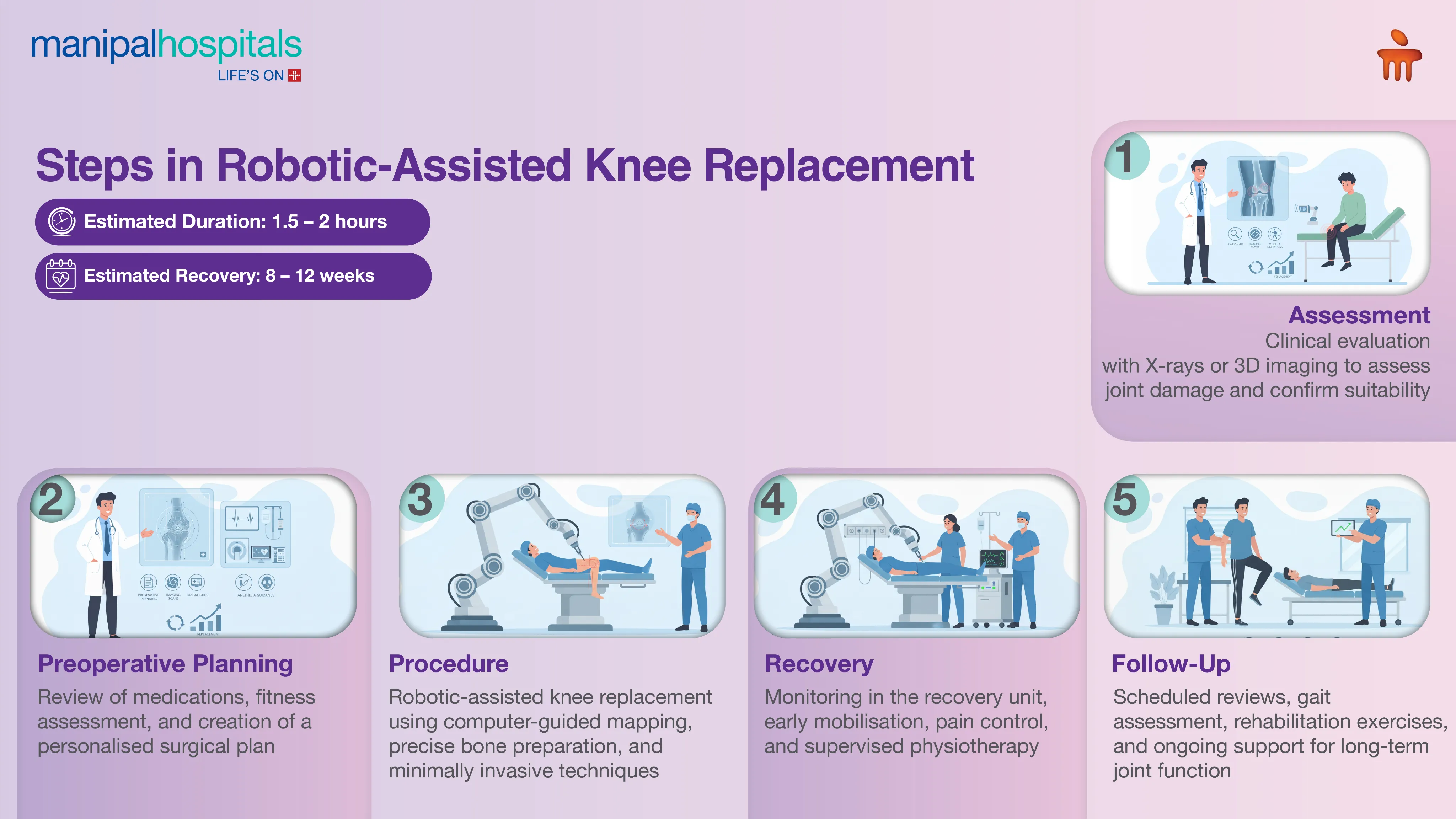
The process begins with a detailed orthopaedic evaluation that includes clinical assessment, imaging, and digital planning. Surgeons study the extent of arthritis or joint damage. A personalised plan is prepared according to mobility and symptoms. Advanced 3D imaging enables the precise mapping of the knee joint, supporting accurate surgical preparation.
During the procedure, robotic-assisted technology guides the surgeon to make precise bone cuts and accurately align the implant. Small incisions are used to reduce tissue disruption and support quicker healing. Real-time computer feedback ensures proper implant placement and natural joint movement. Strict aseptic measures lower the risk of infection and improve surgical safety.
After surgery, the patient is monitored in a recovery area until stable. Early mobilisation begins under the supervision of physiotherapists, who guide gentle exercises to restore movement and reduce stiffness. A personalised rehabilitation plan follows, focusing on strengthening, balance training, and improving walking patterns. Regular clinical reviews and tele-consultation support help track progress, address concerns, and adjust therapy when needed.
Coordinated care across evaluation, surgery, and rehabilitation ensures patients receive continuous support. This structured approach improves comfort, supports recovery, and contributes to long-term joint function after knee replacement surgery.
Didn’t find what you were looking for?
Request a CallbackBenefits
Choosing Robotic-Assisted Knee Replacement at Manipal Hospitals provides the following benefits:
-
Robotic-assisted techniques ensure improved accuracy and precise joint alignment.
-
Patients experience less post-operative pain because the procedure uses smaller incisions.
-
The hospital stay is shorter, allowing a quicker return to daily activities.
-
Personalised rehabilitation plans support safe, steady, and long-term recovery.
What to Expect
Consultation and diagnosis
A detailed clinical examination and imaging studies help assess joint damage and guide treatment decisions. Surgeons explain findings and discuss suitable options based on symptoms and mobility needs.
Preoperative preparation
Fitness assessments, medication reviews, and lifestyle recommendations prepare the patient for surgery. These steps help reduce risks and support a smoother recovery process.
Surgery day
Minimally invasive knee replacement surgery is performed using robotic guidance, ensuring accurate bone preparation and implant placement. Smaller incisions help minimise tissue disruption.
Recovery room monitoring
After surgery, vital signs, pain levels, and movement responses are monitored to ensure the patient is stable and comfortable.
Hospital stay
Minimally invasive techniques contribute to shorter hospital stays, allowing patients to begin recovery sooner.
Physical therapy
Early mobilisation starts under guided physiotherapy to restore knee movement, reduce stiffness, and promote steady walking patterns.
Follow-up appointments
Continuous reviews track healing after the procedure, and adjustments are made to the recovery plan when needed.
Long-term recovery
Strengthening exercises, gait training, and periodic clinical evaluations support joint longevity and restore daily function.
Why Manipal Hospitals?
Manipal Hospitals has a long-standing reputation for excellence in joint replacement care. The hospital has introduced robotics for knee replacement over the years as part of its commitment to innovation and enhanced patient care. The Orthopaedics Department uses modern robotic systems and advanced surgical suites to support accurate procedures and consistent outcomes. Skilled orthopaedic surgeons work with dedicated nursing and rehabilitation teams to deliver coordinated treatment plans. The availability of digital planning tools, sterile operating environments, and in-house physiotherapy strengthens the overall surgical pathway. These combined strengths make Manipal Hospitals a dependable choice for Robotic-Assisted Total Knee Replacement Surgery in India. The hospital ensures safe and effective care from evaluation to recovery.
Centre of Excellence
The Orthopaedics Department at Manipal Hospitals offers comprehensive care for joint disorders using minimally invasive and robotic-assisted techniques. The team specialises in managing knee, hip, and joint replacement procedures with a special focus on restoring mobility and alleviating pain. Personalised plans and structured rehabilitation support long-term joint function and overall health.
Services Offered
Manipal Hospitals offers a wide range of key orthopaedic services, including:
-
Robotic-assisted total knee replacement
-
Minimally invasive hip replacement
-
Revision joint arthroplasty
-
Patient-specific and computer-guided implant procedures
-
Multidisciplinary pain management
-
Structured rehabilitation and long-term follow-up
These services ensure precise, safe, and coordinated care for a wide spectrum of joint conditions.
Facilities & Services
Manipal Hospitals offers a wide range of advanced orthopaedic facilities and services, including:
-
Robotic surgical theatres
-
High-precision imaging and planning systems
-
Sterile recovery and monitoring units
-
In-house physiotherapy centres
-
Multidisciplinary care teams for pain and infection prevention
-
On-site diagnostics and telemedicine options for post-discharge support
These facilities ensure a smooth and comfortable care experience.
Frequently Asked Questions
Minimally invasive knee replacement surgery uses a smaller incision to reduce soft tissue disruption around the knee. Surgeons may use advanced tools or robotic systems to improve precision, minimise pain, and promote faster recovery.
Robotic systems guide surgeons in making accurate bone cuts and positioning the implant. This improves joint alignment, reduces wear, and helps achieve a more natural range of motion after surgery.
Most patients have a shorter stay due to minimally invasive techniques and early mobilisation. Discharge usually follows once pain is controlled and safe walking ability is achieved with physiotherapy support.
Rehabilitation for minimally invasive knee replacement surgery includes guided physiotherapy, strengthening exercises, and movement training. These sessions improve flexibility and support steady recovery. Adherence to the treatment plan helps protect the new joint.
Eligibility for patients seeking minimally invasive knee replacement surgery in India depends on joint condition, severity of arthritis, age, and general health. A complete orthopaedic evaluation helps determine suitability for robotic-assisted procedures.
Consult our Experts



You’re on Our Indian Website
Visit the Global site for International patient services
'Click' to chat with us
