
Robotic-Assisted Total Hip Replacement
Manipal Hospitals offers hip joint replacement in India using advanced robotic-assisted techniques for patients with hip joint disorders. The hospital combines minimally invasive robotic technology with expert orthopaedic surgeons to ensure precision, optimal implant alignment, faster recovery, and improved joint function. Care pathways include detailed assessment, preoperative planning, robotic surgery, and structured postoperative rehabilitation. Patients receive personalised guidance on medications, mobility, physiotherapy, and lifestyle adjustments. Digital monitoring tracks recovery progress, while multidisciplinary coordination ensures safe rehabilitation, long-term mobility, and excellent outcomes.
Hospital Locations
-

Old Airport Road - Bengaluru
-
.webp)
Mysuru
-

Mangaluru
-

Dwarka - Delhi NCR
-

Patiala
-

Jaipur
-

Vijayawada
-

Salem
-

Salt Lake - Kolkata
-

Baner - Pune
-

Bhubaneswar
-

Siliguri
-

Ranchi

How It Works
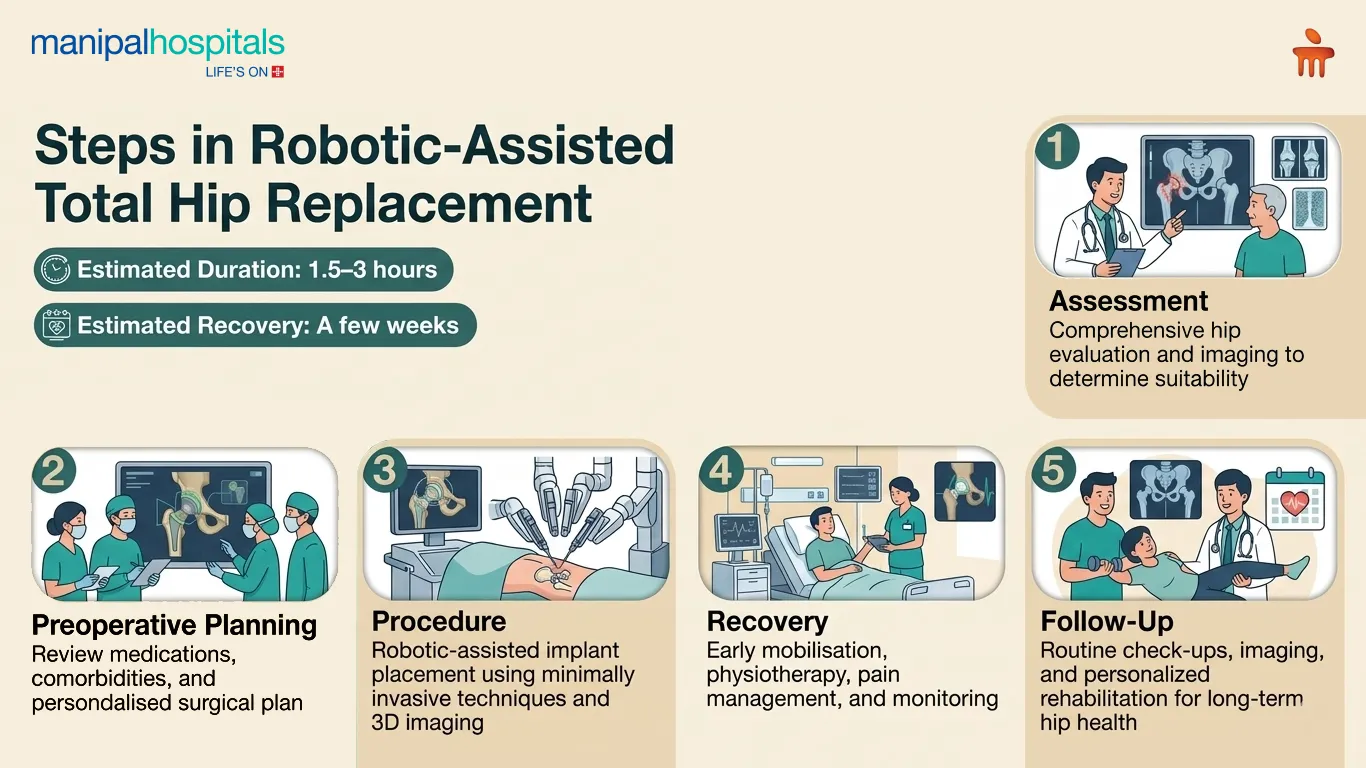
Robotic-Assisted Total Hip Replacement at Manipal Hospitals begins with a thorough preoperative evaluation. Orthopaedic surgeons assess joint function using X-rays, CT scans, and 3D imaging to determine suitability. Surgical goals, potential risks, and recovery expectations are discussed. Preoperative planning includes reviewing medications, comorbidities, lifestyle factors, and individual anatomy to provide a personalised, safe approach.
On the day of surgery, patients undergo minimally invasive robotic-assisted total hip replacement surgery in India at Manipal Hospitals through small incisions. Surgeons use robotic arms and high-definition 3D imaging to remove damaged joint components and accurately position the implant. The robotic system improves precision, ensures optimal implant alignment, reduces soft tissue trauma, and lowers complications compared to conventional procedures.
After surgery, patients are closely monitored in a post-orthopaedic recovery unit. Recovery protocols include pain management, early mobilisation with physiotherapy, and personalised rehabilitation plans. Follow-up consultations, imaging, and gait assessments evaluate outcomes. This structured approach ensures patients benefit from advanced technology, expert surgeons, and comprehensive care.
Didn’t find what you were looking for?
Request a CallbackBenefits
Choosing Robotic-Assisted Total Hip Replacement at Manipal Hospitals provides:
-
Minimally invasive procedure with precise implant placement and reduced tissue trauma
-
Reduced postoperative pain, swelling, and scarring
-
Faster recovery with early mobilisation and return to daily activities
-
Improved joint function, alignment, and long-term mobility
-
Coordinated care from orthopaedic surgeons, physiotherapists, and rehabilitation teams
-
Personalised post-surgery guidance for safe recovery and optimal hip function
-
Structured follow-up and digital monitoring to track progress and ensure long-term outcomes
What to Expect
Consultation and Diagnosis
Detailed hip assessment using X-rays, CT scans, and physical evaluation. Orthopaedic surgeons explain suitability, surgical goals, potential risks, and expected outcomes. Patient questions are addressed thoroughly.
Preoperative Preparation
Blood tests, medication review, physiotherapy preparation, and lifestyle counselling. Patients receive guidance on fasting, pre-surgery routines, and mobility planning for a smooth procedure.
Surgery Day
Robotic-assisted hip joint replacement surgery in India is performed through small incisions. Surgeons use robotic arms and 3D imaging to ensure accurate implant positioning with minimal soft tissue trauma.
Recovery Room Monitoring
Patients are monitored immediately post-surgery. Vital signs, pain, wound sites, and early mobilisation are closely observed. Pain management is personalised to support comfort.
Hospital Stay
Patients typically stay for a few days. Supervision includes physiotherapy, gradual weight-bearing, and regular assessment of joint stability and function.
Physical Therapy
Structured exercises, gait training, and strength-building programs optimise hip function. Physiotherapists guide patients on safe movement and mobility milestones.
Follow-Up
Regular check-ups with imaging and functional assessment ensure implant alignment, joint function, and early detection of any complications. Patients receive personalised guidance on activity, mobility, and long-term hip care.
Lifestyle Guidance
Education on posture, exercise, joint protection, and gradual return to daily or sports activities ensures long-term joint health and functional recovery after hip joint replacement surgery in India.
Why Manipal Hospitals?
Manipal Hospitals is a premier centre for hip joint replacement, offering advanced robotic-assisted surgery combined with decades of orthopaedic expertise. The hospital features modern robotic operating theatres, hybrid imaging labs, and dedicated rehabilitation units to support precise, minimally invasive procedures.
Experienced orthopaedic surgeons specialising in robotic-assisted total hip replacement work alongside multidisciplinary teams, including anaesthetists, physiotherapists, and nursing staff, to provide coordinated, patient-centred care. Structured preoperative planning, personalised surgical approaches, and detailed post-surgical rehabilitation ensure safe recovery with minimal complications.
Patients receive comprehensive guidance on medications, activity restrictions, physiotherapy, and lifestyle adjustments to maintain long-term hip function. With a strong focus on innovation, clinical excellence, and compassionate care, Manipal Hospitals ensures optimal surgical outcomes, faster recovery, and a smooth, confidence-boosting journey toward improved mobility and overall quality of life.
Centre of Excellence
The Orthopaedics Department at Manipal Hospitals specialises in joint care, including robotic-assisted hip replacement in India. Expert surgeons provide comprehensive diagnostics, minimally invasive procedures, and personalised rehabilitation plans. Multidisciplinary teams focus on early mobilisation, pain management, and restoring functional mobility. The department also supports preoperative education, gait training, and structured post-surgical monitoring for optimal outcomes and patient confidence.
Services Offered
Manipal Hospitals offers a wide range of orthopaedic and hip joint care services:
-
Robotic-assisted total hip replacement and conventional hip joint replacement surgery
-
Preoperative assessment, advanced imaging, and surgical planning
-
Postoperative physiotherapy and structured rehabilitation programs
-
Pain management, gait training, and mobility optimisation
-
Minimally invasive procedures for complex orthopaedic cases
-
Long-term follow-up with personalised care plans
Facilities & Services
The hospital provides advanced facilities for hip replacement:
-
Robotic-assisted operating theatres for precise implant placement
-
High-definition imaging systems for preoperative planning and intraoperative guidance
-
Intensive post-orthopaedic care and monitoring units
-
Structured physiotherapy and rehabilitation programs for early mobility
-
Digital recovery tracking and personalised patient monitoring
-
Comfortable patient recovery areas and dedicated multidisciplinary support teams
-
Advanced diagnostic tools for comprehensive joint evaluation
Frequently Asked Questions
Robotic-Assisted Total Hip Replacement is a minimally invasive procedure where robotic instruments help surgeons accurately remove damaged hip components and place implants. It ensures precise alignment, reduces tissue trauma, and allows faster recovery compared to traditional surgery.
Patients with arthritis, hip degeneration, injury, or failed prior joint replacements may be suitable. Eligibility depends on overall health, hip function, and assessment by an orthopaedic specialist to ensure optimal outcomes.
Recovery is faster than conventional surgery. Most patients gradually resume daily activities within weeks, supported by physiotherapy, pain management, and personalised rehabilitation. Long-term follow-up ensures safe mobility, proper implant function, and sustained hip health.
Risks include infection, bleeding, implant loosening, or anaesthesia complications. Robotic-assisted procedures minimise tissue trauma, shorten hospital stay, and reduce overall complications. Structured preoperative planning and close monitoring help manage potential risks effectively.
Robotic-assisted hip replacement provides a minimally invasive alternative to conventional surgery. It ensures precise implant alignment, faster recovery, reduced scarring, and long-term hip function while delivering outcomes comparable to traditional hip joint replacement surgery in India.
Consult our Experts



You’re on Our Indian Website
Visit the Global site for International patient services
'Click' to chat with us
