
Orthotopic Liver Transplant
Manipal Hospitals offers advanced orthotopic liver transplant in India through its specialised Liver Transplant and Hepatobiliary Surgery units. This procedure replaces a diseased liver with a healthy donor liver positioned in the same anatomical location. Transplant teams utilise modern surgical techniques, strict clinical protocols, and coordinated multidisciplinary care to ensure safe and effective transplantation. The hospital provides comprehensive pre- and post-operative support to promote improved outcomes and long-term recovery.
Hospital Locations
-

Old Airport Road - Bengaluru
-
.webp)
Mysuru
-

Mangaluru
-
Dwarka - Delhi NCR
-

Patiala
-

Jaipur
-

Vijayawada
-

Salem
-

Salt Lake - Kolkata
-

Baner - Pune
-

Bhubaneswar
-

Siliguri
-

Ranchi

How It Works
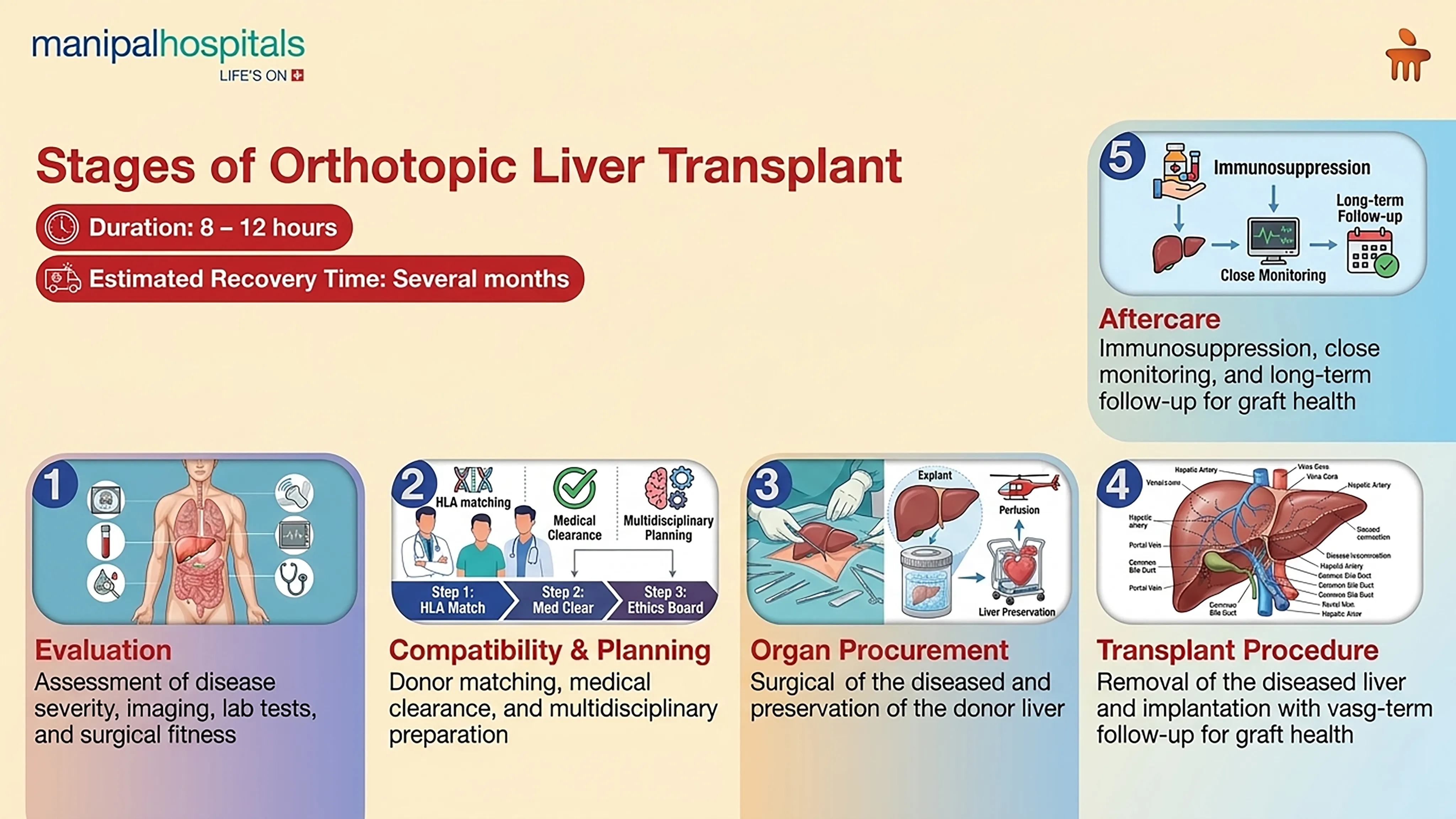
Orthotopic liver transplantation at Manipal Hospitals follows a structured, multidisciplinary process to ensure patient safety and successful graft function. The recipient undergoes a complete medical evaluation, which includes imaging, laboratory tests, and assessment of liver disease severity. Donor selection involves compatibility screening, liver function tests, and medical fitness evaluation.
Surgeons use the orthotopic liver transplant technique, which involves removing the diseased liver and implanting the donor liver in the same anatomical position. Vascular and biliary connections are reconstructed with precision under high magnification. Throughout the procedure, anaesthesia teams monitor coagulation, blood flow, and stability.
After surgery, patients receive intensive care unit monitoring to ensure graft function, haemodynamic stability, and infection prevention. Immunosuppressive therapy begins early to prevent rejection. Hepatologists, surgeons, and critical care specialists manage nutrition, medication, and early rehabilitation.
Regular imaging and laboratory tests track graft health and detect complications promptly. Long-term recovery includes lifestyle guidance, physiotherapy, psychological support, and structured follow-up visits to maintain liver health and ensure stable long-term outcomes.
Didn’t find what you were looking for?
Request a CallbackBenefits
Patients benefit from orthotopic liver transplant services at Manipal Hospitals through:
-
Advanced surgical methods that support safe and precise transplantation
-
Skilled multidisciplinary teams experienced in complex liver procedures
-
Structured care from assessment to full rehabilitation
-
Significant improvement in the quality of life for end-stage liver disease
-
Ethical donor management with strict adherence to national guidelines
What to Expect
Consultation and Diagnosis
Patients begin with a detailed assessment of liver disease severity, overall surgical fitness, and associated medical conditions.
Pre-Operative Preparation
Nutritional optimisation, infection screening, and cardiac evaluation are performed to improve readiness for surgery.
Surgery Day
The procedure involves removing the diseased liver using the latest orthotopic liver transplant technique in India, followed by precise implantation of the donor liver. Surgeons perform vascular and biliary reconstructions with meticulous accuracy, adhering to advanced standards used in modern orthotopic liver transplantation.
Recovery Room Monitoring
Patients are transferred to a specialised transplant ICU for continuous monitoring of graft function, vital signs, and wound healing.
Hospital Stay
Care includes frequent liver function tests, infection prevention, and gradual mobilisation. Patients receive instructions on medication schedules, diet, hydration, and activity restrictions before discharge.
Physical Therapy
Structured exercises help enhance respiratory capacity, strength, and mobility to support safe rehabilitation.
Follow-Up Appointments
Regular visits include blood tests, imaging, and medical reviews to adjust immunosuppressive medication and monitor long-term graft health.
Long-Term Recovery
Patients receive lifestyle counselling, diet guidance, and ongoing surveillance to maintain graft longevity and prevent complications, supporting long-term well-being.
Why Manipal Hospitals?
Manipal Hospitals is recognised as a leading centre for complex liver transplantation, supported by experienced hepatobiliary surgeons, skilled anaesthesiologists, and specialised transplant coordinators. The hospital utilises the advanced surgical practices, modern postoperative care systems and the latest orthotopic liver transplant technique in India to ensure safe outcomes. Equipped operating theatres, dedicated transplant ICUs, and high-end imaging systems support all stages of liver transplantation.
Patients receive structured evaluation, ethical donor management, and long-term monitoring programmes designed to maintain stable graft function. The hospital also provides nutritional support, rehabilitation services, and psychological counselling to improve recovery. With its integrated approach and strong clinical expertise, Manipal Hospitals is a trusted destination for high-quality transplant care.
Centre of Excellence
The Liver Transplant and Hepatobiliary Surgery Department at Manipal Hospitals manages complex liver conditions, including cirrhosis, acute liver failure, and liver cancer. The team performs advanced liver transplants and biliary surgeries using modern surgical techniques. A multidisciplinary approach ensures seamless coordination of pre- and post-operative care, providing safe and comprehensive treatment for every patient.
Services Offered
Patients undergoing orthotopic liver transplantation at Manipal Hospitals benefit from a wide range of specialised services, including:
-
Orthotopic liver transplant performed using organs from deceased or living donors
-
Detailed pre- and post-transplant evaluation to ensure medical readiness
-
Personalised immunosuppressive therapy planning and close monitoring
-
Advanced hepatobiliary reconstructive surgery for complex anatomical needs
Facilities & Services
Manipal Hospitals provides comprehensive infrastructure and specialised units to support safe and effective orthotopic liver transplantation, including:
-
Equipped operating theatres with real-time imaging
-
Dedicated transplant ICUs with continuous monitoring
-
Organ preservation and compatibility testing laboratories
-
Multidisciplinary clinics integrating surgical and hepatology care
-
Counselling and rehabilitation units to support recovery after transplantation
Frequently Asked Questions
An orthotopic liver transplant replaces a diseased liver with a healthy donor liver positioned in the same anatomical location. This restores essential liver functions and supports long-term recovery for patients with severe or end-stage liver disease.
Candidates include individuals with end-stage liver disease, liver cancer, or acute liver failure who meet medical fitness criteria. They must undergo a detailed evaluation to confirm suitability, assess risks, and ensure they can safely benefit from an orthotopic liver transplant.
The procedure involves removing the native liver and replacing it with a healthy donor liver. Surgeons perform precise vascular and biliary reconstructions under controlled surgical conditions to ensure proper blood flow and bile drainage for successful graft function.
Yes. A portion of a healthy liver from a living donor can be transplanted, as the liver has the unique ability to regenerate after donation. Both the donor and recipient typically experience gradual restoration of liver volume and function during recovery.
Recovery time after an orthotopic liver transplant in India includes an initial hospital stay. This is followed by several months of rehabilitation, medication management, and regular monitoring of graft function.
Consult our Experts



You’re on Our Indian Website
Visit the Global site for International patient services
'Click' to chat with us
