
Multi-Organ Robotic-Assisted Cancer Surgeries
Manipal Hospitals leads the way in precision oncology, offering robotic cancer surgery in India to treat complex malignancies across multiple organs effectively. The hospital utilises advanced robotic surgical systems that allow surgeons to operate with enhanced precision, control, and high-definition visualisation. Care pathways involve multidisciplinary tumour board reviews, personalised surgical planning, and comprehensive rehabilitation protocols. Patients receive detailed guidance on pre-surgical preparation and post-operative recovery. Digital integration ensures seamless communication between teams, facilitating holistic cancer management and improved survival outcomes.
Hospital Locations
-
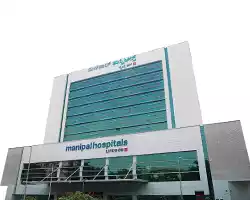
Old Airport Road - Bengaluru
-
.webp)
Mysuru
-
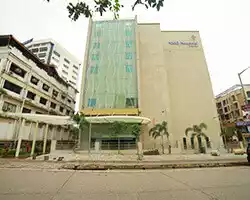
Mangaluru
-
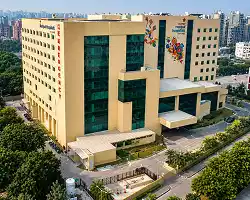
Dwarka - Delhi NCR
-

Patiala
-

Jaipur
-
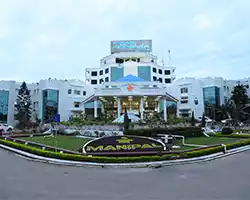
Vijayawada
-
Salem
-

Salt Lake - Kolkata
-

Baner - Pune
-
Bhubaneswar
-

Siliguri
-

Ranchi

How It Works
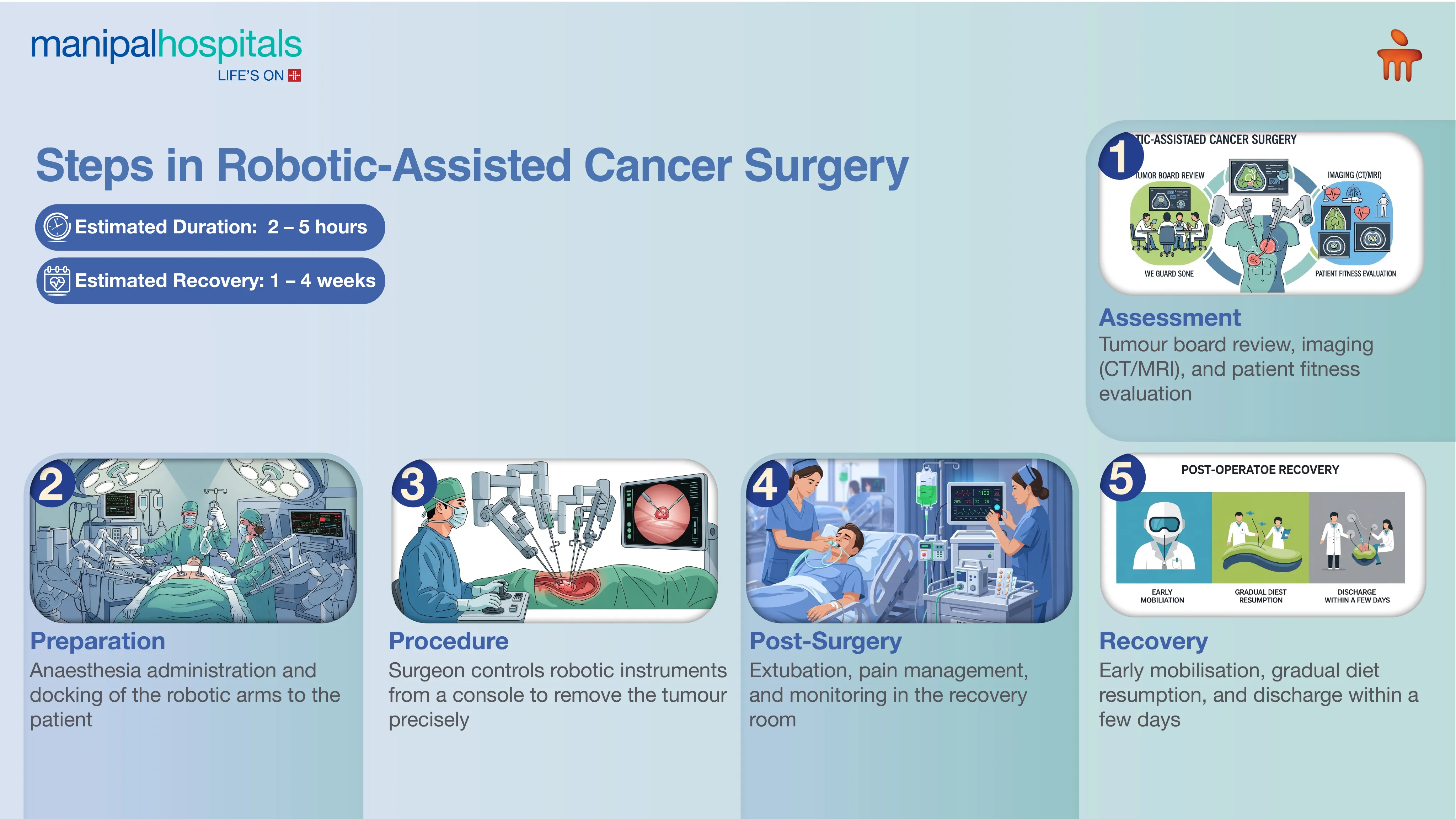
The process begins with a detailed evaluation by a surgical oncologist and a tumour board review to determine the best approach. High-resolution imaging maps the tumour's location for precise surgical planning. Once cleared, the patient undergoes general anaesthesia in a specialised operating suite. The surgeon controls the robotic arms equipped with miniaturised instruments and a 3D high-definition camera.
During the procedure, the surgeon's hand movements are translated into precise micro-movements inside the patient's body. This advanced robotic surgery for cancer in India at Manipal Hospitals allows for the removal of tumours from hard-to-reach areas. It minimises damage to surrounding healthy tissues. The system filters out hand tremors, ensuring steady and accurate incisions. The multi-quadrant capability of the robot allows surgeons to operate on different organs in the same session without repositioning the patient.
After the surgery, the small incisions are closed with sutures. The minimally invasive approach results in less blood loss and reduced pain. Patients are monitored in the recovery room before being shifted to the ward, where specialised nursing staff support their rapid return to normal functions.
Didn’t find what you were looking for?
Request a CallbackBenefits
Choosing Multi-organ Robotic Surgery at Manipal Hospitals provides the following benefits:
-
Minimally invasive approach with smaller incisions and less scarring
-
Superior precision in removing tumours while preserving healthy tissue
-
Significantly reduced blood loss and lower risk of infection
-
Faster recovery time and shorter hospital stay compared to open surgery
-
Reduced post-operative pain and reliance on pain medication
-
Ability to perform complex multi-organ surgeries in a single session
What to Expect
Consultation and Diagnosis
Patients meet with a surgical oncologist to discuss the cancer diagnosis. The team explains the robotic technology, surgical goals, and expected outcomes.
Pre-Operative Preparation
Routine blood tests, cardiac clearance, and imaging are conducted. Patients are counselled on fasting, medication adjustments, and breathing exercises.
Surgery Day
The patient is prepared in the pre-operative holding area. Anaesthesia is administered, and the robotic system is set up for the specific procedure.
During the Surgery
The surgeon operates using the robotic console. The 3D view ensures higher precision and control. The team monitors vital signs continuously to ensure safety.
Immediate Post-Surgery
Patients wake up in the recovery room. Pain is managed effectively. Tubes or drains may be present but are usually removed quickly.
Hospital Stay
Mobilisation starts as early as the same day. Nurses assist with walking and diet. The stay is typically shorter than traditional surgery.
Follow-Up
A post-discharge visit checks healing and pathology results. Further treatments like chemotherapy are planned if necessary, based on the final report.
Why Manipal Hospitals?
Manipal Hospitals is a premier destination for advanced surgical oncology, combining clinical expertise with state-of-the-art robotic infrastructure. The facility is equipped with the latest robotic systems, enabling surgeons to perform complex multi-organ resections with unmatched precision.
A collaborative team of oncologists, radiologists, and specialised nurses ensures that every robotic surgery for cancer in India performed here adheres to global safety protocols. Patients benefit from reduced hospital stays, lower complication rates, and faster recovery times. The hospital prioritises patient-centric care, offering comprehensive support from diagnosis through rehabilitation. They focus on innovation, infection control, and superior clinical outcomes. Also, Manipal Hospitals provides the advanced technological edge needed for effective cancer treatment and a better quality of life.
Centre of Excellence
The Surgical Oncology Department at Manipal Hospitals excels in the management of solid tumours using advanced robotic techniques. Expert teams of surgeons and oncologists work together to devise organ-preserving strategies. The department focuses on precision, reduced morbidity, and faster rehabilitation. It is supported by modern infrastructure and a commitment to utilising minimally invasive methods for superior patient outcomes.
Services Offered
Manipal Hospitals offers a wide range of robotic surgical services, including:
-
Robotic radical prostatectomy and partial nephrectomy
-
Robotic hysterectomy and myomectomy for gynaecological cancers
-
Robotic colorectal and gastrointestinal cancer resections
-
Transoral robotic surgery (TORS) for head and neck cancers
-
Robotic thoracic surgery for lung and oesophageal tumours
-
Comprehensive post-surgical rehabilitation and pain management
Facilities & Services
The hospital provides advanced surgical facilities, including:
-
Advanced 3D high-definition visualisation technology
-
Specialised Surgical Intensive Care Units (SICU)
-
Integrated digital operating rooms for real-time data access
-
24/7 anaesthesia and critical care support teams
-
Comfortable private recovery rooms and wards
-
Expert nursing staff trained in robotic surgical care
-
Central sterile services department for infection control
Frequently Asked Questions
It is a minimally invasive technique where surgeons use a robotic system to remove tumours from multiple organs in one procedure. It allows for better precision, control and faster recovery.
Patients with early to mid-stage solid tumours are often eligible. Suitability depends on tumour size and location. An oncologist determines if robotic cancer surgery is the safest option for the patient.
Recovery is significantly faster than open surgery. Most patients experience lesser procedural pain and mobilise within a day. Discharge often happens within a few days, allowing a quicker return to daily routines.
Risks may include infection or bleeding, and in rare cases, conversion to open surgery. Expert surgeons minimise risks through precise planning and continuous monitoring, enabling better outcomes for robotic cancer surgery in India.
Yes, the hospital welcomes international patients based on suitability. It provides visa assistance and dedicated coordinators. The facility offers world-class treatment standards, making it a preferred choice for advanced medical care globally.
Consult our Experts



You’re on Our Indian Website
Visit the Global site for International patient services
'Click' to chat with us
