
Minimally Invasive Coronary Artery Bypass
Manipal Hospitals offers advanced cardiac care for patients requiring coronary artery bypass procedures performed through smaller incisions. As a centre for minimally invasive cardiac surgery in India, the hospital provides detailed evaluation for patients with blocked coronary arteries. The minimally invasive coronary artery bypass technique allows surgeons to restore blood flow to the heart while reducing pain. With structured assessment and multidisciplinary support, Manipal Hospitals ensures each patient receives personalised guidance and a comfortable treatment journey.
Hospital Locations
-

Old Airport Road - Bengaluru
-
.webp)
Mysuru
-

Mangaluru
-
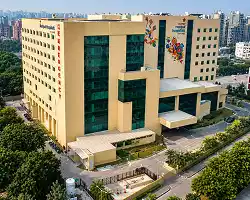
Dwarka - Delhi NCR
-

Patiala
-

Jaipur
-

Vijayawada
-

Salem
-

Salt Lake - Kolkata
-

Baner - Pune
-

Bhubaneswar
-

Siliguri
-

Ranchi

How It Works
Patients can expect a structured, carefully planned, and stepwise process designed to ensure safety and optimal surgical outcomes.
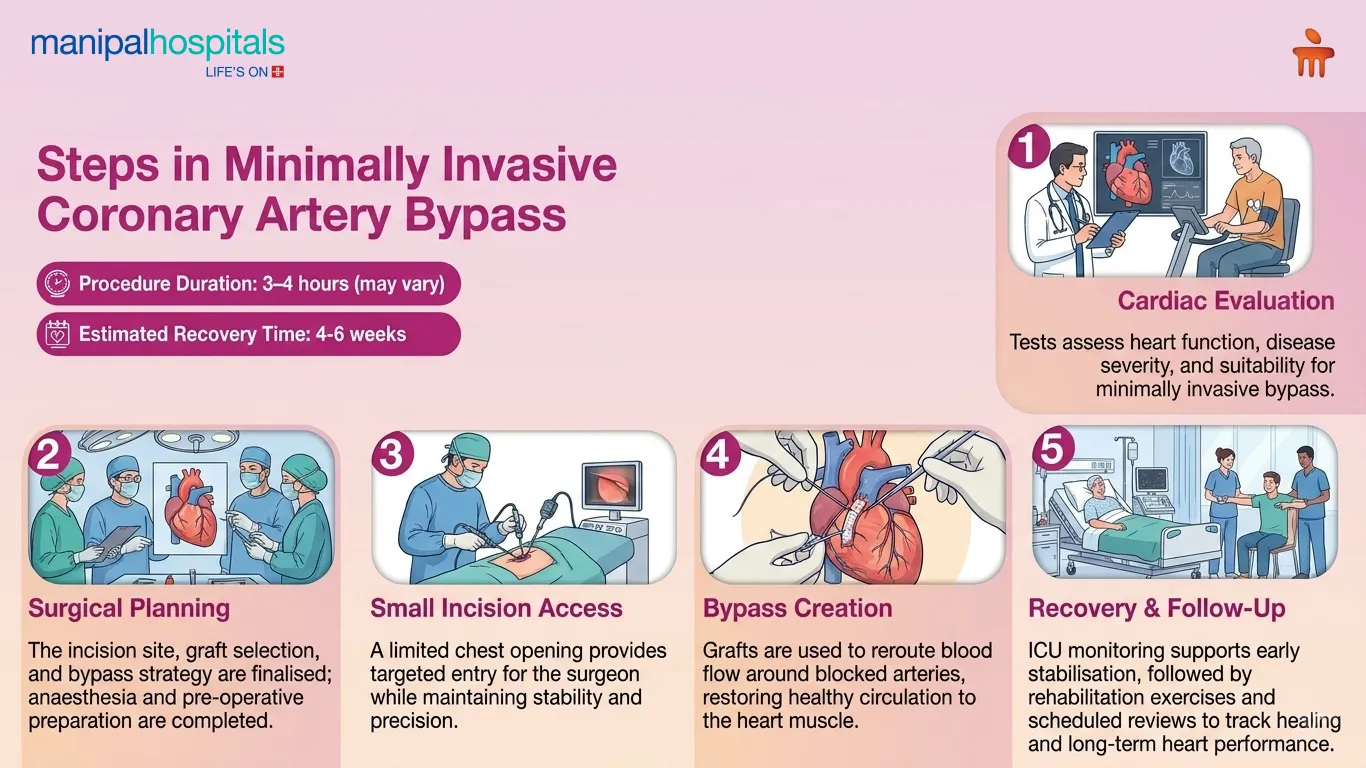
Minimally invasive coronary artery bypass surgery is performed through small incisions in the chest. These small openings allow surgeons to access blocked coronary arteries without opening the entire breastbone. At Manipal Hospitals, the process begins with a detailed cardiac evaluation that includes echocardiography, angiography, and risk assessment. This helps determine whether the patient is suitable for advanced techniques used in minimally invasive heart surgery in India.
Once cleared for surgery, patients receive pre-operative guidance on medications, lifestyle adjustments, and preparation steps. On the day of surgery, anaesthesia is administered, and the surgeon makes a small incision to reach the affected coronary arteries. Special instruments and high-definition imaging systems are used to bypass blockages with precision.
After the procedure, patients are moved to a specialised cardiac recovery unit. Vital signs, heart rhythm, and early healing responses are monitored closely. Pain is usually less compared to traditional bypass surgery due to smaller incisions.
As recovery progresses, patients receive physiotherapy support and guided breathing exercises. They are also provided with wound-care advice and structured follow-up planning to ensure a steady return to daily activities.
Didn’t find what you were looking for?
Request a CallbackBenefits
Minimally invasive coronary artery bypass at Manipal Hospitals provides a safer and less traumatic treatment experience for patients.
-
Smaller incisions lead to reduced pain and faster recovery
-
Lower risk of wound complications compared to traditional surgery
-
Shorter hospital stay and quicker return to activity
-
Precise surgical access with advanced imaging support
What to Expect
Consultation and diagnosis
Before minimally invasive heart surgery in India, patients undergo a comprehensive evaluation, including an ECG, echocardiography, angiography, and a general fitness assessment.
Pre-operative preparation
Pre-surgery instructions include medication review, breathing exercises, nutritional guidance, and information on what to expect on the day of the procedure.
Surgery day
Patients are admitted, and final checks are completed. Anaesthesia is given, and surgeons access the heart through a small chest incision using specialised instruments
Recovery room monitoring
After surgery, patients are shifted to a recovery unit where vital signs, heart rhythm, oxygen levels, and wound sites are closely monitored.
Hospital stay
Most patients spend a shorter duration in the hospital due to reduced trauma. Breathing support, pain control, and wound evaluation are continued during this stage.
Physical therapy
Physiotherapists guide patients through breathing exercises, gradual mobilisation, and chest expansion techniques to support faster healing.
Follow-up appointments
Scheduled reviews help assess recovery progress, adjust medications, and monitor heart function.
Long-term recovery
Patients receive guidance on activity levels, diet, wound care, and lifestyle changes to ensure sustained heart health and stable long-term outcomes.
Why Manipal Hospitals?
Manipal Hospitals is recognised for delivering advanced cardiac care supported by experienced surgeons, modern technology, and carefully structured clinical pathways. The hospital’s cardiac surgery programme has steadily grown to include minimally invasive techniques. These approaches aim to reduce discomfort, shorten recovery time, and improve the overall patient experience. Each case is assessed thoroughly to determine suitability, ensuring that every patient receives a personalised and safe treatment plan.
The cardiac team comprises skilled surgeons, cardiologists, cardiac anaesthetists, intensivists, and rehabilitation specialists who work together throughout the treatment journey. Modern operating theatres, high-definition imaging systems, and advanced monitoring technology support precise surgical performance and consistent outcomes. Specialised cardiac ICUs provide close observation after surgery, allowing early detection of complications.
Rehabilitation plays a key role at Manipal Hospitals. Physiotherapists, nutrition experts, and nursing teams guide patients on breathing exercises, mobility routines, and lifestyle adjustments, helping patients towards complete recovery.
Centre of Excellence
The Cardiothoracic and Vascular Surgery Department at Manipal Hospitals provides specialised care for patients requiring advanced heart and chest procedures. The team includes experienced cardiothoracic surgeons, cardiac anaesthetists, intensivists, and trained nursing staff who manage both routine and complex cardiac surgeries. Modern operating theatres, high-precision imaging systems, and specialised cardiac ICUs support safe surgical planning.
Services Offered
Manipal Hospitals provides a comprehensive range of cardiac services to support patients undergoing minimally invasive coronary artery bypass surgery.
Services include:
-
Detailed cardiac evaluation and diagnostic imaging
-
Suitability assessment for minimally invasive bypass
-
Surgical planning with advanced imaging guidance
-
Minimally invasive coronary artery bypass surgery
-
Specialised cardiac ICU care
-
Pain management and early mobilisation support
Facilities & Services
Manipal Hospitals offers advanced cardiac facilities designed to support safe, precise, and minimally invasive bypass surgery. Each cardiac unit is equipped with technology that enhances surgical accuracy and ensures continuous patient monitoring.
Key facilities and services include:
-
High-definition cardiac imaging systems
-
Modern minimally invasive operating theatres
-
Specialised cardiac ICUs
-
24/7 cardiac monitoring
-
Advanced anaesthesia support
Frequently Asked Questions
Patients with specific types of coronary blockages, stable heart function, and no major chest abnormalities may be suitable. A detailed cardiac evaluation and imaging assessment help determine eligibility for the minimally invasive approach.
Most patients recover within four to six weeks. Smaller incisions lead to reduced pain, quicker mobility, and earlier discharge. Recovery time depends on overall health, heart function, and adherence to rehabilitation guidance.
Pain is usually less than traditional bypass surgery due to smaller incisions. Mild discomfort may occur, but pain control methods, early mobilisation, and guided breathing exercises help improve comfort during the recovery phase.
Risks may include bleeding, infection, rhythm disturbances, or graft-related issues. Continuous monitoring in specialised cardiac ICUs and regular follow-up help detect and manage potential complications effectively and safely, ensuring stable recovery.
At Manipal Hospitals, patients receiving minimally invasive cardiac surgery in India undergo evaluation, surgical planning, and the bypass procedure. This is done through small incisions, cardiac ICU care, pain management, physical rehabilitation, and long-term monitoring to ensure stable recovery.
Consult our Experts



You’re on Our Indian Website
Visit the Global site for International patient services
'Click' to chat with us
