
Living Donor Kidney Transplant
Manipal Hospitals offers advanced living donor kidney transplant in India through its specialised Nephrology and Urology Specialities. This procedure supports patients with end-stage kidney disease by enabling a healthy kidney donation from a medically evaluated living donor. Transplant teams follow strict medical, ethical, and national guidelines to ensure donor safety. With modern surgical facilities, the latest infrastructure, coordinated care, and experienced surgeons, Manipal Hospitals provides safe and reliable kidney transplant pathways.
Hospital Locations
-

Old Airport Road - Bengaluru
-
.webp)
Mysuru
-

Mangaluru
-

Dwarka - Delhi NCR
-

Patiala
-

Jaipur
-

Vijayawada
-

Salem
-

Salt Lake - Kolkata
-

Baner - Pune
-

Bhubaneswar
-

Siliguri
-

Ranchi

How It Works
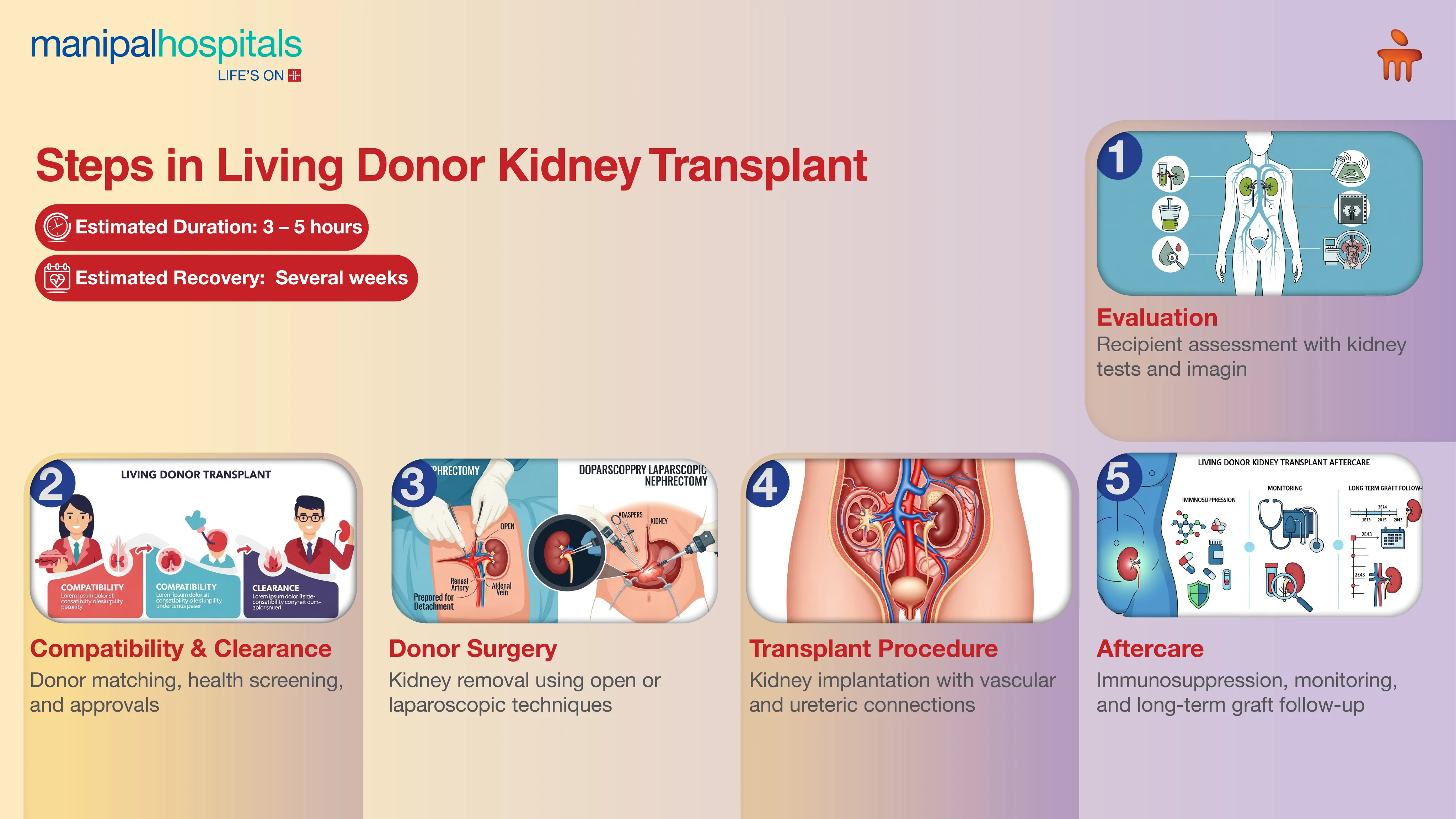
Living donor kidney transplantation at Manipal Hospitals follows a structured and carefully coordinated process. The recipient first undergoes a detailed medical evaluation to confirm suitability for surgery. Donor assessment includes blood group matching, tissue typing, imaging, and overall health checks to ensure compatibility and safety.
Both donor and recipient follow national regulations, including mandatory documentation and authorisation under transplant laws. Surgeons provide counselling regarding the procedure steps, possible risks, and the importance of lifelong medications after kidney transplantation.
The donor nephrectomy is performed through laparoscopic or open techniques under general anaesthesia. The healthy kidney is carefully removed to preserve function. The recipient procedure involves placing the donated kidney in the lower abdomen and connecting the blood vessels and the ureter.
Post-operative care includes monitoring urine output, blood pressure, and kidney function. Immunosuppressive medications are started immediately to prevent rejection. Both donor and recipient receive wound care, infection prevention support, and physiotherapy guidance. A systematic long-term follow-up schedule ensures stable kidney function and overall health for both individuals.
Didn’t find what you were looking for?
Request a CallbackBenefits
Patients undergoing kidney transplantation surgery at Manipal Hospitals benefit from:
-
Reduced waiting time compared to deceased donor transplants
-
Better graft survival and long-term kidney function
-
Faster recovery and improved quality of life post-transplant
-
Safety-focused care pathways for both donor and recipient throughout the treatment journey.
-
Multidisciplinary support, including diet, counselling, and rehabilitation
What to Expect
Consultation and Diagnosis
Patients begin with a detailed evaluation of kidney failure severity, dialysis history, and overall transplant suitability.
Pre-Operative Preparation
Both donor and recipient undergo comprehensive medical tests, cardiac assessments, and infection screening. Legal and ethical documentation is completed in accordance with the national guidelines, and patients receive counselling on anaesthesia, medications, and pre-surgery routines.
Surgery Day
Coordinated procedures are performed for the donor and the recipient. The donor kidney is removed through open or laparoscopic surgery and transplanted into the recipient during the same session. This approach minimises cold ischaemia and optimises graft viability.
Recovery Room Monitoring
After surgery, patients are monitored in a specialised transplant recovery unit. Vital signs, urine output, blood loss, and wound condition are closely observed, while pain relief and early mobilisation are supported.
Hospital Stay
Patients are monitored for kidney function, infection prevention, and healing progress.
Physical Therapy
Mobilisation programmes help improve circulation, prevent clots, and build strength. Breathing exercises and gentle movements support a safe post-operative recovery.
Follow-Up Appointments
Regular reviews with blood tests are scheduled to monitor graft function and adjust immunosuppressive medicines.
Why Manipal Hospitals?
Manipal Hospitals is recognised as a trusted centre for kidney transplantation, offering holistic services aligned with national protocols and ethical standards. The kidney transplant surgery in India is supported by teams of nephrologists, urologists, anaesthesiologists, and trained transplant coordinators who work in an integrated environment. The hospital uses modern operating theatres, cutting-edge imaging, and specialised transplant ICUs to manage complex cases safely.
Its structured approach ensures smooth coordination from donor evaluation to post-operative follow-up. Patients benefit from robust infection-control systems, immunology laboratories, and long-term monitoring frameworks. With a strong emphasis on safety, transparency, and clinical excellence, Manipal Hospitals remains a preferred destination for individuals seeking reliable transplant care.
Centre of Excellence
The Nephrology and Urology Departments at Manipal Hospitals specialise in managing chronic kidney disease, dialysis care, and kidney transplants. Specialists work together to evaluate donors, plan transplant Procedures, and provide lifelong follow-up for recipients. The teams ensure coordinated, safe, and patient-centred transplant care with modern diagnostic and surgical support.
Services Offered
Patients undergoing kidney transplantation at Manipal Hospitals benefit from key transplant services, including:
-
Living and deceased donor kidney transplantation
-
Laparoscopic donor nephrectomy and complex recipient surgeries
-
Immunosuppressive therapy planning and continuous monitoring
-
Comprehensive infection control and vaccination support
-
Diet guidance, rehabilitation services, and psychosocial counselling for long-term well-being
Facilities & Services
Supporting transplant facilities at Manipal Hospitals include:
-
Modern transplant operating theatres and specialised recovery units
-
Dedicated transplant ICUs equipped with dialysis support
-
Histocompatibility and immunology laboratories for accurate matching
-
Coordinated systems for long-term follow-up and registry tracking
-
Patient education programmes covering medicines, lifestyle, and ongoing care after kidney transplant surgery
Frequently Asked Questions
A living donor kidney transplant enables a healthy individual to donate one kidney to a patient with kidney failure. It offers a quicker, more dependable alternative to long-term dialysis, providing improved kidney function, faster recovery, and better long-term health outcomes.
Eligible donors include close relatives who are healthy, medically fit, and blood group compatible. They must undergo thorough medical evaluations and legal clearances to ensure safety, suitability, and compliance with national transplant regulations.
Yes. Donors undergo a complete medical evaluation to ensure safety, and most continue to live healthy, active lives with one kidney. Regular follow-up assessments help monitor long-term kidney function and overall well-being.
A transplanted kidney can function for many years, depending on consistent medication use, healthy lifestyle habits, and proper management of accompanying medical conditions. Regular follow-up and monitoring help maintain long-term kidney health and improve overall transplant outcomes.
Manipal Hospitals offers advanced living donor kidney transplant in India through a fully regulated process. It follows the Transplantation of Human Organs and Tissues Act, requiring strict documentation and approval to ensure ethical, safe, and lawful procedures.
Consult our Experts



You’re on Our Indian Website
Visit the Global site for International patient services
'Click' to chat with us
