.webp "Paediatric Liver Transplant in India | Manipal Hospitals")
Liver transplant (paediatric)
Manipal Hospitals offers specialised paediatric liver transplant services for children with severe liver failure, metabolic disorders, or end-stage liver disease. As a centre for living donor liver transplants in India, the hospital provides thorough evaluation, advanced surgical expertise, and continuous critical-care support. Children receive coordinated, multidisciplinary care from hepatologists, intensivists, anaesthesiologists, and paediatric specialists. They provide modern transplant units, strict safety protocols, and structured post-operative monitoring. Manipal Hospitals ensures safe surgery, improved survival, and long-term liver health for paediatric patients.
Hospital Locations
-

Old Airport Road - Bengaluru
-
.webp)
Mysuru
-

Mangaluru
-
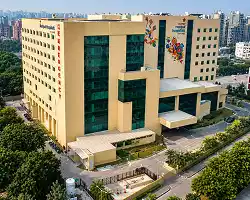
Dwarka - Delhi NCR
-

Patiala
-

Jaipur
-
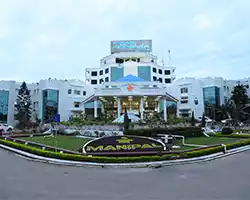
Vijayawada
-
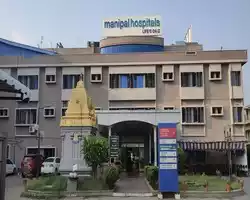
Salem
-
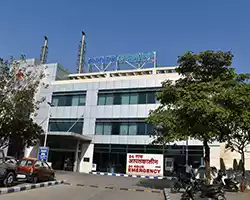
Kharadi - Pune
-

Salt Lake - Kolkata
-

Bhubaneswar
-
Siliguri
-
Ranchi
How It Works
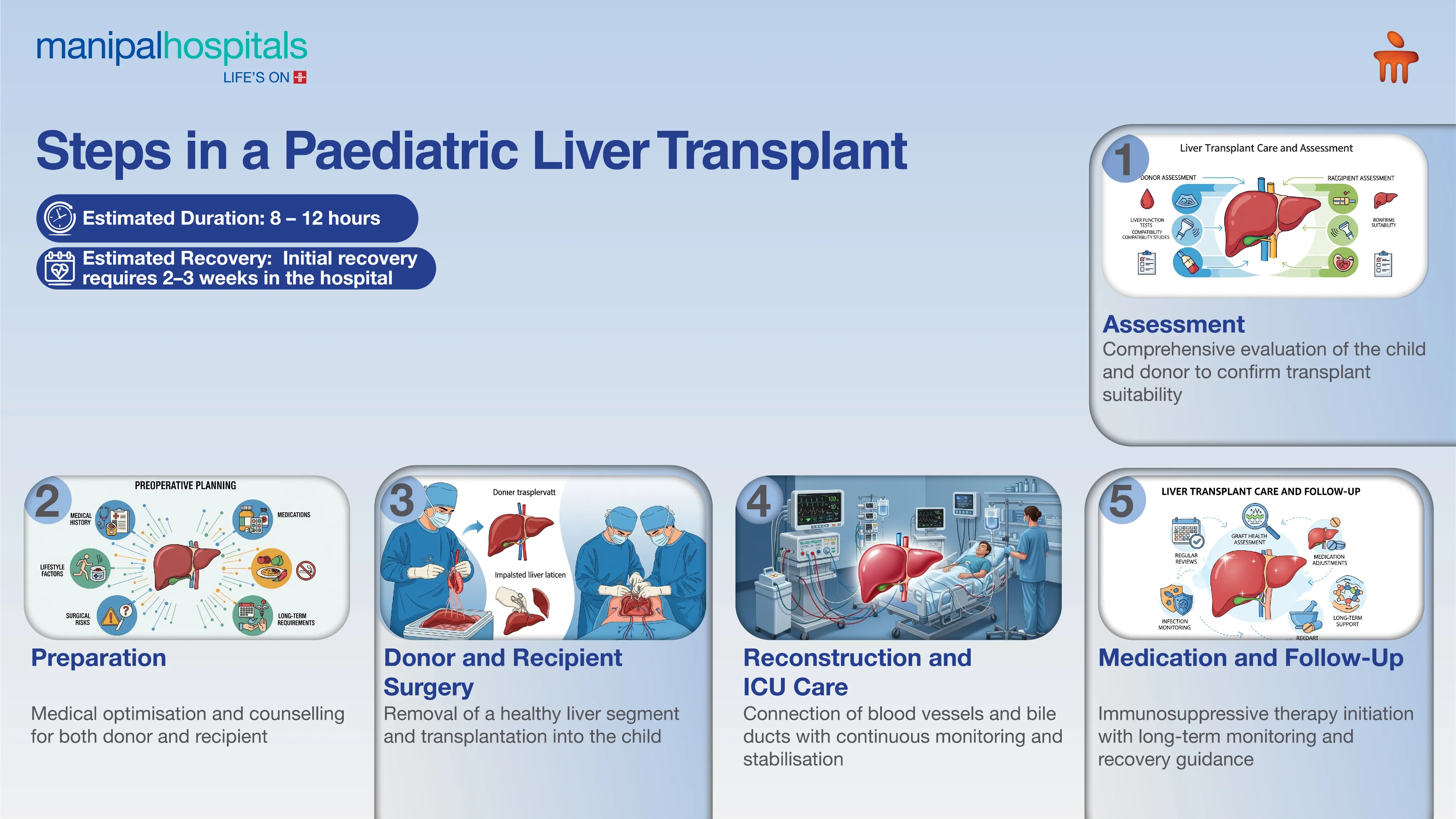
Manipal Hospitals follows a coordinated, multidisciplinary approach to support families seeking a paediatric liver transplant in India. Before the procedure, children undergo detailed assessments, including blood tests, imaging, liver function studies, nutritional evaluation, and infection screening. Transplant surgeons and hepatologists review the severity of liver disease and determine the timing for surgery. A suitable living donor is evaluated for compatibility, liver health, and overall fitness.
Families receive counselling on the surgical plan, risks, recovery timelines, and the importance of immunosuppression. Nutritional and medical optimisation is carried out to stabilise the child before surgery.
During the procedure, the donor and the child are prepared in separate sterile surgical suites. A portion of the donor liver is carefully removed and transplanted into the child after removing the diseased liver. Blood vessels and bile ducts are reconstructed with precision to ensure proper liver function. Anaesthesia teams monitor vital parameters throughout.
The surgery requires meticulous planning and seamless teamwork among transplant specialists. After the procedure, children are transferred to specialised transplant ICUs for continuous monitoring of liver function, fluid balance, pain control, and early complications. Immunosuppressive medicines are initiated to prevent rejection. Immunosuppressive medicines are started to prevent rejection and stabilise graft function.
Didn’t find what you were looking for?
Request a CallbackBenefits
Paediatric patients receive surgical care supported by advanced techniques, coordinated monitoring, and long-term follow-up.
-
Effective treatment for end-stage liver failure
-
Improved growth, nutrition, and overall development
-
Lower risk of complications with living-donor grafts
-
Faster graft function and recovery
-
Multidisciplinary support throughout treatment
-
Strict infection-control and safety measures
-
Continuous monitoring of liver function
-
Guidance for long-term immunosuppression and health management
What to Expect
Consultation and Diagnosis
The process begins with a thorough review of the child’s liver disease, detailed blood tests, imaging, and nutritional evaluation.
Pre-operative Preparation
Children and donors undergo medical optimisation, infection screening, and counselling. Families are educated on surgery steps, risks, immunosuppression, and recovery goals.
Surgery Day
The donor and child are taken to separate sterile operating rooms. A healthy segment of the donor liver is removed and transplanted into the child after removing the damaged liver.
Recovery Room Monitoring
After surgery, the child is shifted to the transplant ICU. Vital signs, graft function, fluid balance, and signs of rejection are monitored continuously.
Hospital Stay
Children remain in hospital for two to three weeks, depending on recovery and stabilisation.
Physical Therapy
Gentle physiotherapy may be introduced once the child stabilises to support mobility and strength.
Follow-up Appointments
Regular reviews assess liver function, medication levels, and overall recovery. Immunosuppressive therapy is adjusted accordingly.
Long-term Recovery
Recovery continues for months, with ongoing monitoring, infection prevention, and nutritional support.
Why Manipal Hospitals?
Manipal Hospitals is recognised for its advanced paediatric liver transplant services supported by skilled transplant surgeons, paediatric hepatologists, and specialised liver-care teams. The hospital follows a structured evaluation process that includes detailed diagnostic testing, imaging and donor compatibility checks to ensure safe and timely transplantation. Every transplant is planned with multidisciplinary coordination involving paediatricians, intensivists, anaesthesiologists, and nursing staff experienced in complex paediatric care.
Modern transplant operating theatres, high-precision surgical equipment, and dedicated paediatric ICUs support safe surgical practice and continuous monitoring. Strict infection-control measures and child-friendly recovery spaces enhance comfort and safety during post-operative care. The hospital’s expertise in managing living-donor transplants helps ensure reliable graft function.
Families receive clear guidance on surgery, immunosuppressive therapy, and long-term health requirements. Specialised counsellors and nutrition experts support parents throughout the treatment journey. Regular follow-ups help monitor liver function, medication levels, growth patterns, and early signs of complications, ensuring timely intervention when needed.
Centre of Excellence
The Paediatric Liver Transplant and Hepatology Department at Manipal Hospitals provides specialised care for children with liver failure and complex hepatobiliary diseases. The department is staffed by experienced transplant surgeons, paediatric hepatologists, and multidisciplinary teams skilled in managing high-risk paediatric cases. With advanced technology and child-friendly recovery areas, the department ensures precise evaluation and safe surgery.
Services Offered
Patients receive comprehensive transplant and liver care services designed to support safe surgery and long-term recovery.
-
Complete evaluation for paediatric liver transplant
-
Living-donor assessment and compatibility testing
-
Pre-transplant optimisation and counselling
-
Advanced transplant surgery for children
-
Post-operative ICU monitoring and stabilisation
-
Immunosuppressive therapy management
-
Nutritional assessment and growth monitoring
-
Long-term follow-up for liver function and development
Facilities & Services
Patients benefit from advanced transplant facilities designed to support safe surgery, continuous monitoring, and comprehensive paediatric care.
-
Dedicated paediatric transplant ICUs
-
Advanced transplant operating theatres
-
High-precision surgical and monitoring equipment
-
Controlled infection-prevention systems
-
Child-friendly inpatient and recovery areas
-
24/7 critical-care and anaesthesia support
-
Skilled paediatric nursing teams
-
Integrated imaging and laboratory services
Frequently Asked Questions
A paediatric liver transplant is recommended for liver failure, biliary atresia, metabolic diseases, and genetic liver disorders that progress despite medical treatment.
A living donor liver transplant in India includes donor evaluation, liver function tests, and graft matching. The patient then undergoes transplant surgery, ICU recovery, immunosuppressive treatment, and long-term follow-up.
Most children stay in the hospital for two to three weeks. The duration depends on graft function, infection risk, vital stability, healing progress, and overall stabilisation.
Risks may include infection, rejection, bile duct problems, and delayed graft function. Close monitoring, timely immunosuppression, and structured follow-up help detect issues early and reduce the chances of complications overall.
Full recovery usually takes several months. Regular follow-ups, medication monitoring, and lifestyle guidance support stable liver function, reduce complications, and help the child achieve better outcomes.
Consult our Experts



You’re on Our Indian Website
Visit the Global site for International patient services
'Click' to chat with us
