
Kidney Transplant Surgery
Manipal Hospitals stands at the forefront of renal care. It offers potentially life-saving kidney transplant surgery in India for patients with end-stage renal disease. The hospital combines the expertise of distinguished transplant surgeons and nephrologists with advanced surgical technology to ensure optimal outcomes. Care pathways involve rigorous pre-transplant assessment, precise donor matching, and surgical execution. Teams prioritise patient safety and long-term organ survival, explaining the complex legal and medical processes clearly. Patients receive comprehensive guidance on post-operative medication and lifestyle adjustments.
Hospital Locations
-

Old Airport Road - Bengaluru
-
.webp)
Mysuru
-

Mangaluru
-

Dwarka - Delhi NCR
-

Patiala
-

Jaipur
-

Vijayawada
-

Salem
-

Salt Lake - Kolkata
-

Baner - Pune
-

Bhubaneswar
-

Siliguri
-

Ranchi
How It Works
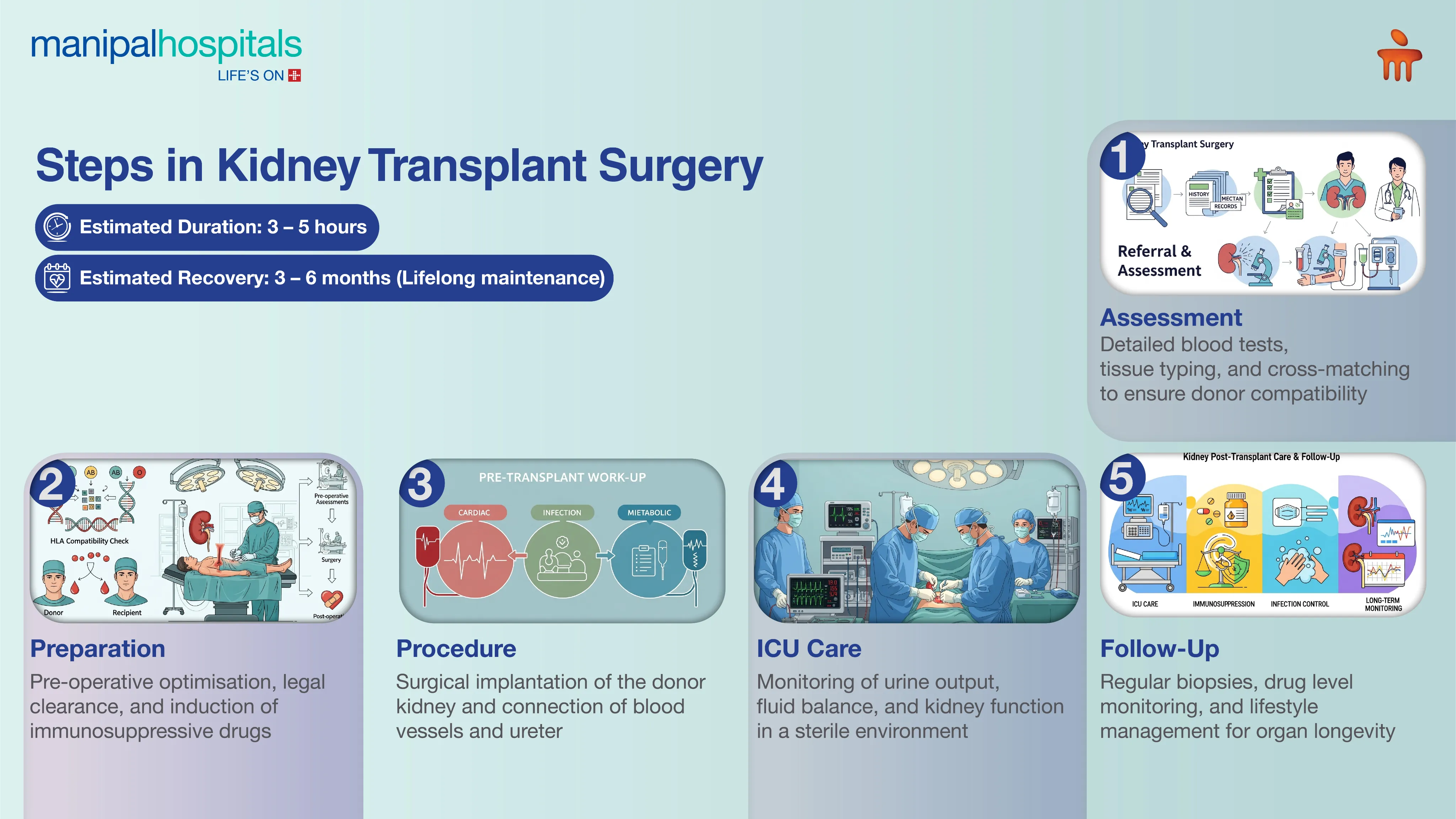
The process begins with a comprehensive evaluation of both the recipient and the donor to ensure compatibility and medical fitness. A multidisciplinary team assesses tissue typing, blood group matching, and overall health status. Once cleared, the surgery is scheduled. During the procedure for a renal transplant in India, the surgeon places the healthy donor kidney into the recipient's lower abdomen.
The new kidney's blood vessels are connected to the recipient's arteries and veins, and the ureter is attached to the bladder to allow urine flow. The patient's existing damaged kidneys are usually left in place unless they cause complications like high blood pressure or infection. Post-surgery, the medical team closely monitors urine output and kidney function.
Immunosuppressive medications are initiated immediately to prevent organ rejection. This meticulous process ensures the best possible outcome, restoring renal function and significantly improving the patient's quality of life. With consistent follow-up, patients gradually regain strength and return to normal routines with confidence
Didn’t find what you were looking for?
Request a CallbackBenefits
Choosing Kidney Transplant Surgery at Manipal Hospitals provides the following benefits:
-
Restoration of normal kidney function and freedom from dialysis
-
Significant improvement in energy levels and overall quality of life
-
Higher long-term survival rates compared to chronic dialysis
-
Expert handling of complex cases like ABO-incompatible transplants
-
Minimally invasive laparoscopic techniques for donor nephrectomy
-
Comprehensive multidisciplinary support for donors and recipients
What to Expect
Consultation and Workup
The journey starts with deep screening by nephrologists. Doctors check blood types, antibodies, and general health to ensure the transplant is safe for both donor and recipient.
Legal and Ethical Clearance
The transplant team assists with the necessary legal documentation and committee approvals required for organ transplantation regulations.
Pre-Surgery Admission
Patients are admitted a day or two early. Dialysis may be performed if needed. Final cross-match tests confirm that the donor organ is safe for the recipient.
The Surgery
The operation is performed under general anaesthesia. The surgeon implants the new kidney. The donor also undergoes surgery, often laparoscopically, to remove one kidney.
ICU Recovery
After surgery, the recipient moves to a specialised transplant ICU. The medical team closely watches urine production, which is often an immediate sign of success.
Ward Transition
Once stable, the patient moves to a private room. Nurses teach the patient and family how to manage fluid intake and the strict medication schedule required.
Long-Term Follow-Up
After discharge, frequent check-ups are vital. Doctors monitor creatinine levels and adjust immunosuppressants to prevent rejection and ensure the kidney remains healthy.
Why Manipal Hospitals?
Manipal Hospitals is a premier destination for transplant medicine, known for its high success rates, advanced infrastructure, and patient-centric approach. The hospital offers state-of-the-art operating theatres and dedicated transplant ICUs designed to minimise infection risks and support faster recovery. A highly experienced team of transplant surgeons, nephrologists, and multidisciplinary specialists performs complex procedures, including ABO-incompatible and high-risk transplants.
Choosing Manipal Hospitals for a renal transplant in India ensures access to cutting-edge technology, precision diagnostics, and comprehensive post-operative management. Patients receive holistic support throughout their journey, from legal and transplant documentation to lifelong follow-up counselling, diet planning, rehabilitation, and medical monitoring. Manipal Hospitals focuses on ethical practices, safety protocols, and clinical excellence. They provide a seamless, reassuring, and transformative transplant experience for patients seeking a second chance at life.
Centre of Excellence
The Nephrology and Urology Department at Manipal Hospitals excels in the management of kidney failure and transplantation. Expert teams of transplant surgeons and nephrologists work together to provide world-class care. The department focuses on graft survival, donor safety, and comprehensive rehabilitation. It is supported by advanced laboratories and a commitment to clinical excellence for optimal patient outcomes.
Services Offered
Manipal Hospitals offers a wide range of renal services, including the following:
-
Live-related and cadaveric kidney transplantation
-
ABO-incompatible and paired exchange transplants
-
Pediatric kidney transplants
-
Laparoscopic donor nephrectomy for faster recovery
-
Post-transplant immunological monitoring and biopsy
-
Comprehensive chronic kidney disease management
-
24/7 emergency nephrology and dialysis care
Facilities & Services
The hospital provides advanced transplant facilities, including:
-
Dedicated transplant ICUs with HEPA air filtration
-
State-of-the-art modular operating theatres
-
Advanced HLA typing and cross-matching laboratories
-
24/7 dialysis units with SLED and CRRT capabilities
-
Isolation rooms for strict infection control
-
Robot-assisted surgical systems for precision
-
Expert transplant coordination and counselling team
Frequently Asked Questions
A kidney transplant replaces a failed kidney with a healthy one from a donor. It allows the body to filter waste properly again. This reduces the need for dialysis and improves overall health.
A living donor can be a close relative or a medically fit spouse. They must have a compatible blood type. Cadaveric donors are deceased individuals whose families have consented to organ donation.
Donors usually leave the hospital within a few days. Recipients stay for about a week or two. Full recovery takes a few months. Patients must avoid heavy lifting and crowds during the early healing phase.
The body may try to reject the new organ. Doctors prescribe immunosuppressive medicines to prevent this. Regular blood tests and check-ups at Manipal Hospitals help detect and manage any signs of rejection early.
Manipal Hospitals offers modern operating theatres, advanced diagnostic labs, and dedicated transplant ICUs. Together, they help position the hospital as a leading centre for kidney transplant surgery in India.
Consult our Experts



You’re on Our Indian Website
Visit the Global site for International patient services
'Click' to chat with us
