
Heart Transplant
Manipal Hospitals offers potentially life-saving care for patients with end-stage heart failure, providing world-class heart transplant in India. The programme combines expert transplant surgeons with advanced organ preservation technology to ensure successful outcomes. The process involves detailed pre-transplant assessment, donor matching, and precise surgical intervention. Teams prioritise long-term survival and quality of life, guiding patients through every step. Comprehensive post-transplant monitoring ensures organ acceptance and recovery. Dedicated coordinators support families throughout the process.
Hospital Locations
-

Old Airport Road - Bengaluru
-
.webp)
Mysuru
-

Mangaluru
-
Dwarka - Delhi NCR
-

Patiala
-

Jaipur
-

Vijayawada
-

Salem
-
Kharadi - Pune
-

Salt Lake - Kolkata
-

Bhubaneswar
-

Siliguri
-

Ranchi

How It Works
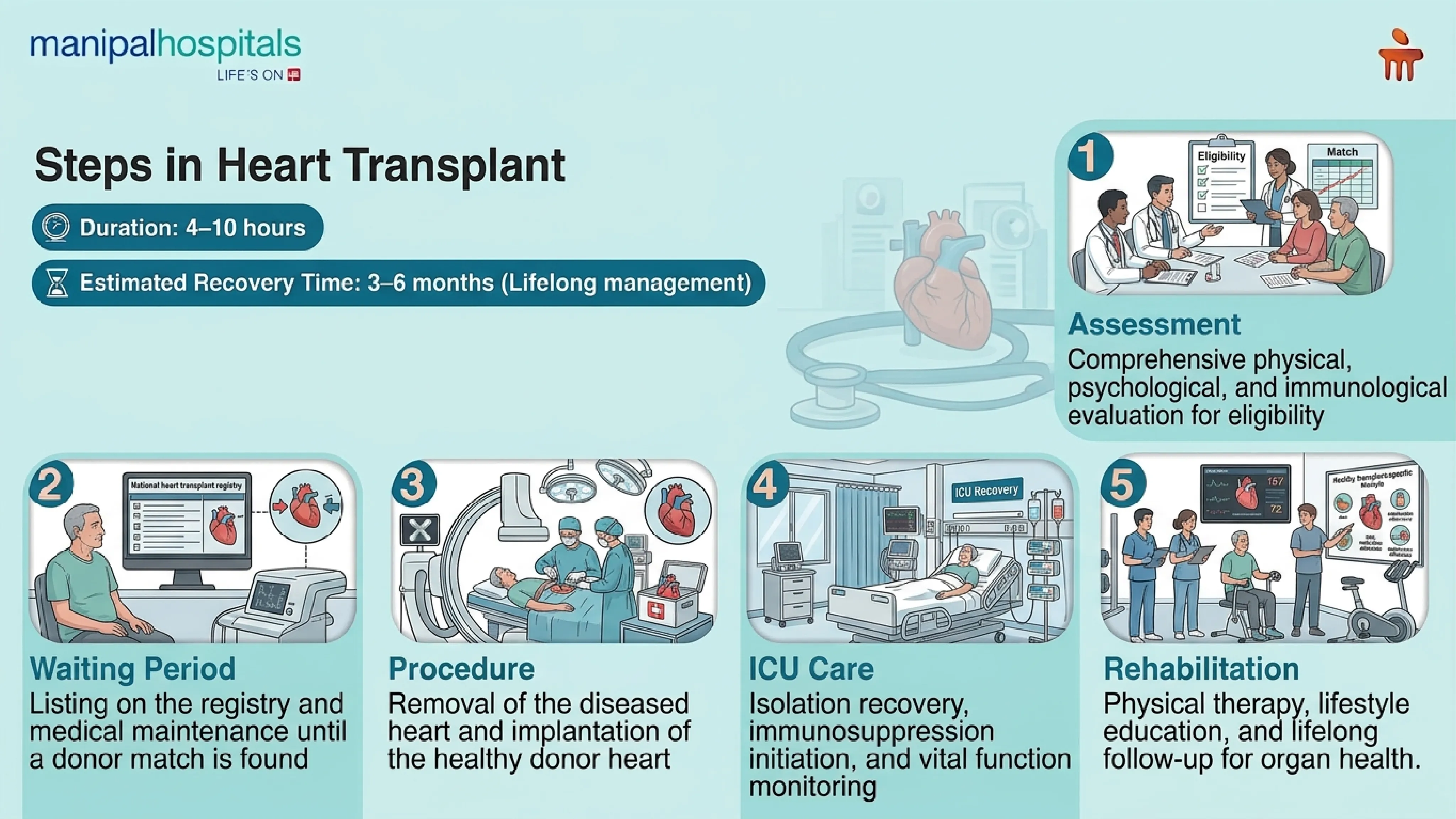
The process begins with a detailed evaluation by a multidisciplinary team to determine eligibility. Once approved, the patient is placed on a national organ waiting list. While waiting, medical management stabilises the patient's condition. When a matching donor organ becomes available, the transplant team mobilises immediately for the procedure.
During the heart transplant surgery in India at Manipal Hospitals, surgeons place the patient on a heart-lung machine to maintain blood flow. The diseased heart is removed, and the healthy donor heart is sewn into place. The team connects the blood vessels and restores blood flow. They monitor the new heart’s first beats before closing the chest.
Post-surgery, patients move to a sterile Transplant ICU to minimise infection risks. Immunosuppressive therapy begins immediately to prevent rejection. Rehabilitation starts early, focusing on breathing exercises and gentle mobility. The team conducts frequent biopsies and tests to ensure the body accepts the new organ, transitioning the patient gradually toward discharge and home care.
Didn’t find what you were looking for?
Request a CallbackBenefits
Choosing a Heart Transplant at Manipal Hospitals provides the following benefits:
-
Life-saving intervention for end-stage heart failure
-
Significant improvement in physical energy and quality of life
-
Access to a multidisciplinary team of transplant experts
-
Dedicated sterile ICUs to prevent post-surgical infections
-
Comprehensive support for donor matching and logistics
-
Structured long-term follow-up programmes to support better outcomes
What to Expect
Consultation and Evaluation
The process starts with deep screening. Doctors check heart function, tissue match, and overall health. Psychologists and social workers ensure the patient is ready for the journey.
The Waiting List
Once cleared, the patient waits for a donor. The team provides continuous medical support during this time to keep the patient as stable as possible.
The Call
When a match is found, the patient must reach the hospital immediately. Pre-operative prep is rapid, involving blood tests and final physical checks.
Surgery
The patient is put under general anaesthesia. The complex surgery involves replacing the heart. Family members are kept informed throughout the procedure by the support team.
The patient begins to regain consciousness in a specialised isolation ICU. Breathing tubes are removed when stable. Visitors are restricted to protect the patient from infections.
Ward Transition
As strength returns, the patient moves to a transplant ward. Physiotherapy begins, and nurses instruct the patient on how to manage the new medication
Long-Term Care
After discharge, frequent visits are required. Biopsies are performed to check for rejection. Patients adopt a new lifestyle to protect their new heart.
Why Manipal Hospitals?
Manipal Hospitals is a premier destination for transplant medicine, known for high success rates, advanced interventional cardiology, and multidisciplinary expertise that ensures safe and effective patient care. The facility is equipped with dedicated transplant ICUs and HEPA-filtered recovery zones to minimise infection risks.
The hospital is a leader in performing heart transplant surgery in India, utilising cutting-edge surgical techniques and organ care systems. A cohesive team of cardiologists, immunologists, and surgeons ensures seamless coordination from donor retrieval to post-operative care.
Patients benefit from holistic support, including psychological counselling and nutritional guidance. With a commitment to ethical practices and clinical excellence, Manipal Hospitals offers a second chance at life through compassionate, long-term partnerships.
Centre of Excellence
The Cardiology Department at Manipal Hospitals is a centre of clinical excellence for advanced heart failure management and transplantation. The team comprises internationally trained surgeons and transplant physicians. The department focuses on end-stage heart failure solutions, utilising mechanical circulatory support and organ transplantation to restore vitality to critically ill patients.
Services Offered
Manipal Hospitals offers a wide range of cardiac services, including:
-
Heart Transplantation (Adult and Pediatric)
-
Ventricular Assist Devices (VAD) implantation
-
Advanced Heart Failure Clinics
-
Endomyocardial Biopsy for rejection monitoring
-
ECMO (Extracorporeal Membrane Oxygenation) support
-
Immunosuppression management and counselling
-
Cardiac rehabilitation for transplant recipients
Facilities & Services
The hospital provides advanced cardiac facilities, including:
-
Dedicated Transplant ICUs with HEPA filtration
-
Advanced modular operating theatres
-
Organ preservation and transport infrastructure
-
24/7 transplant coordination team
-
Pathology labs for rapid tissue typing
-
Mechanical circulatory support systems
-
Isolation rooms for infection control
-
Counselling centres for patients and families
Frequently Asked Questions
A heart transplant is a major surgery that replaces a failing heart with a healthy donor heart. It is the last treatment option when medication and other surgeries no longer work.
Patients with end-stage heart failure may require this procedure. This includes severe cardiomyopathy or coronary artery disease. Candidates are individuals whose hearts cannot pump enough blood to survive despite all other medical treatments.
A hospital stay lasts for two to three weeks, with full recovery taking several months. Patients must take medications lifelong. Regular check-ups are essential for monitoring heart function and preventing organ rejection.
Risks include organ rejection and infection. Side effects from immunosuppressant medicines can occur, such as high blood pressure. Doctors monitor patients closely. Strict medication adherence significantly lowers these risks over time.
Survival rates have improved significantly, with many patients living for over ten years post-surgery. Choosing a heart transplant in India at Manipal Hospitals provides access to experienced transplant teams, helping improve long-term outcomes.
Consult our Experts



You’re on Our Indian Website
Visit the Global site for International patient services
'Click' to chat with us
