.webp "ICU Dialysis Services in India | Manipal Hospitals")
Dialysis in ICU
Dialysis in the ICU supports critically unwell patients needing continuous kidney support while receiving intensive medical care. The process helps stabilise fluid balance, filter waste, and maintain essential electrolytes. As a recognised leader in renal care, Manipal Hospitals provides advanced dialysis in India with experienced specialists and modern technology. Patients benefit from structured monitoring, protective protocols, and closely supervised recovery for safe, dependable renal support. The hospital ensures personalised care tailored to each patient’s critical condition.
Hospital Locations
-

Old Airport Road - Bengaluru
-
.webp)
Mysuru
-

Mangaluru
-
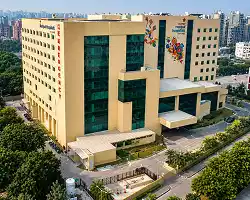
Dwarka - Delhi NCR
-

Patiala
-

Jaipur
-

Vijayawada
-

Salem
-

Salt Lake - Kolkata
-

Baner - Pune
-

Bhubaneswar
-

Siliguri
-

Ranchi

How It Works
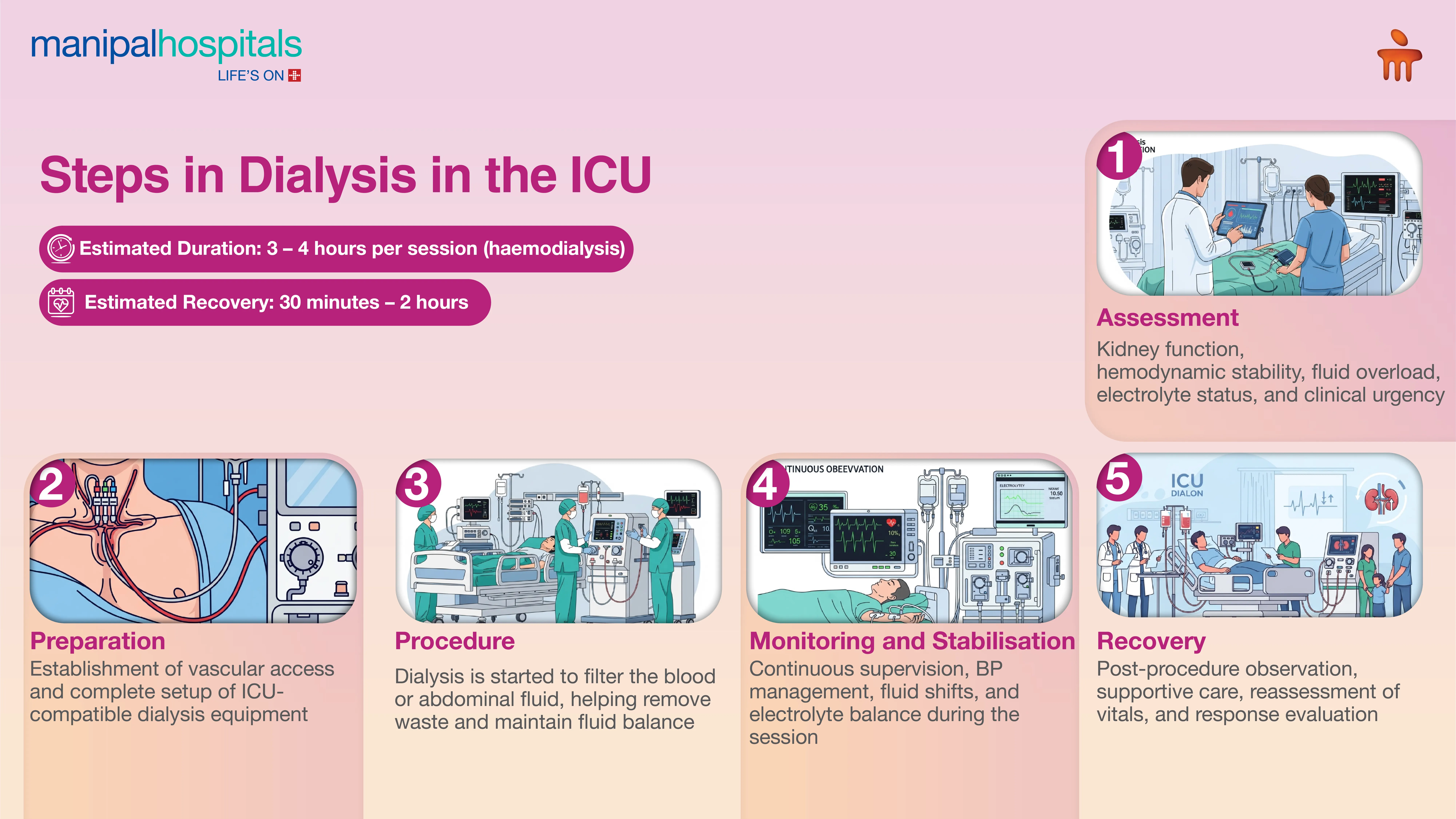
Dialysis in the ICU follows a carefully monitored process designed to support patients who require round-the-clock renal assistance. Treatment begins with a detailed clinical assessment, where specialists review symptoms, kidney function, blood pressure, and overall stability. A temporary dialysis catheter is placed under sterile conditions using ultrasound guidance. It is typically placed in the internal jugular or femoral vein to ensure reliable blood flow during dialysis. These steps help maintain safe and uninterrupted treatment at the best dialysis centre in India.
For critically ill patients, continuous therapies such as CRRT may be used for gentle, slow fluid and toxin removal. Standard haemodialysis or peritoneal dialysis may also be provided depending on stability and treatment goals. Anticoagulation and continuous monitoring are applied as needed. Fluid balance, electrolytes, and acid–base status are adjusted in real time, guided by ongoing monitoring from ICU nurses and renal specialists.
During treatment, doctors coordinate medications, nutrition, and ventilator support with dialysis to keep the patient stable. Alarms and safety checks ensure immediate response to any changes. After each session, the access site is cleaned, and patient parameters are reassessed. Ongoing reviews allow teams to adjust the dialysis plan as the patient’s condition improves.
Didn’t find what you were looking for?
Request a CallbackBenefits
Dialysis in the ICU offers essential support during critical illness:
Helps stabilise fluid and electrolyte balance
Removes toxins without straining the cardiovascular system
Supports blood pressure by using gentle continuous filtration
Allows treatment even in unstable or ventilated patients
Enables real-time adjustments guided by ICU monitoring
Integrates smoothly with other life-support therapies
What to Expect
Initial Assessment
Specialists urgently evaluate kidney function, fluid overload, blood pressure, infection status, and circulation. Imaging and laboratory results support accurate treatment decisions.
Access and Planning
A central venous line is placed using sterile techniques. The dialysis method is selected based on medical urgency, stability, and organ support requirements.
Treatment Session
The dialysis machine is carefully adjusted to support heart function and maintain blood pressure. ICU teams monitor oxygen levels, temperature, electrolytes, and fluid balance continuously during the session.
Immediate Response
Mild fatigue, slight temperature changes, temporary blood pressure fluctuations, or muscle cramps may occur. The care team manages comfort and ensures the patient remains stable throughout treatment.
Ongoing Support
Nurses adjust machine settings, medications, and fluid targets according to real-time measurements. Ventilator or cardiac-support coordination is maintained when required.
Post-Session Care
The access site is cleaned, dressings are changed, and clinical response is reviewed. Additional sessions are planned based on kidney function, overall stability, and recovery needs.
Why Manipal Hospitals?
Manipal Hospitals provides advanced dialysis supported by renal specialists, intensive-care physicians, and experienced nursing teams. Treatment plans integrate real-time monitoring, modern machines, and strict safety protocols to ensure accurate and stable care. As one of the best dialysis centres in India, the hospital offers coordinated management for complex and critically unwell patients. Each session is supervised with continuous assessment of blood pressure, electrolytes, and organ function.
Patients benefit from precise fluid control, sterile access procedures, and technology designed for uninterrupted treatment. The ICU environment supports rapid response to changes, ensuring stability throughout the dialysis process. Families receive clear updates, and treatment plans are adapted as patients recover. This comprehensive, multi-disciplinary approach ensures safe and reliable renal support during critical illness.
Centre of Excellence
The Department of Nephrology provides specialised care for acute and chronic kidney conditions, including advanced renal support in the ICU. Skilled nephrologists manage assessment, dialysis planning, and round-the-clock supervision. The department focuses on safe treatment delivery, patient stability, and seamless coordination to ensure effective renal care during critical illness.
Services Offered
Manipal Hospitals offers a complete range of advanced renal care services, including dialysis, to support kidney function. These include:
-
Continuous Renal Replacement Therapy for unstable patients
-
Haemodialysis for acute renal support
-
Peritoneal dialysis management
-
Vascular access placement and care
-
Fluid and electrolyte optimisation
-
Personalised monitoring plans for ICU and non-ICU patients
Facilities & Services
At Manipal Hospitals, patients benefit from advanced renal care facilities and modern infrastructure, including:
-
ICU-grade dialysis machines for continuous treatment
-
Sterile procedure areas for safe access placement
-
Bedside monitoring integrated with dialysis systems
-
Skilled nursing teams trained in critical renal support
-
Controlled infection-prevention protocols
-
Recovery support with continuous clinical supervision
Frequently Asked Questions
A patient may need dialysis in the ICU when the kidneys are unable to remove waste or excess fluid due to serious illness or injury. It helps stabilise the body and support vital organ function.
The duration of a dialysis session depends on the type of dialysis being performed. Typically, haemodialysis sessions last 3–4 hours, while peritoneal dialysis exchanges take 30–40 minutes. Continuous therapies run around the clock.
After dialysis, patients are closely monitored in the ICU to ensure their blood pressure, oxygen levels, and comfort remain stable. The care team provides gentle post-dialysis support and ongoing observation.
Manipal Hospitals provides dialysis in the ICU, including CRRT, haemodialysis and peritoneal dialysis, with expert care for access and monitoring. Post-dialysis follow-ups are also offered to ensure comprehensive kidney management and patient well-being.
The hospital provides advanced dialysis machines, sterile access procedures, continuous monitoring, and experienced ICU staff. These facilities ensure safe treatment delivery during critical care and support patients undergoing dialysis in India with reliable supervision.
Consult our Experts



You’re on Our Indian Website
Visit the Global site for International patient services
'Click' to chat with us
