
Conjunctivitis Care
Manipal Hospitals offers comprehensive conjunctivitis treatment in India through its Ophthalmology Speciality. The hospital provides personalised care for bacterial, viral, allergic, and irritant conjunctivitis using modern therapies. Specialists focus on fast symptom control, infection prevention, and eye-surface protection. With targeted medications, advanced techniques, hygiene guidance, and structured follow-up, Manipal Hospitals ensures safe and complete recovery. The hospital also supports self-treatment for mild cases of conjunctivitis at home, providing clear instructions and monitoring.
Hospital Locations
-

Old Airport Road - Bengaluru
-

Whitefield - Bengaluru
-

Jayanagar - Bengaluru
-

Malleshwaram - Bengaluru
-

Yeshwanthpur - Bengaluru
-

Hebbal - Bengaluru
-

Sarjapur Road - Bengaluru
-

Varthur Road - Whitefield - Bengaluru
-

Doddaballapur - Bengaluru
-

Millers Road - Bengaluru
-
.webp)
Mysuru
-

Mangaluru
-
Dwarka - Delhi NCR
-

Gurugram - Delhi NCR
-
Ghaziabad - Delhi NCR
-

Patiala
-

Jaipur
-

Vijayawada
-

Salem
-
Kharadi - Pune
-

Salt Lake - Kolkata
-

Baner - Pune
-

Dhakuria - Kolkata
-

Mukundapur - Kolkata
-

Broadway - Kolkata
-

Bhubaneswar
-

Kanakapura Road - Bengaluru
-

EM Bypass - Kolkata
-

Siliguri
-

Yelahanka - Bengaluru
-

Rangapani
-

Ranchi
How It Works
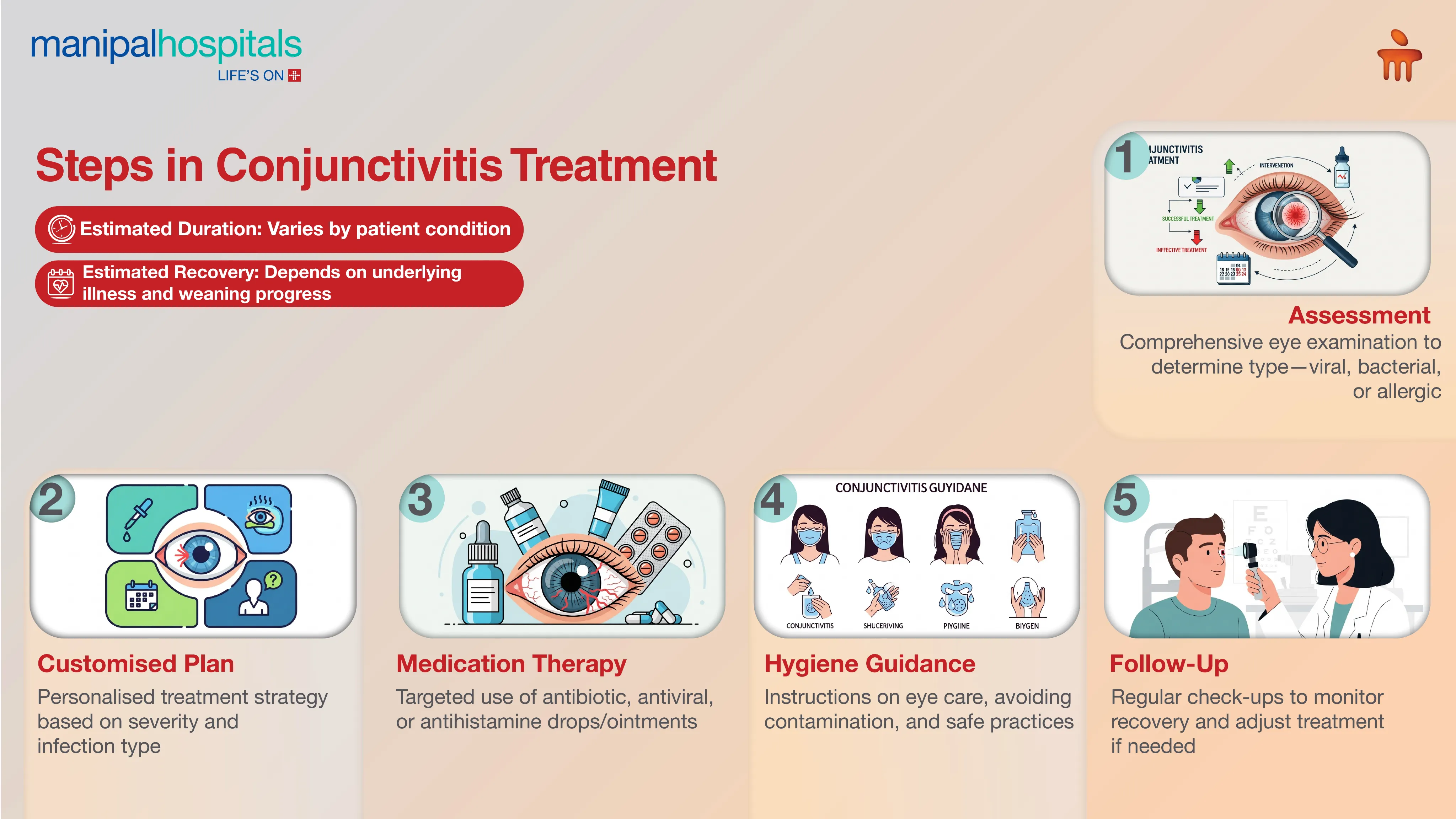
Conjunctivitis management at Manipal Hospitals begins with a detailed eye examination. Highly skilled ophthalmologists assess the type, severity, and cause of inflammation using slit-lamp evaluation and symptom review. When needed, eye swabs are taken to confirm bacterial infection or rule out resistant organisms.
Bacterial conjunctivitis is treated using antibiotic eye drops or ointments prescribed according to clinical findings. Viral conjunctivitis is usually self-limiting, and patients receive supportive care such as cold compresses, lubricating eye drops, and rest. Allergic conjunctivitis is managed with antihistamine or mast cell stabiliser drops selected based on allergy triggers and symptom severity.
Severe presentations or cases with corneal involvement may require a combination of steroid and antibiotic drops administered under close supervision. Contact lens wearers receive specific advice to discontinue lens use until full recovery. Patients also receive guidance on conjunctivitis treatment at home in India, including hygiene practices, avoiding eye rubbing, and preventing spread to family members.
Regular follow-ups allow specialists to review healing, adjust medicines, and identify complications such as keratitis early. Long-term advice includes lens hygiene, allergen avoidance, and protective eye care.
Didn’t find what you were looking for?
Request a CallbackBenefits
Choosing conjunctivitis care at Manipal Hospitals provides:
-
Provides faster relief from redness, irritation, watering, and discharge through accurate diagnosis
-
Type-specific treatment for bacterial, viral, or allergic conjunctivitis helps prevent complications
-
Clear home-care guidance ensures safe recovery and proper use of prescribed medicines
-
Hygiene and prevention advice reduce recurrence and protect family members from infection
-
Regular follow-up checks support stable healing
What to Expect
Consultation and Diagnosis
Ophthalmologists perform a slit-lamp examination, confirm the type of conjunctivitis, and explain treatment options for conjunctivitis. Swab culture is advised for severe or persistent symptoms.
Pre-treatment Planning
Patients receive instructions on hygiene, contact lens care, compress use, and medication frequency. Those with mild symptoms receive safe, supportive measures for conjunctivitis treatment at home in India.
Treatment Phase
Bacterial cases are treated with antibiotic drops. Viral cases receive lubricants and cold compresses. Allergic presentations are managed with antihistamines or stabilising drops. Severe inflammation may require combined therapy.
Recovery Room/Monitoring
Although usually outpatient, early improvement, comfort, and corneal clarity are closely monitored. Any worsening symptoms are reviewed promptly.
Hospital/Clinic Visits
Follow-up visits typically occur within 3–5 days to assess healing. Specialists review lens hygiene and environmental triggers.
Physical and Supportive Care
Patients receive guidance on compresses, hand hygiene, avoiding eye rubbing, and preventing spread to family members.
Follow-Up
Routine assessments ensure full recovery. Referral to a cornea specialist is provided if vision changes or corneal involvement occurs.
Why Manipal Hospitals?
Manipal Hospitals has long been recognised for providing reliable conjunctivitis treatment, supported by experienced ophthalmologists and advanced diagnostic facilities. The hospital ensures precise evaluation through slit-lamp examinations, tear film assessment, and microbiological testing when required. This approach allows accurate identification of bacterial, viral, allergic, or irritant conjunctivitis. Treatment plans are customised to ensure fast symptom relief, effective infection control, and safe recovery.
Patients also receive guidance on conjunctivitis treatment at home, including hygiene measures, cold or warm compress use, and medication instructions. This helps individuals manage mild cases confidently while ensuring timely medical attention when needed.
With strong infection-control protocols and structured follow-up support, the hospital minimises complications such as keratitis, chronic irritation, or recurrent infections. Its multidisciplinary approach and patient education position Manipal Hospitals as a trusted centre for the comprehensive management of all types of conjunctivitis.
Centre of Excellence
The Ophthalmology Department at Manipal Hospitals manages all forms of conjunctivitis with targeted medications, personalised hygiene guidance, and supportive care. Specialists prioritise rapid relief from redness, irritation, and discharge while protecting the eyes from complications. Systematic follow-up ensures complete recovery, prevents recurrence, and supports long-term ocular health for patients of all ages.
Services Offered
Manipal Hospitals provides:
-
Treatment for bacterial, viral, and allergic conjunctivitis using type-specific protocols
-
Prescription of antibiotic, lubricating, antiviral, or antihistamine eye drops as required
-
Eye swab culture and sensitivity testing for accurate diagnosis
-
Management of complications such as keratitis or persistent inflammation
-
Clear home-care instructions and preventive guidance to reduce recurrence and ensure safe recovery
Facilities & Services
Patients seeking conjunctivitis treatments at Manipal Hospitals benefit from key facilities, including:
-
Slit-lamp examination rooms for precise eye assessment
-
Microbiology laboratories for conjunctival swab and culture testing
-
Outpatient eye treatment bays for safe medication initiation and monitoring
-
Patient education and hygiene-support areas to guide home care
-
Teleconsultation services for convenient follow-up reviews and ongoing management
Frequently Asked Questions
Bacteria, viruses, allergies, or environmental irritants can cause conjunctivitis. These factors inflame the transparent membrane lining the eyelids and eyeball, leading to redness, irritation, watering, and discharge. Identifying the specific cause ensures appropriate treatment and helps prevent complications or recurrence.
Bacterial conjunctivitis typically improves within 7–10 days with appropriate treatment, while viral conjunctivitis may take 1–2 weeks and often resolves on its own. Proper diagnosis and supportive care help speed recovery and reduce the risk of complications or recurrence.
No. Contact lenses should be avoided until complete recovery, as they can worsen irritation, delay healing, and increase the risk of infection. Patients should resume lens use only after medical clearance.
Cold compresses, artificial tears, strict hygiene, and avoiding eye rubbing help relieve symptoms safely and prevent worsening of conjunctivitis. These measures support comfort, reduce irritation, and complement medical treatment for faster recovery.
Yes. Conjunctivitis can spread easily through direct contact, contaminated surfaces, shared personal items, or poor hand hygiene. Manipal Hospitals provides quick diagnosis, targeted treatment, and structured follow-up, ensuring effective conjunctivitis treatment in India with safe, timely recovery.
Consult our Experts



You’re on Our Indian Website
Visit the Global site for International patient services
'Click' to chat with us
