
CBC
Manipal Hospitals offers the CBC in India as part of its structured haematology services. The test evaluates red cells, white cells, and platelets to detect anaemia, infections, inflammation, and clotting abnormalities. It supports early diagnosis and helps clinicians assess disease progression or treatment response. The Haematology team at Manipal Hospitals uses calibrated analysers and multilayer checks for consistent accuracy. Reports follow standard reference limits and assist specialists in planning appropriate investigations or follow-up care.
Hospital Locations
-
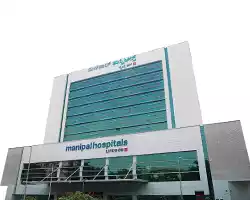
Old Airport Road - Bengaluru
-
.webp)
Mysuru
-
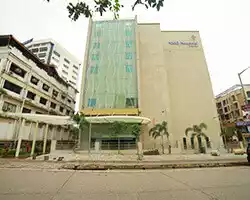
Mangaluru
-
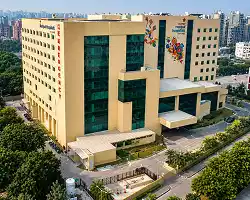
Dwarka - Delhi NCR
-

Patiala
-

Jaipur
-

Vijayawada
-

Salem
-
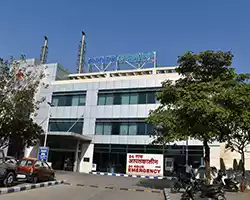
Kharadi - Pune
-

Bhubaneswar
-

Siliguri
-

Ranchi

How It Works
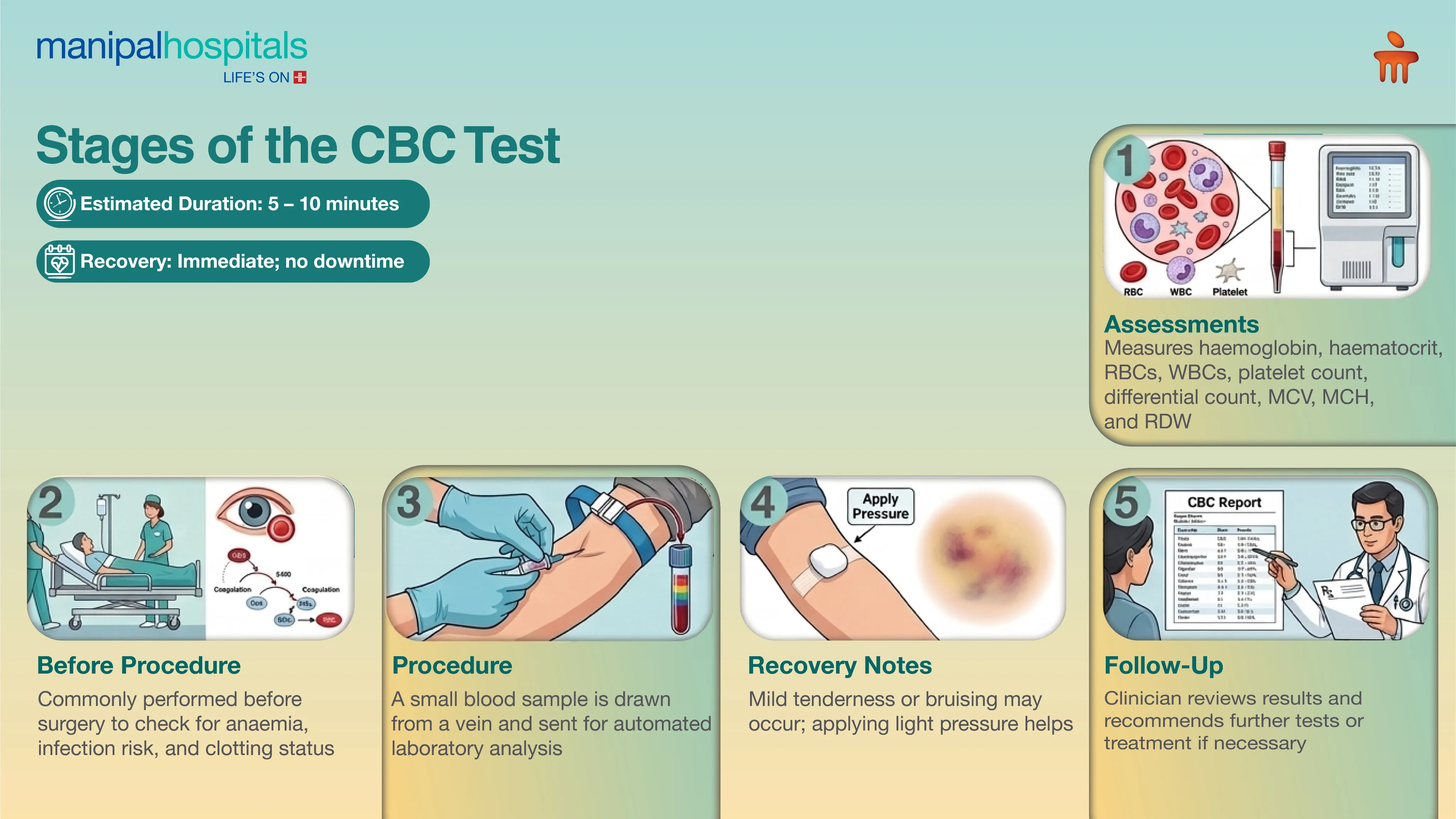
A complete blood count evaluates the major cellular components of blood. The test begins with a venous sample collected using sterile technique. Trained technicians verify patient identification, choose the correct tube, and maintain proper anticoagulant balance to preserve specimen integrity. Samples are processed promptly or stored under controlled conditions to prevent cell distortion. Automated analysers measure haemoglobin, haematocrit, red cell indices, white cell counts, differential patterns, and platelet levels.
When results show unexpected changes, the laboratory team reviews abnormal flags through peripheral smear examination. This manual evaluation identifies immature cells, shape abnormalities, or platelet clumping, and findings are correlated with clinical details provided by Haematology specialists.
The CBC normal range in India may vary slightly between laboratories due to analyser calibration and population differences. Reference values are updated periodically to reflect regional trends. The report helps clinicians diagnose anaemia, infections, bleeding disorders, and bone marrow diseases. It also serves as essential baseline data before surgeries, chemotherapy, or long-term treatments. Patients receive clear instructions about fasting, hydration, or medication considerations when required. The procedure is quick, safe, and suitable for adults, children, and older individuals.
Didn’t find what you were looking for?
Request a CallbackBenefits
CBC testing offers essential clinical insights that guide diagnosis, monitoring, and treatment planning across various medical conditions.
-
Supports early detection of common and complex haematological conditions
-
Provides essential information before procedures and therapies
-
Helps monitor chronic illnesses and treatment responses
-
Identifies abnormalities that require advanced evaluation
-
Offers consistent and standardised reporting for reliable clinical decisions
What to Expect
Initial Steps
The visit begins with registration and verification of clinical history. Clinicians discuss current medications, recent illnesses, and previous test results to ensure accurate interpretation. Patients may receive instructions regarding hydration or fasting, depending on clinical requirements.
Sample Collection
A trained technician performs a venous blood draw using sterile technique. A gentle tourniquet is applied to improve vein access, and the sample is carefully labelled before being sent to the laboratory analyser.
Processing
Automated analysers evaluate key blood parameters. If any abnormal flags appear, specialists review a peripheral smear to examine cell appearance and detect immature or atypical forms. All findings are documented clearly.
Interpretation and Follow-Up
Haematology experts interpret the results and provide guidance on further tests, supplements, or treatment if needed. Any variations from the CBC normal range are explained, and patients receive secure digital access to their reports. This structured process ensures reliable results that support timely intervention and ongoing medical care.
Why Manipal Hospitals?
Manipal Hospitals has long supported comprehensive haematology care, offering advanced diagnostic systems and trained laboratory teams. The department integrates modern analysers, peripheral smear stations, and strict quality protocols to ensure reliable results. Specialists interpret patterns within context, helping clinicians plan investigations or therapy adjustments. Calibrated equipment, consistent internal checks, and technical oversight maintain reporting accuracy.
The hospital’s Haematology services cover routine blood tests, coagulation profiles, and bone marrow assessments. Patients benefit from structured workflows, safe sampling practices, and close collaboration between clinical and laboratory teams. This coordinated approach ensures dependable diagnostic support for individuals undergoing a CBC and interpreting their results. The focus remains on clarity, accuracy, and ongoing patient safety.
Centre of Excellence
The Haematology Department assesses and manages conditions involving blood cells, clotting pathways, and bone marrow function. Services include diagnostic testing, chronic disease monitoring, and specialist consultations. Teams evaluate anaemias, infections, bleeding issues, and immune-related disorders while guiding treatment for acute and long-term conditions. Results are interpreted in alignment with the CBC normal range in India.
Services Offered
Manipal Hospitals provides a broad range of Haematology services.
-
Complete Blood Count, coagulation studies, and peripheral smear assessments for detailed morphology.
-
Iron and vitamin tests support nutritional evaluation, while bone marrow studies guide complex diagnoses.
-
Consultants manage diagnosis, monitoring, and follow-up care.
-
Structured reporting and multidisciplinary coordination ensure accurate interpretation and safe, informed care across blood-related conditions.
Facilities & Services
The laboratory is equipped with modern technology to ensure accurate testing and a smooth patient experience.
-
Automated analysers and digital differential systems support precise reporting.
-
Peripheral smear workstations enhance cell evaluation.
-
Samples are stored in temperature-controlled environments.
-
Dedicated phlebotomy units ensure safe collection.
-
Strict quality checks and multidisciplinary coordination maintain reliable, integrated care.
Frequently Asked Questions
A CBC identifies abnormalities in red cells, white cells, and platelets. It helps diagnose anaemia, infections, inflammatory conditions, and bleeding risks. Clinicians also use it to monitor chronic diseases or assess therapy effectiveness.
Sample collection takes a few minutes. Automated analysis is usually completed quickly, though additional smear reviews may extend reporting time. Results are shared after internal checks confirm accuracy and consistency.
Fasting is not usually required. However, clinicians may advise it when combining CBC with tests affected by food intake. Patients should follow the instructions given during consultation or sample registration.
Hydration, medications, stress, and recent illness may alter values. Laboratory teams assess these factors during review. Major variations may require repeat testing or additional studies for clarity.
The test for CBC in India helps detect infection through changes in white cell counts and differential patterns. Elevated or reduced levels may indicate acute, chronic, or viral illness. Further tests confirm the exact cause.
Consult our Experts



You’re on Our Indian Website
Visit the Global site for International patient services
'Click' to chat with us
