
Brachytherapy
Manipal Hospitals offers advanced brachytherapy in India as part of its comprehensive cancer care programme. This internal radiation treatment delivers targeted, high-dose radiation directly to or near the tumour. This helps minimise radiation exposure to surrounding healthy tissue and reduce unwanted side effects. The multidisciplinary oncology team uses brachytherapy for selected cancers, offering organ-preserving treatment. Treatment times are shorter with image-guided precision. Outcomes are carefully monitored to support better recovery.
Hospital Locations
-
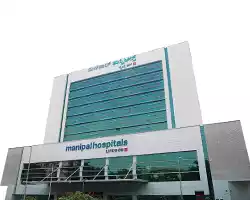
Old Airport Road - Bengaluru
-
.webp)
Mysuru
-
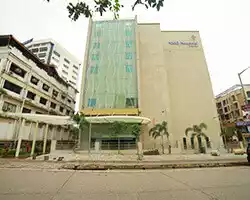
Mangaluru
-
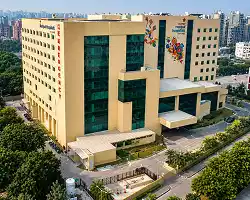
Dwarka - Delhi NCR
-
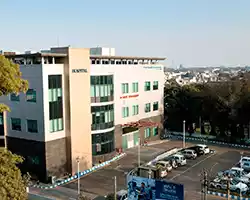
Patiala
-
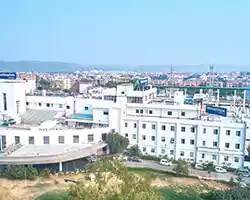
Jaipur
-
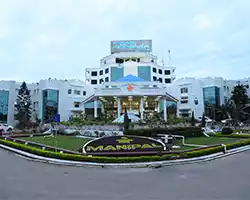
Vijayawada
-
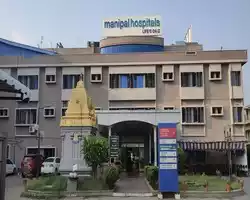
Salem
-
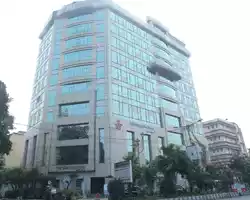
Salt Lake - Kolkata
-
Baner - Pune
-
Bhubaneswar
-
Siliguri
-
Ranchi
How It Works
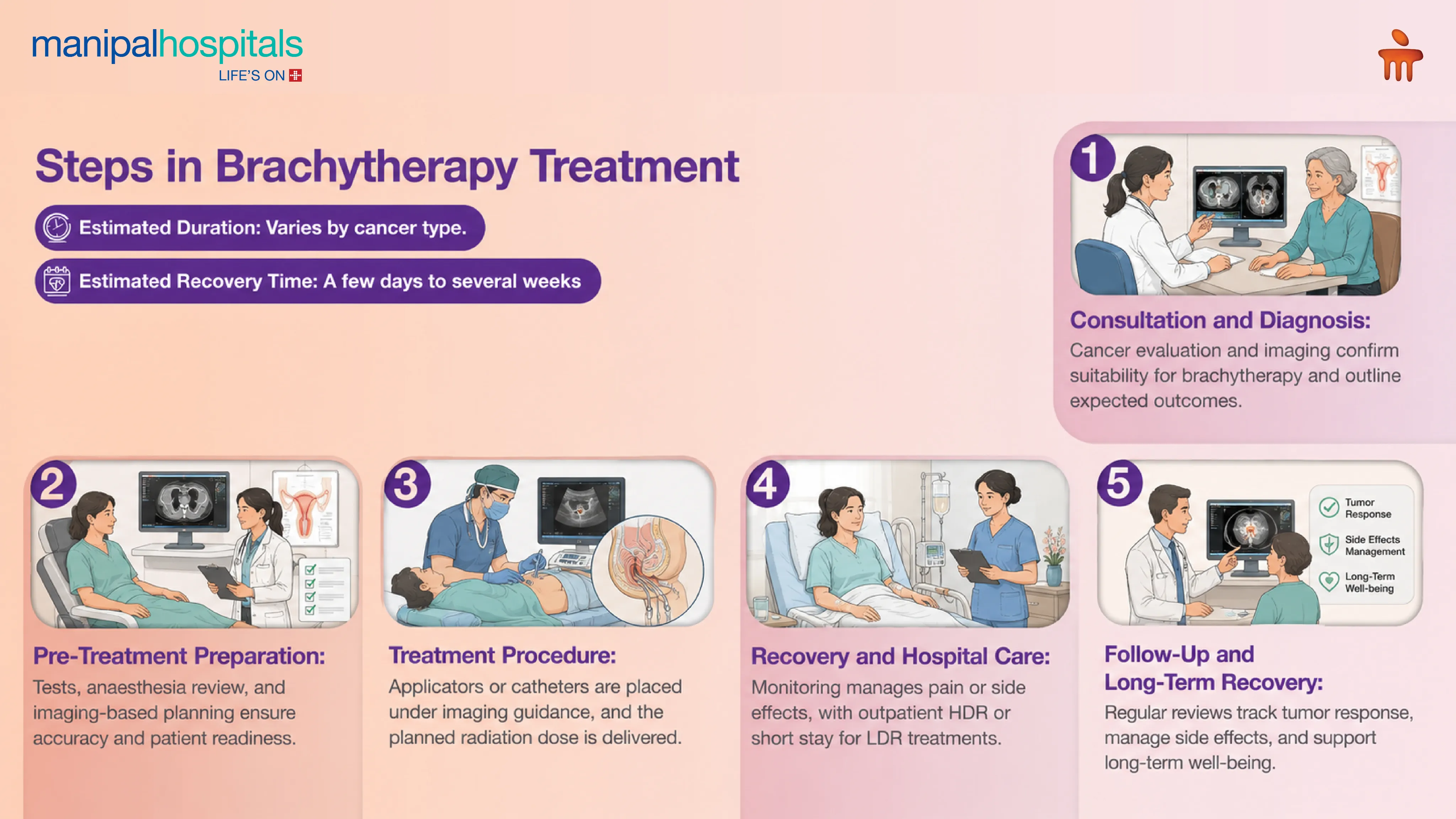
Brachytherapy is delivered in a structured and well-planned manner by the Radiation Oncology team. The process begins with a detailed consultation that reviews cancer type, stage, imaging findings, and the patient’s overall medical condition. Treatment planning determines whether brachytherapy is suitable as a stand-alone option or as part of a combined treatment plan with external radiotherapy.
Imaging tools such as ultrasound, CT, or MRI guide the accurate placement of applicators or catheters. Local or general anaesthesia is used to ensure comfort. Radioactive sources are placed inside or close to the tumour, either temporarily or permanently. Medical physicists and radiation oncologists calculate the exact dose and duration needed to achieve the desired treatment effect.
Patients are monitored throughout each session to ensure safety and stability. Temporary applicators are removed after the prescribed dose is delivered. Clear instructions are provided regarding rest, activity, hygiene, and any required contact precautions. Regular follow-up appointments help assess tumour response, manage side effects, and coordinate further cancer care. This structured pathway ensures accuracy, safety, and continuity throughout the full course of brachytherapy treatment.
Didn’t find what you were looking for?
Request a CallbackBenefits
Patients receiving brachytherapy at Manipal Hospitals experience several important benefits:
-
Radiation is delivered in a highly targeted manner, helping protect surrounding healthy tissue.
-
Treatment times are shorter, resulting in fewer hospital visits.
-
Tumour-specific delivery supports organ preservation and improved function.
-
Brachytherapy can be safely combined with surgery or external radiotherapy.
-
Continuous supervision by oncology specialists ensures safe, coordinated care throughout treatment.
What to Expect
Consultation and diagnosis
Cancer evaluation, imaging review, and discussion of brachytherapy as a treatment option. Goals, benefits, and possible side effects are explained.
Pre-Treatment preparation
Routine blood tests, anaesthesia assessment, and imaging-based planning. Instructions are given on fasting, medicines, and necessary arrangements.
Treatment day(s)
Admission to a specialised oncology unit. Anaesthesia is administered, and applicators or catheters are inserted accurately under imaging guidance. The planned brachytherapy dose is delivered.
Recovery room monitoring
Observation for pain, bleeding, or anaesthesia-related effects. Pain control and early mobilisation are advised.
Hospital stay
Many HDR treatments are performed on an outpatient basis, while LDR sessions may require a short hospital stay.
Physical care and activity
Guidance includes rest, hygiene measures, and awareness of warning signs. Supportive medicines are prescribed for bladder or bowel irritation.
Follow-up appointments
Regular visits assess tumour response, manage late effects, and coordinate ongoing oncology care.
Long-term recovery
Surveillance imaging, clinical examinations, and survivorship support help maintain long-term quality of life.
Why Manipal Hospitals?
Manipal Hospitals is a leading centre for advanced cancer treatments. It provides safe, image-guided brachytherapy India across its Radiation Oncology units. The team includes experienced radiation oncologists, medical physicists, anaesthesia specialists, and oncology nurses who collaborate to deliver accurate internal radiation. Modern treatment planning systems, strict safety protocols, and integrated oncology services support consistent and reliable outcomes. Each treatment plan is tailored using imaging, computer planning, and multidisciplinary input. Long-term follow-up, counselling, and supportive care programmes help patients manage side effects and maintain quality of life. This combination of skilled teams, advanced systems, and coordinated care supports quality internal radiation therapy.
Centre of Excellence
The Radiation Oncology Department at Manipal Hospitals offers a full spectrum of radiotherapy services, including brachytherapy. Using modern imaging, treatment planning software, and specialised delivery units, the team provides precise, personalised cancer care. The department offers advanced brachytherapy India, focusing on tumour control, organ preservation, and comprehensive support for patients throughout their treatment journey.
Services Offered
Manipal Hospitals in India offer key brachytherapy services, which include:
-
Intracavitary brachytherapy for selected gynaecological cancers.
-
Interstitial brachytherapy for head and neck and soft tissue tumours.
-
Brachytherapy for prostate cancer and certain breast cancers.
-
Boost brachytherapy combined with external beam radiotherapy when required.
-
Palliative brachytherapy to relieve symptoms and improve comfort.
Facilities & Services
Manipal Hospitals in India offer supportive facilities, which include:
-
Image-guided treatment planning and simulation systems for precise delivery.
-
Dedicated brachytherapy suites with comfortable recovery areas.
-
Multidisciplinary tumour boards that support coordinated treatment decisions.
-
Integrated nursing and anaesthesia teams for safe procedure support.
-
Patient education, survivorship counselling, and structured follow-up programmes.
Frequently Asked Questions
Brachytherapy is used to treat specific cancers by placing radiation sources inside or near the tumour. This approach delivers targeted treatment and limits radiation exposure to surrounding healthy tissue. It also helps achieve effective tumour control with fewer side effects.
Brachytherapy places the radiation source inside the body, close to the tumour. External radiotherapy delivers beams from outside. This internal approach enables a higher, focused dose to the tumour with less radiation reaching nearby organs and healthy tissues.
Anaesthesia and pain control are provided during the procedure to ensure comfort. Afterwards, most patients experience only mild pressure or discomfort at the treatment site. These sensations are usually short-lived and improve quickly with rest and simple supportive care.
Brachytherapy sessions depend on the type of cancer, its stage, and the specific treatment technique being used. Your oncologist will assess these factors. They will provide a personalised schedule during the planning phase to ensure safe and effective treatment.
Yes. It is often used in conjunction with surgery, chemotherapy, or external beam radiation. This helps improve treatment outcomes and supports tumour control. Manipal Hospitals ensures safe and effective brachytherapy in India as part of comprehensive cancer care.
Consult our Experts



You’re on Our Indian Website
Visit the Global site for International patient services
'Click' to chat with us
