
Autologous Transplant
Manipal Hospitals provides specialised care for patients requiring advanced stem cell–based therapies. As a centre for autologous stem cell transplant in India, the hospital offers precise evaluation, skilled haematology expertise, and modern transplant facilities. The treatment process involves collecting a patient’s own stem cells. High-dose therapy is then administered, followed by safe reinfusion to restore healthy bone marrow. Each patient undergoes a thorough assessment to confirm suitability. With coordinated monitoring and infection-control support, Manipal Hospitals ensures a reliable transplant journey.
Hospital Locations
-
Old Airport Road - Bengaluru
-
.webp)
Mysuru
-

Mangaluru
-
Dwarka - Delhi NCR
-

Patiala
-

Jaipur
-

Vijayawada
-
Salem
-

Salt Lake - Kolkata
-

Baner - Pune
-

Bhubaneswar
-

Siliguri
-

Ranchi

How It Works
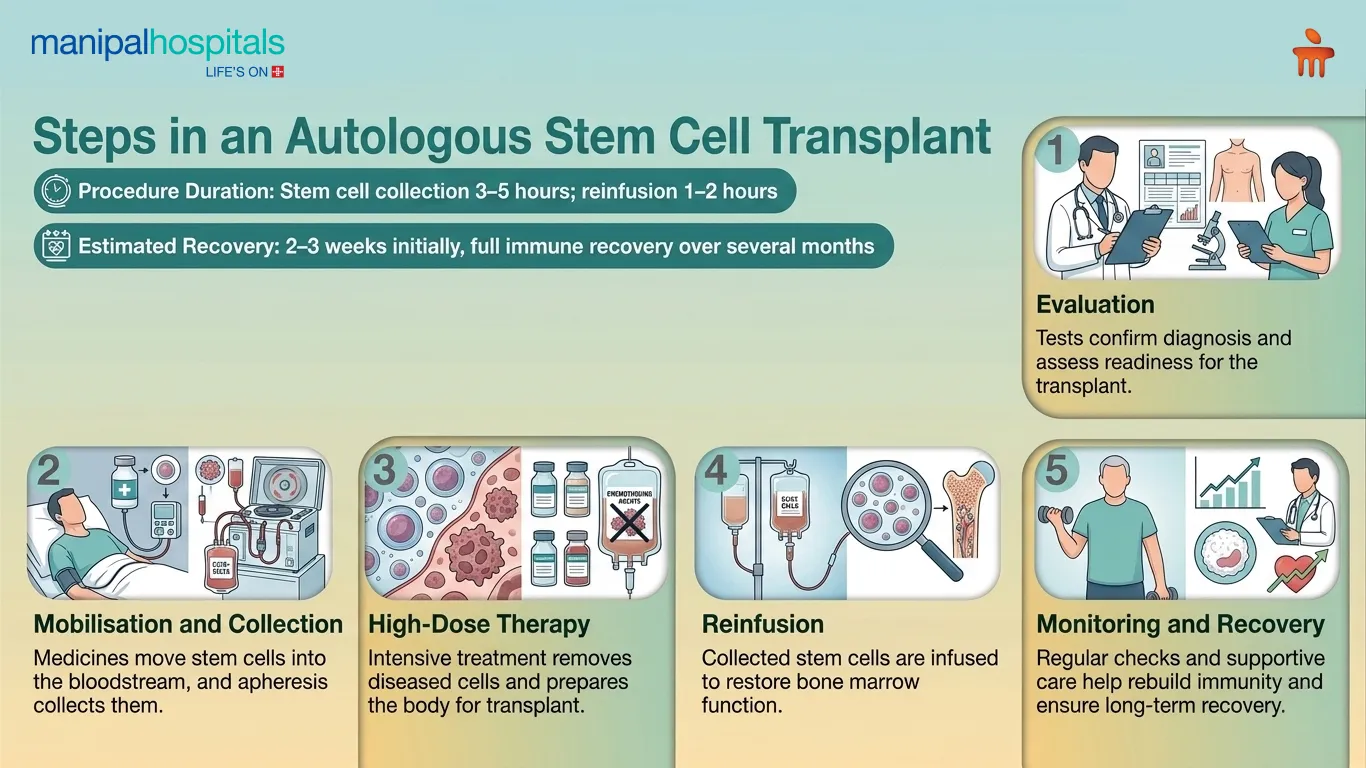
An autologous stem cell transplant is a planned procedure. In this procedure, a patient’s own stem cells are collected, preserved, and reinfused after high-dose treatment. At Manipal Hospitals, the process begins with a comprehensive evaluation that includes blood tests, imaging, and bone marrow studies. This helps determine suitability for autologous stem cell transplant in India and ensures that patients can safely proceed.
Once approved, the first step is stem cell mobilisation. Medications are given to stimulate stem cell production, allowing them to move from the bone marrow into the bloodstream. These cells are then collected through a specialised procedure called apheresis and stored in controlled conditions.
After collection, patients receive high-dose chemotherapy to treat the underlying condition. Once this phase is completed, the preserved stem cells are reinfused through a vein. These cells travel back to the bone marrow and begin the process of rebuilding healthy blood and immune cells.
Following reinfusion, patients are monitored closely in a protected environment. Vital signs, blood counts, and infection risks are reviewed regularly. Supportive care includes antibiotics, nutrition guidance, and hydration support. Recovery continues over several weeks. Follow-up visits are arranged to track progress and adjust treatment as needed.
Didn’t find what you were looking for?
Request a CallbackBenefits
Autologous stem cell transplantation at Manipal Hospitals offers structured, safe, and well-supported care for patients requiring advanced haematology treatment.
Benefits include:
-
Uses the patient’s own stem cells to support safer recovery
-
Lower risk of rejection and immune complications
-
Precise high-dose therapy targeting the underlying condition
-
Modern transplant units with controlled environments
-
Continuous monitoring by experienced haematology teams
-
Strong infection-control measures
What to Expect
Consultation and diagnosis
Patients begin with a detailed haematology assessment, including blood tests and bone marrow evaluation. The team explains the suitability and expected steps involved in an autologous stem cell transplant in India.
Pre-operative preparation
Patients receive guidance on medications, infection precautions, nutritional needs, and mobilisation injections to help stem cells move into the bloodstream.
Treatment day
It refers to the collection or reinfusion day. The patient is prepared, monitored, and connected to the apheresis or infusion system.
Recovery room monitoring
After stem cell collection or reinfusion, vital signs, hydration, and early responses are monitored. Patients rest in a protected area to ensure stability.
Hospital stay
Patients stay in specialised transplant units with controlled environments. Blood counts, infection risks, and treatment tolerance are reviewed frequently.
Physical therapy
Gentle mobility, breathing exercises, and light activity are encouraged to maintain strength and improve recovery.
Follow-up appointments
Regular reviews help track blood count recovery, adjust medicines, and monitor side effects.
Long-term recovery
Patients receive detailed guidance on infection control, nutrition, activity levels, and medication adherence.
Why Manipal Hospitals?
Manipal Hospitals is recognised for delivering comprehensive care for patients undergoing autologous stem cell transplantation. The hospital’s Haematology and Bone Marrow Transplant Unit is equipped with dedicated HEPA-filtered transplant rooms. Advanced apheresis systems and continuous monitoring facilities further support safe and controlled treatment. Experienced haematologists, transplant physicians, and trained nursing teams work together to assess suitability. They plan treatment and guide patients through each stage of the transplant process.
The hospital follows structured clinical pathways that emphasise infection control, timely intervention, and personalised care. During high-dose therapy and reinfusion, patients are managed in protected environments designed to reduce risk and ensure close supervision. Post-treatment care includes regular monitoring of blood counts, medication adjustments, nutritional guidance, and supportive therapies to promote steady recovery.
Manipal Hospitals also focuses on patient education, helping individuals understand treatment expectations, potential side effects, and long-term recovery needs. Rehabilitation support and follow-up consultations improve the transplant journey.
Centre of Excellence
The Haemato-Oncology Department at Manipal Hospitals provides specialised care for patients requiring bone marrow and stem cell transplants. It also offers comprehensive management for patients needing advanced haematology treatments. The department is staffed by experienced haematologists, transplant physicians, and skilled nursing teams who manage every stage of the transplant process.
Services Offered
Manipal Hospitals provides a complete range of services to support patients throughout the autologous stem cell transplant process.
Services include:
-
Comprehensive haematology evaluation
-
Stem cell mobilisation therapy
-
Apheresis for stem cell collection
-
High-dose chemotherapy planning
-
Stem cell cryopreservation
-
Controlled reinfusion of harvested stem cells
-
HEPA-filtered transplant room care
-
Infection-control monitoring
-
Supportive therapy, nutrition guidance, and hydration care
Facilities & Services
Manipal Hospitals offers advanced facilities designed to support safe and controlled autologous stem cell transplant care. Each unit is equipped to manage complex haematology cases with precision.
Key facilities and services include:
-
HEPA-filtered transplant rooms
-
Modern apheresis systems
-
Cryopreservation facilities for stem cells
-
Specialised haematology ICUs
-
Continuous vital monitoring
-
On-site laboratory and blood bank support
Frequently Asked Questions
Patients with certain blood cancers, severe marrow disorders, or conditions requiring high-dose therapy may need this procedure. Suitability is confirmed after detailed medical evaluation, diagnostic tests, and review of overall health stability.
Initial recovery usually takes two to three weeks, followed by gradual immune rebuilding over several months. Manipal Hospitals provides regular monitoring, infection-prevention measures, and medication adjustments to support safe and steady recovery.
The procedure itself is not painful. Stem cell collection feels similar to a long blood-donation session, and reinfusion is usually comfortable. Temporary fatigue or mild discomfort may occur during recovery.
Risks may include infection, low blood counts, treatment-related side effects, or delayed immune recovery. At Manipal Hospitals, these risks are managed through close monitoring, protective environments, and timely medical intervention.
At Manipal Hospitals, patients undergoing autologous stem cell transplant in India receive evaluation, stem cell mobilisation, collection, high-dose treatment, reinfusion, and structured monitoring. Each stage is closely supervised to ensure safety and effective recovery.
Consult our Experts



You’re on Our Indian Website
Visit the Global site for International patient services
'Click' to chat with us
