
Antihistamines
Manipal Hospitals provides specialist-led evaluation and treatment for patients requiring Antihistamine drugs in India through structured and personalised clinical care. The team evaluates allergy triggers like pollen, food, dust, insect bites, and medicines before selecting oral, topical, or injectable options. Each plan aims to reduce itching, sneezing, hives, and redness while maintaining safety. Doctors choose suitable medicines based on age, comorbidities, and symptom severity to ensure safe and individualised treatment.
Hospital Locations
-

Old Airport Road - Bengaluru
-
.webp)
Mysuru
-

Mangaluru
-
Dwarka - Delhi NCR
-

Patiala
-

Jaipur
-

Vijayawada
-

Salem
-
Kharadi - Pune
-

Salt Lake - Kolkata
-

Bhubaneswar
-

Siliguri
-

Ranchi

How It Works
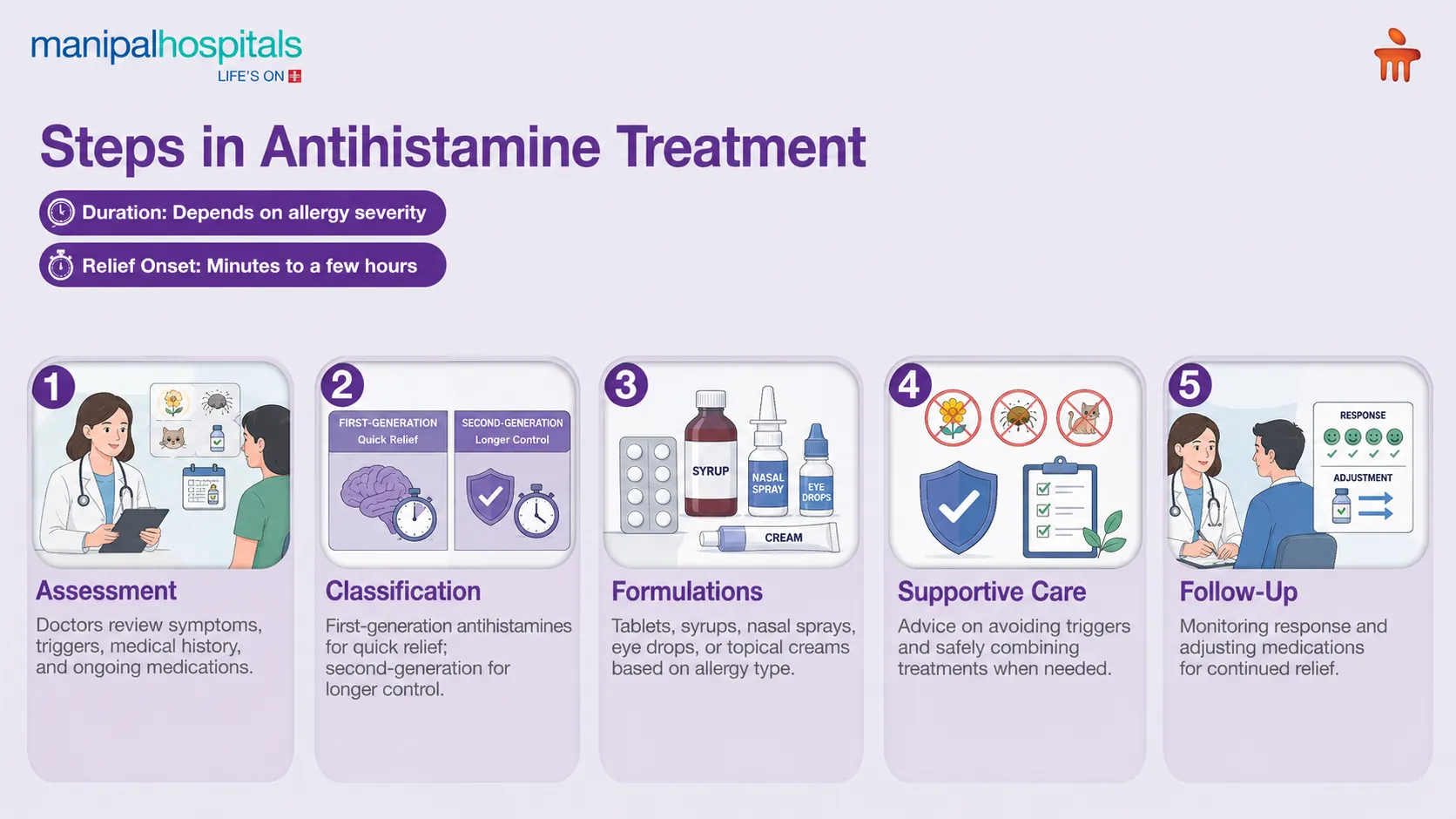
Antihistamines work by blocking histamine, a chemical released during allergic reactions. This helps reduce itching, redness, swelling, and nasal discharge. These medicines are used for conditions such as allergic rhinitis, urticaria, conjunctivitis, insect bite reactions, and some food-related allergies. They may also support care for nausea or motion sickness under medical advice, showing the antihistamine drugs uses in India.
Doctors classify antihistamines into first-generation and second-generation groups. First-generation medicines may cause drowsiness and are often used for short-term relief or nighttime symptoms. Second-generation options are preferred for long-term control because they cause less sedation and offer once-daily dosing. H1 antihistamines primarily target skin and respiratory allergies, while H2 antihistamines help manage stomach acid-related concerns.
At Manipal Hospitals, specialists assess symptom patterns, health conditions, and medication tolerance before selecting the most suitable antihistamine. Treatment may include oral tablets, nasal sprays, eye drops, or topical creams. The team provides clear advice on dosage, timing, and safe use. Regular monitoring ensures symptom control and minimises side effects. Doctors may combine antihistamines with nasal steroids, inhalers, or gastric medicines if clinically required.
Didn’t find what you were looking for?
Request a CallbackBenefits
Manipal Hospitals offers antihistamine-based care through a structured evaluation and provides safe treatment. Benefits include:
-
Individualised selection of antihistamines
-
Options for both sedating and non-sedating medicines
-
Access to ENT, Dermatology, and Gastroenterology specialists
-
Monitoring for side effects and interactions
-
Guidance for children, older adults, and pregnant patients
What to Expect
Consultation and Diagnosis
Patients at Manipal Hospitals begin with a detailed review of symptoms, allergy history, and potential triggers. Doctors examine the skin, eyes, nose, and respiratory system, and may recommend blood or skin tests to confirm the allergy type.
Treatment Planning
Specialists explain antihistamine drugs uses in India and help patients understand the differences between first- and second-generation options. They also provide guidance on supportive treatments, such as nasal sprays, eye drops, and gastric medicines, to ensure comprehensive symptom relief.
Starting Treatment
Patients receive clear instructions on medication timing, dosage, and safety precautions, including possible sedation and activities to avoid. This helps ensure proper use and reduces the risk of side effects.
Monitoring and Review
Regular follow-ups allow doctors to track symptoms, adjust dosage, and introduce long-term prevention strategies. Patients are also educated about avoiding common triggers that may worsen their condition.
Long-Term Recovery
If symptoms recur, continued review helps assess medication tolerance and necessary lifestyle adjustments. Throughout the process, care remains patient-focused, promoting safe, effective, and sustained symptom control.
Why Manipal Hospitals?
Manipal Hospitals provides coordinated care for patients requiring antihistamine therapy, supported by a multidisciplinary team from Allergy, ENT, Dermatology, and Gastroenterology. The hospital has offered structured allergy management for many years. It integrates updated clinical guidance for urticaria, allergic rhinitis, insect bite reactions, and gastric acid concerns. Specialists use a wide range of modern antihistamine options, providing safer choices for short- and long-term treatment.
The facility features well-equipped clinics, in-house diagnostics, and pharmacy support under a single roof, ensuring smooth continuity of care. Patients receive clear counselling on medication safety, side effects, and treatment combinations. The hospital’s team-driven model strengthens patient confidence, offering reliable support for complex allergy-related concerns.
Centre of Excellence
The Department of Internal Medicine at Manipal Hospitals provides comprehensive evaluation and management of allergy-related conditions. They treat conditions affecting the skin, respiratory system, eyes, and digestive tract. Physicians assess triggers, symptom patterns, and medical history before tailoring treatment plans that may include antihistamines and supportive therapies. The department focuses on symptom control and flare-up prevention.
Services Offered
Manipal Hospitals offers a wide range of patient-centric, allergy-focused services:
-
Care for allergic rhinitis and sinus-related symptoms
-
Evaluation of urticaria, angioedema, and chronic itching
-
Management of food, drug, and insect bite allergies
-
Support for gastric acid-related issues with H2 antihistamines
-
Paediatric allergy assessment and treatment guidance
Facilities & Services
Manipal Hospitals offers its patients various facility and services, which includes:
-
Modern outpatient clinics with Allergy, ENT, Dermatology, and Gastroenterology support
-
In-house laboratories for allergy testing
-
Pharmacy access with a wide range of antihistamines
-
Emergency services for severe allergic reactions
-
Structured follow-up and safety monitoring
Frequently Asked Questions
Antihistamines help reduce sneezing, a runny nose, itching, and hives caused by allergies or insect bites. Some medicines also support relief from nausea or motion sickness when prescribed by a doctor.
Second-generation antihistamines are generally suitable for longer use because they cause less drowsiness. However, patients should always follow medical advice to ensure safe and appropriate treatment and achieve the best possible health outcomes.
Drowsiness, dry mouth, and dizziness may occur, especially with first-generation medicines. Non-sedating options usually cause fewer side effects but may interact with other medicines so patients should consult healthcare providers to avoid unexpected reactions.
Certain antihistamines are considered safer than others during pregnancy. A specialist can guide suitable choices based on the patient’s stage of pregnancy and overall health condition to ensure the safest possible treatment plan.
Antihistamine drugs in India work by blocking histamine, a chemical released during allergic reactions that triggers multiple symptoms. This helps reduce itching, sneezing, rashes, watery eyes, and nasal symptoms more effectively.
Consult our Experts



You’re on Our Indian Website
Visit the Global site for International patient services
'Click' to chat with us
