
Allogeneic Stem Cell Transplant
Manipal Hospitals offers allogeneic stem cell transplants in India for patients with blood cancers and severe bone marrow disorders. Haematology teams perform HLA matching to identify suitable donors and ensure safe stem cell infusion. Treatment includes conditioning, transplant day procedures, and recovery in HEPA-filtered isolation units. Continuous infection control, supportive care, and graft monitoring help stabilise engraftment. Coordinated multidisciplinary management supports long-term recovery and relapse surveillance. The transplant pathway is structured to support patient safety at every stage.
Hospital Locations
-

Old Airport Road - Bengaluru
-
.webp)
Mysuru
-

Mangaluru
-
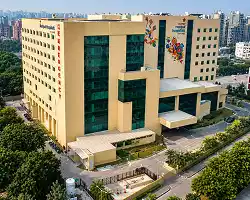
Dwarka - Delhi NCR
-

Patiala
-

Jaipur
-

Vijayawada
-

Salem
-

Salt Lake - Kolkata
-

Baner - Pune
-

Bhubaneswar
-

Siliguri
-

Ranchi
How It Works
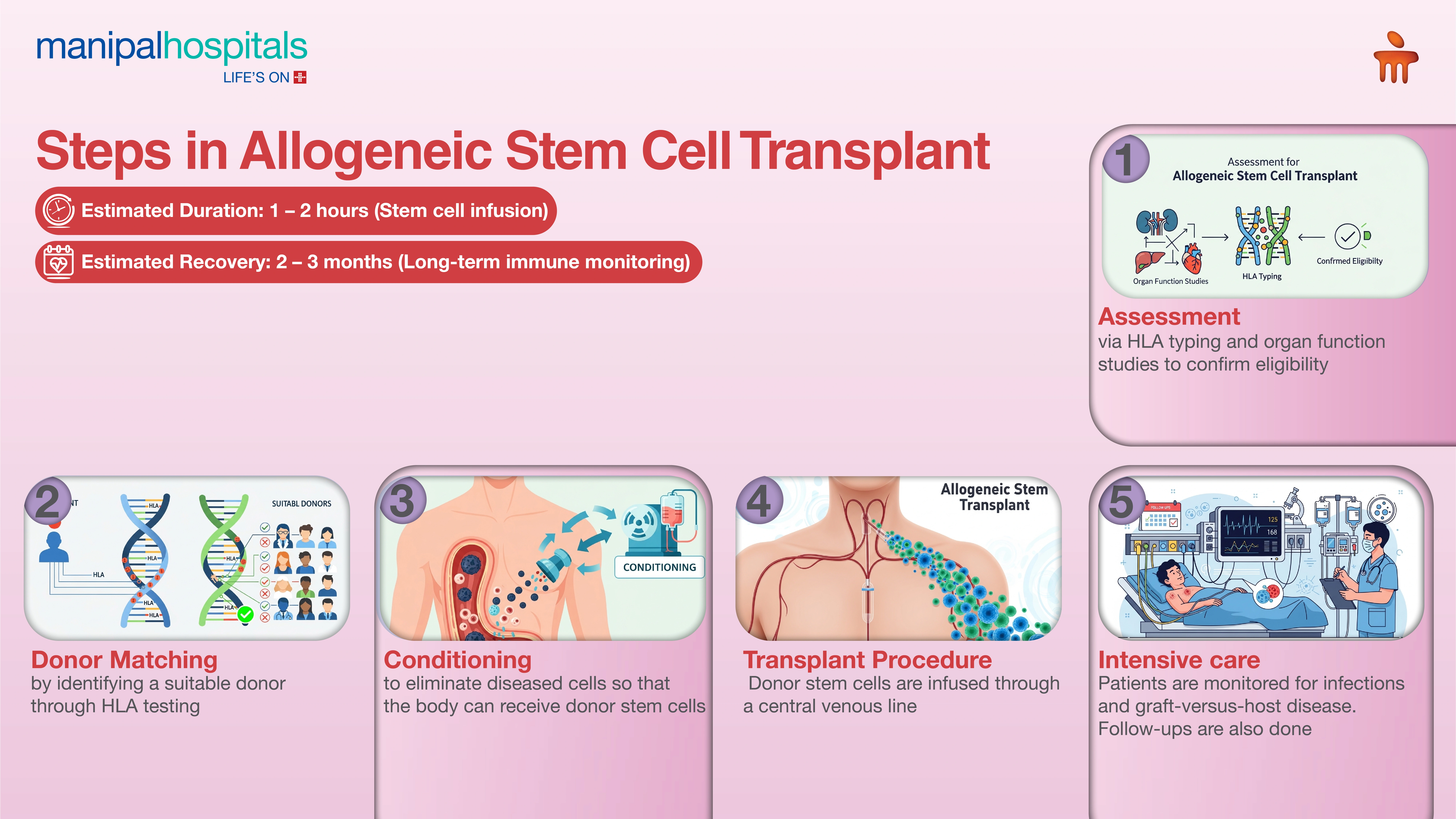
Allogeneic transplant in India transfers healthy stem cells from a matched donor to replace diseased bone marrow. Donors may be a sibling, an unrelated volunteer, or a haploidentical family member. The process begins with a detailed evaluation, including blood tests, HLA typing, organ function assessment, and infectious disease screening. Once a suitable donor is identified, the patient undergoes conditioning therapy. Conditioning may include high-dose chemotherapy or radiotherapy to eliminate diseased cells and suppress the immune system so it can accept donor cells.
Stem cells are collected from the donor through peripheral blood stem cell collection or bone marrow harvest. These cells are infused into the patient through a central line, similar to a blood transfusion. After infusion, the medical team closely monitors the patient for engraftment, which usually occurs within 2–3 weeks. During this period, infection control, supportive care, and management of complications such as graft-versus-host disease are essential. Recovery continues with long-term follow-up to monitor immune reconstitution and clinical stability.
Didn’t find what you were looking for?
Request a CallbackBenefits
Allogeneic transplant at Manipal Hospitals provides the following therapeutic benefits:
-
Replaces diseased marrow with healthy donor cells.
-
Delivers graft-versus-tumour effect against cancer cells.
-
Restores long-term haematopoiesis and immune function.
-
Treats leukaemia, lymphoma, and bone marrow failure.
-
Offers remission potential in high-risk blood disorders.
-
Enables treatment options when chemotherapy alone is insufficient.
What to Expect
Consultation and Diagnosis
Haematologists evaluate disease status, organise HLA typing, and identify suitable donors. Risk assessments and transplant readiness evaluations are completed according to institutional protocols for allogeneic transplant in India.
Pre-Operative Preparation
Organ function tests, viral screening, and central line insertion occur. Patients receive counselling on isolation, medication plans, and expected timelines.
Surgery Day
Stem cells are infused through a central line in a transfusion-style procedure following conditioning.
Recovery Room Monitoring
Vital signs, reactions, and early engraftment markers are checked frequently. Blood counts, cultures, and organ function panels guide daily decisions.
Hospital Stay
Patients typically remain in HEPA-filtered isolation rooms for several weeks until neutrophil and platelet recovery stabilises.
Physical Therapy
Gentle mobilisation programmes support strength and prevent deconditioning during recovery.
Follow-Up Appointments
Weekly reviews track GVHD, infections, medication levels, and chimerism results.
Long-Term Recovery
Immunosuppressants taper gradually. Lifestyle guidance, vaccinations, and relapse monitoring support long-term remission.
Why Manipal Hospitals?
Manipal Hospitals provides specialised care for bone marrow and stem cell transplants, supported by extensive haemato-oncology experience. Dedicated transplant units feature HEPA-filtered isolation rooms, molecular diagnostic laboratories, apheresis systems, and specialised blood component facilities.
Haematologists collaborate with infectious disease experts, intensivists, nutritionists, and transplant nurses to manage conditioning, infusion, engraftment, and complications such as GVHD or infections. The hospital's transplant programme includes unrelated donor services aligned with global registries, allowing access to wider donor options when family matches are unavailable.
Digital tracking, counselling, and structured education help patients and carers understand each stage and manage expectations during treatment. This integrated approach ensures safe, coordinated care and supports improved transplant outcomes.
Centre of Excellence
The Haemato-Oncology Department at Manipal Hospitals delivers specialised care for blood cancers and marrow disorders through structured allogeneic transplant protocols. Teams manage donor matching, conditioning therapy, stem cell infusion, and continuous post-transplant monitoring. Focus includes infection prevention, GVHD control, engraftment stability, relapse surveillance, and coordinated multidisciplinary support for long-term recovery.
Services Offered
Manipal Hospitals provides comprehensive Allogeneic Transplant services:
-
HLA typing and matched donor identification
-
Conditioning regimens tailored to disease
-
Stem cell collection and infusion
-
GVHD prevention and management
-
Chimerism testing and marrow recovery assessment
-
Long-term survivorship and relapse monitoring programs
-
Supportive transfusion and infection-control care
-
Post-transplant nutritional and rehabilitation support
-
Psychosocial support for patients and caregivers
Facilities & Services
Manipal Hospitals supports transplants with specialised infrastructure:
-
HEPA-filtered isolation rooms for infection control
-
Apheresis units for donor stem cell collection
-
Molecular laboratories for HLA typing and chimerism testing
-
Blood product irradiation and processing systems
-
Dedicated transplant clinics and pharmacy support
-
Multidisciplinary teams coordinating all treatment stages
-
24/7 monitored critical-care backup
Frequently Asked Questions
An allogeneic stem cell transplant involves infusing healthy stem cells from a matched donor into a patient to replace diseased bone marrow. It is used to treat blood cancers, bone marrow failure, and certain genetic blood disorders.
Donor matching uses HLA typing, which analyses genetic markers on white blood cells. Siblings are the most likely matches, but national and international registries help identify unrelated donors when family matches are unavailable.
Initial inpatient recovery often requires one to three weeks, with immune reconstitution continuing over two to three months or longer. Regular follow-ups help monitor engraftment, treat complications, and support overall recovery.
Possible risks include infections, delayed engraftment, organ complications, and graft-versus-host disease. These risks are monitored through regular assessments, supportive care, and early intervention. The transplant team manages complications promptly to support patient safety during recovery.
Recovery involves regular monitoring, infection prevention, and gradual immune rebuilding. Follow-ups track engraftment and manage complications, forming an essential part of successful allogeneic stem cell transplant in India and overall long-term healing.
Consult our Experts



You’re on Our Indian Website
Visit the Global site for International patient services
'Click' to chat with us
