
Acute Kidney Injury Treatment
Manipal Hospitals provides specialised nephrology care for patients experiencing sudden kidney dysfunction. As a centre for acute kidney injury treatment in India, the hospital offers timely evaluation, advanced diagnostics, and coordinated medical support. Nephrologists assess fluid balance, electrolyte levels, infection risks, and underlying causes to guide appropriate treatment. Interventions may include medication, controlled hydration, and renal support therapies when required. With continuous monitoring, safe clinical practices, and structured follow-up, Manipal Hospitals ensures each patient receives prompt, well-organised, and comprehensive care.
Hospital Locations
-
Old Airport Road - Bengaluru
-
.webp)
Mysuru
-

Mangaluru
-
Dwarka - Delhi NCR
-

Patiala
-

Jaipur
-

Vijayawada
-
Salem
-

Salt Lake - Kolkata
-

Baner - Pune
-

Bhubaneswar
-

Siliguri
-

Ranchi

How It Works
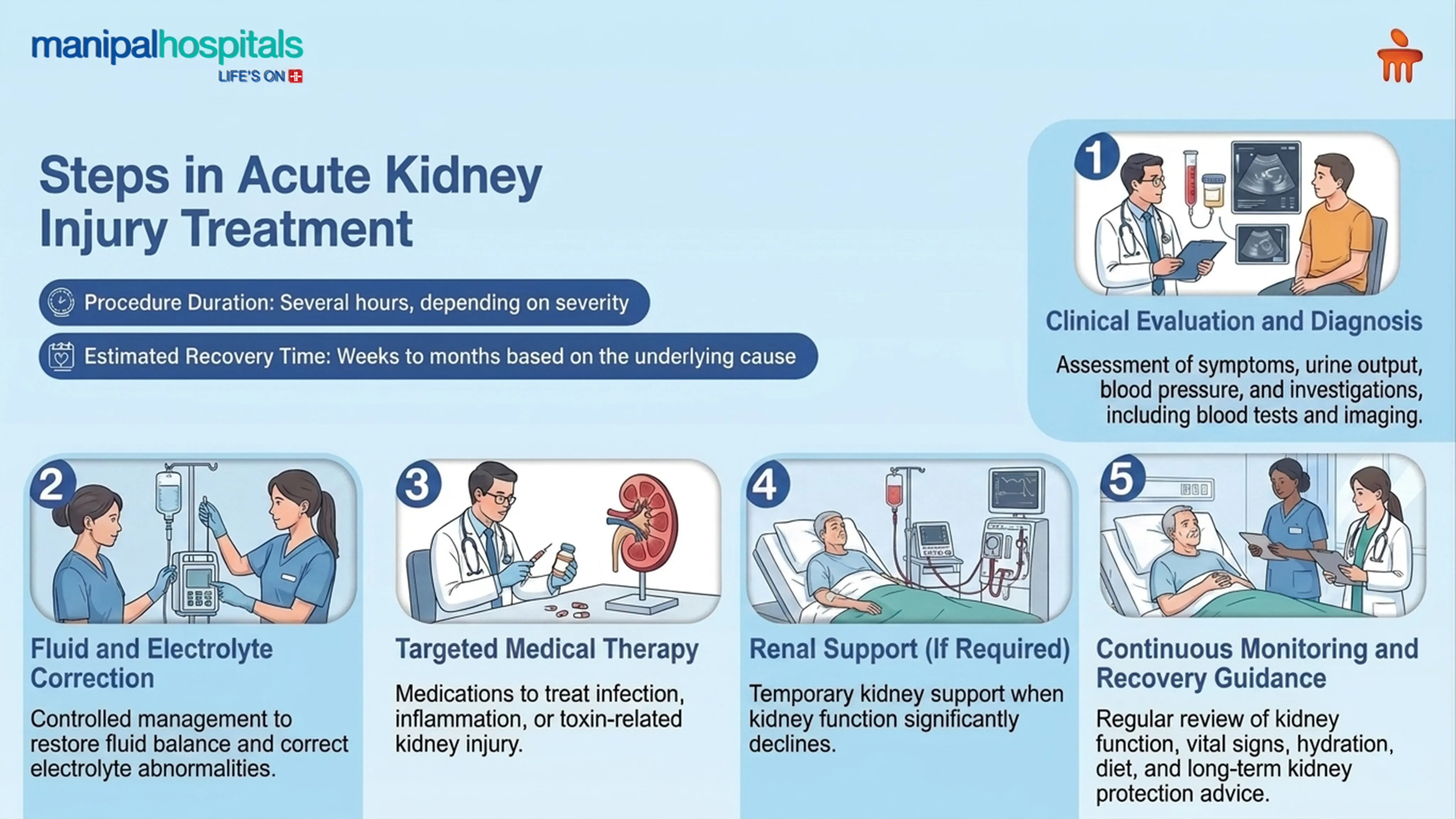
Manipal Hospitals approaches kidney failure treatment in India through a clear, step-wise and closely coordinated process. Before treatment begins, nephrologists carry out a detailed clinical assessment to identify the cause and severity of acute kidney injury. This includes a review of symptoms, hydration levels, urine output, blood pressure, and current medications. Blood tests, urine analysis, and imaging help determine whether the condition is linked to infection, dehydration, obstruction, or toxin exposure. Treatment planning is based on these findings and addressing the underlying cause.
During the active phase of medical management, patients receive fluid management and targeted medication. If kidney function declines further, renal replacement therapy may be initiated temporarily. Throughout this phase, vital signs, blood values, and urine output are observed closely to guide timely adjustments and ensure treatment is well tolerated. For severe cases, long-term and supportive care may include dialysis.
Throughout the management, continuous monitoring supports safe recovery. Kidney function tests are repeated, fluid plans are adjusted, and medications are reviewed to prevent further strain on the kidneys. Dietary guidance, hydration planning, and symptom awareness are provided to support long-term stability and reduce the risk of recurrence.
Didn’t find what you were looking for?
Request a CallbackBenefits
Patients receive structured, timely, and closely monitored care that helps restore kidney function.
-
Early detection and rapid medical stabilisation
-
Personalised treatment based on the underlying cause
-
Controlled fluid and electrolyte management
-
Reduced risk of complications through continuous monitoring
-
Access to advanced diagnostic and renal support systems
-
Safe recovery planning with dietary and hydration support
-
Regular follow-up to maintain long-term kidney health
What to Expect
Consultation and diagnosis
The process begins with a detailed evaluation that includes clinical examination, urine output assessment, blood tests, and imaging studies. It helps identify the cause of acute kidney injury and understand its severity.
Treatment Planning
The medical team designs a personalised plan based on the findings. This may include controlled hydration, medication adjustments, infection management, or renal support if needed.
Treatment Phase
Patients receive targeted therapy, such as intravenous fluids, electrolyte correction, antibiotics, or temporary renal support. Vital signs, urine output, and kidney markers are monitored closely to guide adjustments.
Recovery and Monitoring
Kidney function is reassessed regularly to ensure improvement. Fluid plans, medications, and diet are modified to support safe and steady recovery.
Follow-Up Appointments
Scheduled reviews help track kidney function, refine treatment, and prevent future complications. The team monitors blood pressure, hydration status, and potential triggers.
Long-Term Recovery
Patients receive guidance on diet, hydration, lifestyle changes, and early symptom recognition. Consistent follow-up helps maintain kidney health and reduce the risk of recurrence.
Why Manipal Hospitals?
Manipal Hospitals provides comprehensive nephrology care supported by experienced specialists and modern diagnostic systems. Well-structured clinical pathways guide the management of acute kidney injury. The nephrology team includes skilled consultants, renal nurses, intensivists, and dieticians who work together to assess kidney function, identify the cause of injury, and plan safe, timely treatment.
The hospital houses advanced laboratory services, continuous monitoring facilities, and dedicated renal support units for comprehensive management. Treatments are delivered in controlled environments designed to minimise infection risk and support steady recovery. Clear communication is prioritised so patients understand their treatment plan, expected progress, and the importance of hydration, medication, and monitoring.
Rehabilitation support and dietary guidance help strengthen recovery and reduce future kidney strain. Follow-up appointments ensure kidney function continues to improve and that any early concerns are addressed promptly.
Centre of Excellence
The Nephrology Department at Manipal Hospitals provides specialised management for patients with acute kidney injury and related conditions. The department is staffed by experienced nephrologists, renal nurses, and critical care teams who monitor patients closely through every stage of treatment. With structured care plans and coordinated follow-up, the department supports safe recovery and long-term kidney health.
Services Offered
Patients receive comprehensive renal support designed to stabilise kidney function and address the underlying cause of acute kidney injury.
-
Detailed nephrology evaluation and diagnostic testing
-
Fluid and electrolyte management
-
Infection screening and targeted treatment
-
Renal replacement therapy when required
-
Continuous vital and kidney-function monitoring
-
Nutrition and hydration guidance
-
Follow-up planning for long-term kidney protection
Facilities & Services
Patients receive access to advanced renal facilities designed to support acute kidney injury treatment.
-
Advanced laboratory and imaging support
-
Dedicated renal monitoring units
-
Modern equipment for renal replacement therapy
-
Controlled IV fluid and medication administration areas
-
Skilled nephrology and critical care nursing teams
-
On-site blood pressure, electrolyte, and toxin monitoring
-
Infection-control and sterile procedure environments
Frequently Asked Questions
Acute kidney injury can result from dehydration, infections, medications, sudden drops in blood pressure, or blocked urine flow. Early testing helps identify the cause so treatment can begin quickly and safely.
Diagnosis is based on blood tests, urine analysis, imaging, and a review of symptoms and medical history. These assessments help determine the severity of kidney damage and guide appropriate treatment.
At Manipal Hospitals, patients receiving acute kidney injury treatment in India undergo clinical evaluation, fluid and electrolyte correction, medication review, supportive therapies, and continuous monitoring. These steps help stabilise kidney function and prevent further complications.
Many cases are reversible when treated early. Recovery depends on the underlying cause, severity, and patient health. Regular monitoring and supportive therapy help restore kidney function gradually over time.
Not all patients require dialysis. It is recommended only when kidney function drops significantly, waste levels rise, or fluid balance cannot be maintained through medical treatment alone.
Consult our Experts



You’re on Our Indian Website
Visit the Global site for International patient services
'Click' to chat with us
