Book Appointments &Health Checkup Packages
The Laparoscopic Surgery Department at Manipal Hospitals performs minimally invasive diagnostic and therapeutic surgical procedures for both simple and complex conditions of the abdomen and pelvic area.
Manipal Hospitals has skilled surgeons who are experts in minimally invasive and laparoscopic surgery. Offering both traditional laparoscopic procedures and robotic-assisted procedures, our surgeon use new technologies to provide comfortable, painless, and accurate diagnosis and treatment.
The removal of the gallbladder is a common procedure that is best performed through laparoscopic surgery. Depending on the nature of the case and laparoscopic equipment, up to 4 incisions of between 0.5-1 cm are made to perform a Cholecystectomy. The laparoscopic apparatus then allows the surgeon to drain the gallbladder and extracting it through the…
Your appendix is a narrow tubular finger-shaped organ attached to the intestines on the lower right side of your abdomen. It houses bacteria. When the appendix is blocked, it becomes inflamed and results in appendicitis. A ruptured appendix can allow the bacteria to spread to the other organs posing a risk to life. Laparoscopy is the best diagnostic…
Your gallbladder will need to be removed if the gallstones in it cause complications. The presence of gallstones is called cholelithiasis. Doctors may also recommend this type of surgery if you have - biliary dyskinesia, which occurs when the gallbladder doesn’t empty bile correctly due to a defect; pancreatitis or the inflammation of the pancreas…
The spleen is an organ that is located under your rib cage on the upper left side of your abdomen. It helps fight infection and filters waste material such as old or damaged blood cells from your blood. Splenectomy is a surgical procedure to remove your spleen. This is done when the spleen is ruptured, becomes cancerous, contracts idiopathic thrombocytopenic…
Laparoscopy is used in diagnosis when non-invasive methods can't diagnose a condition, and surgeries performed are via small incisions, which increases postoperative patient recovery, reduces blood loss and pain and significantly improve cosmesis.
Diagnosis options are offered through laparoscopy for Pelvic inflammatory disease (PID), Endometriosis, Ectopic pregnancy, Ovarian cyst, Fibroids, Female infertility, Undescended testicles, Appendicitis, Unexplained abdominal pain, Liver cancer, Pancreatic cancer , Ovarian cancer, Bile duct cancer, Gallbladder cancer
Laparoscopic techniques are commonly used for a wide range of procedures, including the removal of an inflamed appendix or gallbladder, the treatment of Crohn’s disease and diverticulitis, as well as hernia repairs, stomach ulcer management, gastrectomies, oncological surgeries, and gynecological interventions such as addressing ectopic pregnancies, fibroids, or performing a hysterectomy. Our experts ensure patients' recovery and improved quality of life using advanced, minimally invasive laparoscopic procedures.
Patients visit the Laparoscopic Surgery department at Manipal Hospitals India for expert diagnosis, advanced treatment, and personalized care. The department specializes in managing Laparoscopic Cholecystectomy, Laparoscopic Appendectomy - Removing an inflamed appendix, Laparoscopic cholecystectomy - removing the gallbladder to treat gallstones, Splenectomy and Shunt Surgeries, ensuring medical support for patients.
The Laparoscopic Surgery department at Manipal Hospitals India provides a wide range of treatments, including:
To book an appointment with a Laparoscopic Surgery expert at Manipal Hospitals India, please call 1800 102 5555. Our dedicated team will assist you in scheduling a convenient consultation.
The Laparoscopic Surgery department is led by highly qualified specialists, including:
For your initial consultation at Manipal Hospitals India, please bring:
Providing these documents will help our specialists ensure a comprehensive diagnosis and personalized treatment plan.
Manipal Hospitals India is a preferred choice for Laparoscopic Surgery due to:
Laparoscopic techniques are commonly used for a wide range of procedures, including the removal of an inflamed appendix or gallbladder, the treatment of Crohn’s disease and diverticulitis, as well as hernia repairs, stomach ulcer management, gastrectomies, oncological surgeries, and gynecological interventions such as addressing ectopic pregnancies, fibroids, or performing a hysterectomy. Our experts ensure patients' recovery and improved quality of life using advanced, minimally invasive laparoscopic procedures.
Manipal Hospitals has skilled surgeons who are experts in minimally invasive and laparoscopic surgery. Offering both traditional laparoscopic procedures and robotic-assisted procedures, our surgeon use new technologies to provide comfortable, painless, and accurate diagnosis and treatment.
Although laparoscopic surgery is minimally invasive and requires small incisions it is not minor surgery. Laparoscopic surgery is major surgery with the potential for major complications including bleeding and injury to the visceral organs, GI tract and bladder.
Laparoscopic surgeries require small incisions and are minimally invasive so the recovery time is typically less than surgeries performed through traditional methods. Patients can go home after doctors have checked for any side effects and the effects of the anaesthesia have worn off.
Some common laparoscopic surgeries are:
(i) Appendectomy
(ii) Cholecystectomy
(iii) Gall bladder removal
(iv) Splenectomy and shunt surgeries (spleen removal)
(v) Anti-reflux surgery
(vi) Hernia’s repair
(vii) Ectopic pregnancy
After patients are discharged from the hospital, they undergo recovery at home. Keeping a few things in mind will ensure fast and proper recovery after laparoscopy:
(i) Avoid alcohol, fast food and driving for 1 to 2 days after the surgery
(ii) Ensure you are on bed rest for at least 3 days
(iii) You can remove the bandage the morning after the surgery but steri-strips should be removed 2-3 days after the surgery
(iv) You can resume bathing a few hours after the surgery
Laparoscopic surgeries are performed under the effect of anaesthesia so patients don’t feel pain during the surgery. After the surgery is done, there may be mild to moderate pain and thumping in the incision areas. Within a few days, the pain goes away. Moreover, doctors also prescribe painkillers to ease the pain after surgery.
Common side effects of laparoscopy are:
(i) abdominal pain
(ii) nausea or vomiting
(iii) continuous coughing
(iv) shortness of breath
(v) inability to urinate
(vi) lightheadedness
Laparoscopy used to diagnose a condition can take anywhere between 30 and 60 minutes. Laparoscopic surgery used to treat conditions can take longer depending on the type of surgery.
After laparoscopy is done, patients might feel swelling in the stomach area for a few weeks. Mostly, swelling and bloating will clear by 12 weeks, however, in some rare cases, it can remain up to 12 months after surgery.
Typically laparoscopic surgery uses two to four small incisions of half an inch or less.
Visible veins and constant pain don’t have to be a part of everyday life. Ms. Neeva Das shares her journey of overcoming issues of varicose veins with advanced surgical care at Manipal Hospital Salt Lake.…
After battling obesity, Ms. Bidisha Saha chose bariatric surgery and is now on a steady path to better health and renewed confidence.
Not every lump is a cause for panic—but it’s important to know what it is. Dr. Gautam Bhaumik, Senior Consultant – General & Laparoscopic Surgeon at Manipal Hospital Salt Lake, explains sebaceous cysts,…
Confused about what the appendix does and when it becomes a problem? Dr. Debkumar Ray, Senior Consultant – General & Laparoscopic Surgery at Manipal Hospital Saltlake, explains everything you need to…
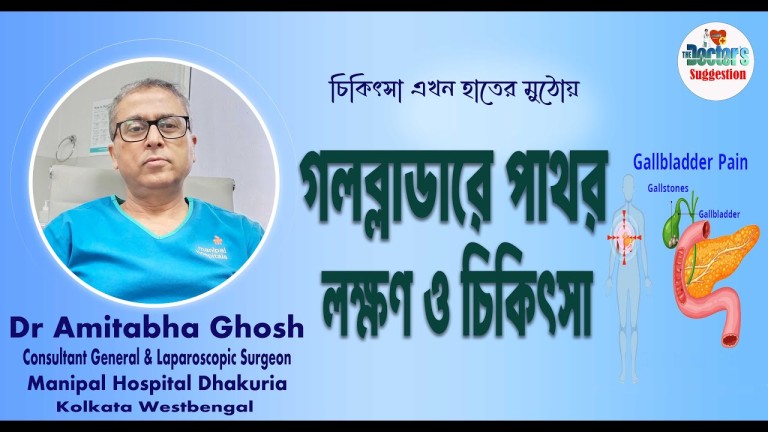
Gallbladder Stone Symptoms: গলব্লাডার স্টোন হবার কারণ কি? এর লক্ষণ, প্রতিকার কি? Dr. Amitabha Ghosh
Gallbladder Stone Cause Symptoms Diagnosis & Prevention Treatment Explained By Dr.Amitabha Ghosh Consultant- General & Laparoscopic Surgeon, Manipal Hospital, Dhakuria
Laparoscopic surgery has become a preferred approach for gallbladder removal, hernia repair, colonic procedures, gastric surgeries, and appendix removal. In this video, Dr. Rajeev Pullagura, Consultant…
In this video, Dr. Sanjeev Vikram Shetty, Consultant – Laparoscopic GI, Bariatric & General Surgery at Manipal Hospitals Jayanagar, Bengaluru, shares his professional journey and over 10 years of clinical…
Dr. G. Moinoddin, Bariatric Surgeon at Manipal Hospital Old Airport Road, Bengaluru, explains in simple terms the different types of bariatric surgeries and how they help with weight loss. He talks about…
In this video, Dr. Wasim M Dar, Consultant – General & Laparoscopic Surgery at Manipal Hospital Jayanagar, Bengaluru, shares his expertise in managing diverse surgical conditions. With over 15 years of…
In this video, Dr. Sanjeev Vikram Shetty, Consultant – Laparoscopic GI, Bariatric & General Surgery at Manipal Hospital Jayanagar, Bengaluru, shares his professional journey and over 10 years of clinical…
Most lumps that are formed in the breast are benign or non-cancerous, such as the fibroadenomas, but any symptoms of discomfort in the breasts must be addressed immediately, says Dr. Manjunath Shastri,…
Bleeding, pain during bowel movements, or swelling near the rectum? These could be signs of a fissure, fistula, or another rectal condition. In this video, Dr. Gautam Bhaumik explains why it's important…
Home Specialities Laparoscopic-surgery
Visit the Global site for International patient services