7 Min Read
Many women notice changes in their periods and brush them off at first. Heavier bleeding, spotting between cycles, or the occasional delayed period can easily be blamed on stress, travel, or a busy routine. However, sometimes they may signal a condition called endometrial hyperplasia. In this condition, the lining of the uterus becomes thicker than is considered healthy. While it is a manageable condition, it is important to address it early because certain types of endometrial hyperplasia can increase the long-term risk of developing uterine cancer. In this blog, we’ll explain what it is, the warning signs to look for, and care tips.
Synopsis
- What Is Endometrial Hyperplasia?
- Types of Endometrial Hyperplasia
- Causes of Endometrial Hyperplasia
- Symptoms of Endometrial Hyperplasia
- Who Is at Risk?
- How Is Endometrial Hyperplasia Diagnosed?
- Treatment Options for Endometrial Hyperplasia
- Lifestyle Changes to Reduce Recurrence Risk
- When Should You See a Doctor?
- Can Endometrial Hyperplasia Lead to Cancer?
- Conclusion
What Is Endometrial Hyperplasia?
Endometrial hyperplasia refers to thickening of the uterine lining due to hormonal imbalance. In a standard menstrual cycle, the hormones estrogen and progesterone work in coordination. Estrogen is responsible for the growth of the uterine lining, while progesterone helps stabilize the tissue and eventually causes the body to shed it during menstruation.
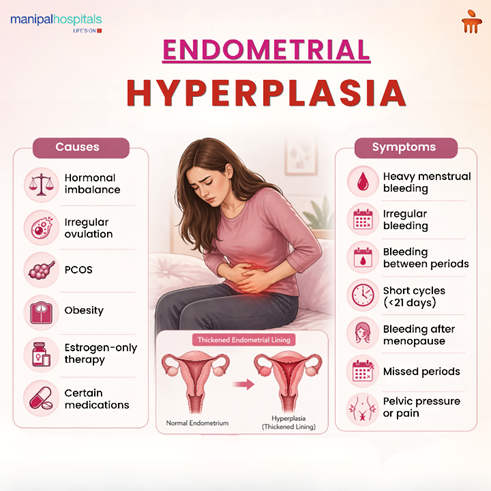
When a woman has endometrial hyperplasia, her body produces an excess of estrogen without a sufficient amount of progesterone to balance its effects. This results in a continuous thickening of the uterine wall rather than the usual monthly shedding. Over time, this overgrowth leads to a thick uterine lining that can cause abnormal bleeding patterns and other physical symptoms.
Types of Endometrial Hyperplasia
Medical professionals categorise the types of endometrial hyperplasia based on the appearance of the cells and the density of the glands within the tissue. The classification below is used to determine the appropriate clinical approach:
|
Type |
Description |
Cancer Risk |
|
Simple hyperplasia (without atypia) |
Mild thickening with normal cells |
Low risk |
|
Complex hyperplasia (without atypia) |
Increased gland growth, but normal cells |
Low to moderate risk |
|
Atypical hyperplasia |
Abnormal cell changes are present |
Higher risk |
|
Complex atypical hyperplasia |
Significant abnormal growth |
High risk of cancer |
Causes of Endometrial Hyperplasia
When endometrial hyperplasia is identified, the focus is typically on identifying the source of hormonal imbalance. The most frequent cause is having "unopposed" estrogen, which means the body is exposed to estrogen without the counterbalancing effect of progesterone. Common factors that contribute to endometrial hyperplasia include:
-
Hormonal imbalance: Too much estrogen causes the uterine lining to keep growing.
-
Irregular ovulation: Lack of ovulation reduces progesterone, which leads to extra lining growth.
-
PCOS: Hormone changes from PCOS cause the lining to get thicker.
-
Obesity: Adipose tissue (fat) contributes to increased estrogen production, which helps the lining grow.
-
Hormone therapy: Taking only estrogen without progesterone makes the lining thicker.
-
Certain medications: Drugs such as tamoxifen can cause the uterine lining to grow.
Knowing these causes helps doctors give the right treatment and keep reproductive health safe.
Symptoms of Endometrial Hyperplasia
Abnormal uterine bleeding is the most common sign, but there can be other symptoms too.
-
Heavy menstrual bleeding: Periods may suddenly feel longer or harder to manage.
-
Irregular cycles: Bleeding between periods or cycles that do not follow a regular pattern.
-
Short cycles: Menstrual cycles that last less than 21 days.
-
Bleeding after menopause: It is a serious warning sign and should be checked by a doctor.
-
Absence of periods: This can occur when hormones are not balanced.
-
Pelvic pain or pressure: Some people may feel mild pain or pressure in the pelvic area.
If this sounds familiar, it’s worth getting checked rather than waiting it out.
Who Is at Risk?
Certain factors can increase your risk of developing this condition.
-
Perimenopause or menopause: Hormonal fluctuations increase risk.
-
Diabetes: Affects hormonal balance and metabolism.
-
Obesity: Higher estrogen levels can cause the uterine lining to thicken.
-
Family history: Having relatives with uterine problems can increase your risk.
-
Longer exposure to estrogen: Starting periods early or having late menopause increases risk.
-
Infertility or difficulty getting pregnant: May be linked to a hormonal imbalance.
Knowing about these risks can help with early screening and prevention.
How Is Endometrial Hyperplasia Diagnosed?
Doctors use a mix of clinical exams and diagnostic tests to make a diagnosis.
-
Transvaginal ultrasound: Helps assess thickness but cannot confirm hyperplasia without biopsy.
-
Endometrial biopsy: Examines tissue cells to confirm the diagnosis.
-
Hysteroscopy: Allows doctors to visualise the uterine lining directly.
-
Dilation and curettage (D&C): A procedure where tissue is removed for closer examination.
These tests help determine the type of hyperplasia and guide the best treatment plan.
Treatment Options for Endometrial Hyperplasia
Treatment depends on age, fertility goals, and cancer risk. Repeat biopsy is often required to monitor the response. Not every case needs aggressive treatment, but ignoring symptoms is not advised.
Let us look at some treatment options:
1. Hormonal Therapy (Most Common)
This is the most common form of endometrial thickness treatment. Synthetic progesterone, known as progestin, is used to balance the estrogen and thin the uterine lining. This can be delivered through:
-
Oral medications taken on a specific daily or monthly schedule.
-
A progestin-releasing intrauterine device.
2. Surgical Treatment Options
|
Treatment |
What It Involves |
When It Is Recommended |
|
Dilation and Curettage (D&C) |
Removes excess lining tissue |
For diagnosis or symptom relief |
|
Hysteroscopy |
Visualises and removes abnormal areas |
For targeted treatment |
|
Hysterectomy |
Removal of the uterus |
For severe or unusual cases |
In women planning pregnancy, treatment aims to preserve the uterus whenever possible.
In advanced cases or when cancer risk is high, doctors may recommend endometrial hyperplasia repair treatment in Sarjapur Road, Bangalore, or similar specialised care centres.
Lifestyle Changes to Reduce Recurrence Risk
Lifestyle changes are just as important as medical treatment.
-
Keep a healthy weight: This keeps estrogen levels stable.
-
Eat balanced meals: This supports your hormone health overall.
-
Stay physically active: This maintains your hormone levels and helps your metabolism.
-
Quit smoking: This lowers risks to your hormones and blood vessels.
-
Manage long-term conditions: Such as diabetes and thyroid problems.
These steps can help you manage a thick uterine lining in the long run.
When Should You See a Doctor?
Early evaluation can prevent complications. Seek medical advice if you experience:
-
Persistent heavy or irregular bleeding
-
Bleeding after menopause
-
Sudden changes in the menstrual cycle
-
Pelvic pain or discomfort
-
Repeated missed periods
Prompt diagnosis ensures timely endometrial thickness treatment and reduces risks.
Can Endometrial Hyperplasia Lead to Cancer?
Not all cases lead to cancer, but the risk varies depending on the type.
-
Without atypia: Low risk and usually easy to treat.
-
With atypia: There is a higher risk of getting uterine cancer.
-
Cases that aren't treated: The risk goes up over time.
Regular check-ups and treatment can greatly reduce the risk of the condition getting worse.
Conclusion
This condition can be treated, but you should not ignore it. If your periods become heavier or your bleeding is irregular, your body is telling you to pay attention. The good news is that most women get better with early check-ups and proper care from best Obstetrics and Gynaecology care in Manipal Hospitals, Sarjapur Road.
If you plan to protect your reproductive health, getting endometrial hyperplasia repair treatment in Sarjapur Road, Bangalore, at Manipal Hospitals early can really make a difference. You can also consult the best specialists in Obstetrics and Gynaecology near Sarjapur Road for expert guidance and personalised care.
FAQ's
In mild cases without atypia, it may improve on its own, especially if hormone levels normalise. However, it is important to monitor the condition to prevent worsening.
It can become serious if it is not treated. Atypical endometrial hyperplasia increases the risk of developing endometrial or uterine cancer.
No, it does not only affect women going through menopause. Although it is more common after menopause, younger women with PCOS, obesity, or hormone imbalances can also develop the condition. Timely detection of symptoms and seeing a doctor early can help protect reproductive health.
Hormonal treatments usually preserve fertility. Surgery, such as a hysterectomy, removes the uterus. Treatment choice depends on the condition's severity, age, and future pregnancy plans.
Follow-up frequency varies. Doctors often suggest ultrasounds or biopsies every few months to keep an eye on progress and make sure the uterine lining goes back to normal.
Share this article on:


.webp "Common Gynaecological Problems Women Ignore: A Clinical Guide")