8 Min Read
When a couple faces difficulties conceiving, attention frequently turns to understanding fertility factors. A common factor in male fertility issues is a lower-than-average concentration of sperm in the semen, a condition medically known as oligospermia. Because reproductive health is a sensitive subject, many men hesitate to discuss it or feel anxious about what the condition means for their future family plans.
A key point to understand is that having a lower sperm concentration does not mean conception is impossible; it simply means it may take more time and require targeted medical guidance. Many men do not realise there is an issue until they actively try to start a family. This blog covers how to identify hidden indicators, what biological factors contribute to the condition, and how modern medical care can help you navigate this reproductive challenge.
Synopsis
Understanding the Condition and Its Silent Nature
To address fertility concerns effectively, it helps to understand what a lower count actually means. According to health standards, a normal sperm concentration is 15 million sperm or more per millilitre of semen. Anything below this threshold is classified as a low count.
For the vast majority of men, the condition is entirely silent. It does not alter a person's appearance, physical strength, or general fitness. Furthermore, it does not change the texture, volume, or appearance of the semen in a way that can be seen with the naked eye. Because of this lack of obvious indicators, understanding the symptoms of low sperm count involves looking closely at underlying hormonal or structural issues rather than visible changes in your daily life.Understanding other common urologic problems can also help men recognise reproductive health concerns early.
What are the Symptoms of Low Sperm Count
While the main effect is the inability to conceive a child, some men do experience subtle clues due to the underlying medical issues causing the low count. These can be related to a hormonal imbalance, an inherited chromosomal abnormality, or a physical blockage.
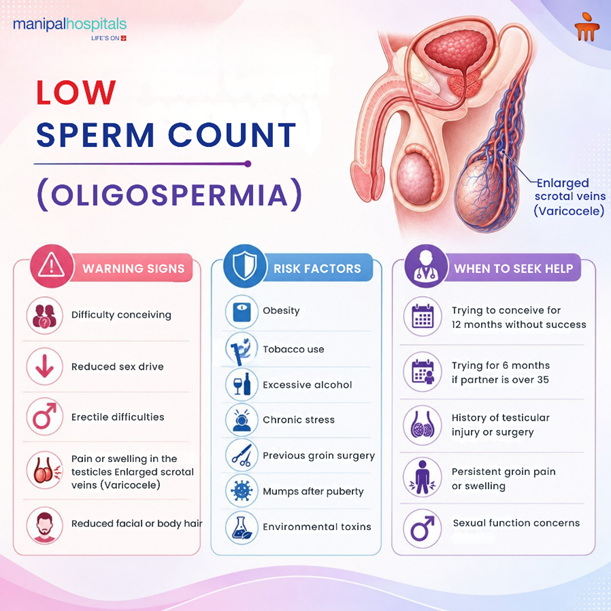
The most notable symptoms of low sperm count and associated conditions include:
-
Difficulty with Sexual Function: Problems with maintaining an erection (erectile dysfunction) or a noticeable drop in sexual desire can point to a lower production of testosterone, which directly impacts sperm development.
-
Pain or Swelling in the Groin: Pain, discomfort, or a tangible lump within the testicles or surrounding scrotum can indicate an underlying physical issue, such as an infection or structural damage.
-
Changes in Body and Facial Hair: A reduction in facial or body hair, along with other signs of a hormonal shift, suggests that the endocrine system is not producing enough hormones to support normal reproductive health.
-
Enlarged Veins in the Scrotum: A swelling of the veins that drain the testicles, known as a varicocele, can cause local overheating and aching, which is a major contributor to reduced sperm quality.
Hidden Signs: What to Look Out For
Because visible changes are rare, discovering an issue usually requires looking closely at your health history and specific physical patterns. When investigating the symptoms, doctors often look for these subtle indicators during an examination:
A History of Testicular Problems
If you experienced undescended testicles during infancy, sustained a significant injury to your groin during sports, or underwent surgeries in the groin area, your reproductive tissue might have structural scarring that impacts production.
Past Viral Infections
Certain viral illnesses contracted after puberty, such as mumps, can cause severe inflammation inside the testicles. This inflammation can lead to permanent changes in the tissue responsible for generating sperm cells.
Chronic Exposure to Environmental Factors
Regular exposure to heavy heat sources, such as working in industrial kitchens, using laptops directly on the lap for extended periods, or regular hot tub use, can raise testicular temperature enough to reduce production.
Comparing Causes, Indicators, and Treatment Pathways
Addressing reproductive health requires a clear look at what is happening inside the body. The table below outlines different underlying issues, how they present, and how medical teams approach them:
| Underlying Root Cause |
Common Low Sperm Count Signs |
Impact on the Reproductive System |
Typical Medical Approach |
| Varicocele |
Swollen scrotal veins, localised dull ache |
Raises testicular temperature, lowering count |
Minor surgical repair or vein correction |
| Hormonal Imbalance |
Reduced facial hair, low sex drive |
Lowers the signals needed to generate sperm |
Targeted hormone medications |
| Infection |
Testicular pain, burning during urination |
Causes inflammation that blocks or damages cells |
Course of antibiotics and anti-inflammatories |
|
Genetic Factors |
Smaller testicles, developmental shifts |
Structural changes from birth affect production |
Specialised genetic counselling and IVF options |
| Lifestyle Stressors |
Unexplained infertility; fatigue and stress factors |
Oxidative stress damages developing sperm cells |
Weight management, dietary shifts, habit changes |
Modern Options for Low Sperm Count Treatment
Discovering a lower count can be disappointing, but it is important to know that modern medicine offers a wide array of reliable paths forward. The right approach depends entirely on what the diagnostic testing reveals about the root cause of your condition.The Urology Department also provides penile prosthesis evaluation and advanced treatment options for men with erectile difficulties affecting sexual health.
When exploring low sperm count treatment, options generally fall into several clear categories:
-
Surgical Interventions: If a varicocele is present, a specialist can perform a minor procedure to close off the enlarged vein, redirecting blood flow to healthier vessels. This often significantly improves both sperm count and quality within a few months.
-
Medications and Antibiotics: When an ongoing infection is identified in the reproductive tract, a targeted course of antibiotics can clear the issue and restore normal function.
-
Hormone Treatments: If blood tests reveal that low hormone levels are stalling sperm production, a doctor can prescribe specific hormone therapies to restore the chemical balance.
-
Assisted Reproductive Technology (ART): If standard treatments do not raise the numbers sufficiently, advanced laboratory techniques like Intrauterine Insemination (IUI) or In Vitro Fertilisation (IVF) can be used. These methods require only a small number of healthy sperm to achieve a successful pregnancy.
When to Seek Medical Guidance
If you and your partner have been trying to conceive regularly without success for over a year, it is a sensible time to schedule a fertility evaluation.Consult the Urology Department for specialised male fertility assessment, diagnosis, and personalised treatment options.However, you should consider booking an appointment sooner, within six months of trying, if you are over 35 or if you have a known history of testicular trauma, surgery, or erectile issues. Seeking help early removes the stress of uncertainty and ensures you receive an accurate diagnosis without unnecessary delays.
Conclusion
A low sperm count is a common medical issue that can feel overwhelming, but it is highly manageable with the right expertise. Identifying the underlying cause through simple tests like a semen analysis allows doctors to create a clear, personalised plan to help you reach your family goals. For precise diagnostics and advanced, supportive care, consult our specialists for expert low sperm count treatment in Salem at Manipal Hospital. Our dedicated reproductive health team provides a comfortable environment and modern clinical solutions to guide you safely through your treatment journey.
FAQ's
Not necessarily. A low sperm count relates specifically to the concentration of sperm cells inside the semen and does not automatically change your ability to have an erection or climax. However, if the low count is caused by a drop in testosterone levels, that hormonal shift can result in a reduced sex drive.
Yes, in many cases, lifestyle modifications can make a positive difference. Maintaining a healthy body weight, avoiding smoking and excessive alcohol consumption, managing stress, and keeping the pelvic area cool by wearing loose clothing can help optimise your body's natural sperm production.
The primary diagnostic tool is a straightforward lab test called a semen analysis. A technician examines a provided sample under a microscope to evaluate the total number of sperm, their shape, and how well they move. Doctors usually request two separate samples a few weeks apart to get a consistent reading.
While some initial studies suggest that long-term exposure to high radiofrequency electromagnetic radiation might have mild effects on sperm health, there is no definitive medical consensus. To be safe, many specialists advise avoiding keeping a transmitting phone in your front trousers pocket for extended periods.
It takes approximately 70 to 90 days for new sperm cells to develop fully and mature inside the body. Because of this biological timeline, you can generally expect to wait about three months after starting a treatment or lifestyle change before a follow-up test will show an improvement in your numbers.
Share this article on: