8 Min Read
When a doctor recommends an upper gastrointestinal evaluation to look inside your digestive tract, the first question most people ask is: is endoscopy painful? It is completely natural to feel nervous before any medical test that involves inserting an instrument into your body. This anxiety is usually caused by a lack of clear information about what actually happens during the procedure.
An upper endoscopy is a standard diagnostic test used to investigate persistent symptoms such as chronic heartburn, swallowing difficulties, unexplained nausea, or upper stomach pain. The Gastroenterology Department provides comprehensive evaluation and advanced diagnostic procedures for a wide range of digestive health conditions.Understanding how the equipment functions, how your comfort is managed, and what the recovery phase looks like can help remove your worries before your appointment.
Synopsis
What is an Upper Endoscopy?
An upper endoscopy involves a medical device called an endoscope. This is a thin, flexible tube, roughly the width of your little finger, equipped with a miniature high-definition camera and a light at its tip. The tube allows a specialist to view the lining of your upper digestive tract in real-time on a digital monitor.
During the examination, the specialist guides the tube through your mouth. As shown in the diagram, it moves down the Oesophagus, enters the Stomach, and moves into the first part of the small intestine, known as the Duodenum. The camera allows the doctor to check for inflammation, ulcers, or abnormal tissue growth, and can take a small tissue sample, called a Biopsy of the stomach, if required.
Answering the Core Concern: Sensation vs. Pain
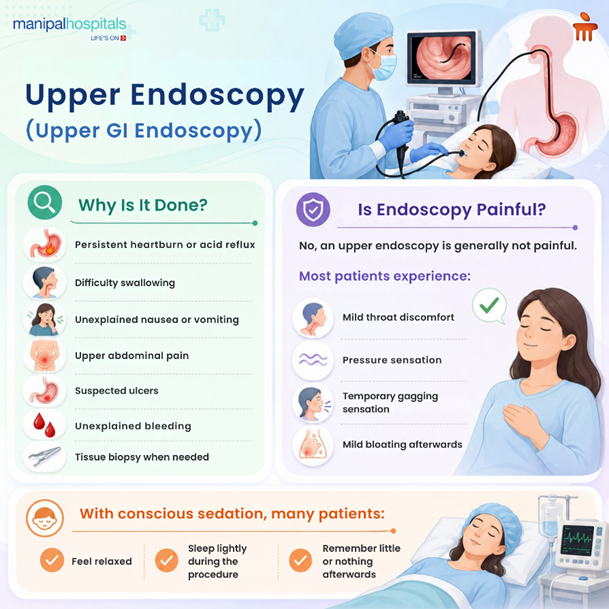
To determine whether an endoscopy painful or not, it helps to separate the concept of actual pain from temporary physical discomfort. The procedure is not designed to be painful. Because your throat is thoroughly numbed or you are given a relaxing sedative, you will not feel sharp pain, cutting, or raw scratching as the tube travels through your digestive system.
If you undergo the test using only a local anaesthetic spray, you will feel the physical presence of the flexible tube at the back of your throat. This can cause a temporary gag reflex or a sensation of pressure as the tube moves downward. While this feeling is unusual and can be uncomfortable, it does not cause acute pain.
For individuals who experience high anxiety, medical teams use conscious sedation. This medication is delivered through a small vein in your arm, making you feel deeply relaxed, calm, and drowsy. Most patients drop off into a light sleep naturally and have no memory of the test afterwards.
Before the Procedure: Preparation Steps
To ensure a safe examination and provide the specialist with a completely clear view, you must follow specific dietary guidelines before arriving at the hospital:
-
Rules of Fasting: Your stomach must be empty of any food and liquids. You will need to fast (not eat solid foods) for at least six to eight hours before the test. You should also stop drinking clear fluids such as water 2 to 3 hours before your scheduled appointment time.
-
Medication Adjustments: Inform your medical team about all prescription medicines, over-the-counter tablets, and blood thinners you take regularly. You may need to pause certain blood-thinning medications for a few days to minimise bleeding risks during a tissue biopsy.
-
Getting a Ride Home: If you receive conscious sedation, the medication will impact your reflexes, coordination and judgement for the rest of the day. You will need to bring a family member or friend to the clinic to take you home safely.
Step-by-Step Process During the Procedure
The full assessment is performed in a dedicated endoscopy suite and usually takes 15-30 minutes to complete:
-
Positioning: You will be asked to lie comfortably on your left side on a bed, and a small clip will be placed on your finger to monitor your heart rate and oxygen levels.
-
Numbing: The nurse sprays a local anaesthetic to numb the back of your throat and make your gag reflex less sensitive. If you have chosen sedation, the medication will be given through your IV line now.
-
Mouthguard placement: A small, hollow piece of plastic sits between your teeth. This keeps your mouth safely open and stops you from inadvertently biting the tube of the endoscope.
-
Guided insertion: The specialist will insert the lubricated endoscope gently into your mouth and will ask you to swallow to help it pass your throat into your food pipe. The tube does not go down your airway, so you never get obstructed breathing.
-
Air Expansion: The doctor pumps small pockets of air through the tube to expand the folds of your stomach and duodenum, giving the camera a clear view of the protective lining.
After the Procedure: Recovery & Sensation
When the endoscope is finished, you are taken to a recovery area. If you are sedated, you will remain still for 30 to 60 minutes while the medication wears off. When you wake up and are ready to return home, you may experience some temporary physical effects:
-
Sore Throat: A slight hoarseness or scratchy throat lasting 24 to 48 hours is common. This is a normal physical reaction to the tube and can be controlled by sipping cool water or simple throat lozenges when the numbing spray wears off.
-
Bloating and Gas: You may feel bloated or have to pass gas because air was introduced to expand your stomach during the test. This is a normal test result and resolves quickly as your body releases the trapped air.
-
Mild Abdominal Discomfort: You might experience a low-grade abdominal pain after endoscopy checks. This minor ache is usually caused by the residual air or from the small site where a tissue biopsy was collected. This sensation is typically mild and fades on its own within 24 hours without requiring medication.
When to See a Doctor
Complications after an upper endoscopy are very rare. However, if you have any of the following warning signs within 48 hours of your test, please contact your doctor or go to the emergency room immediately:
-
Sudden, severe stomach or chest pain that gets worse with rest.
-
A fever that won't go down or chills that make you shake.
-
Chronic cough or breathing difficulty not provoked by anything.
-
Vomiting blood or seeing dark coffee-ground-like material in your vomit.
-
Black, sticky or tarry-looking stools.
Conclusion
An upper endoscopy is a safe, highly effective diagnostic test that provides accurate answers regarding your upper digestive health. While the idea of the test can cause natural anxiety, modern techniques, such as local numbing sprays and conscious sedation, ensure the process is straightforward and free from sharp pain. . If you have persistent digestive symptoms or concerns, consult a gastroenterologist for proper evaluation and guidance. For clear preparation guidance, modern diagnostic equipment, or to arrange an endoscopy procedure in Salem at Manipal Hospitals, booking a specialised consultation ensures your family receives the advanced clinical care, experienced gastroenterologists, and dedicated recovery support needed to protect your digestive health safely.
FAQ's
If you did not receive sedation, you can usually eat a light meal 30 to 60 minutes after the test. However, you must wait until the numbing spray wears off completely and your throat feels normal to avoid accidental choking or biting the inside of your cheek while chewing.
No, general anaesthesia is rarely required for a routine endoscopy. Most clinics use conscious sedation, which makes you deeply drowsy, relaxed, and comfortable. You are technically awake and able to breathe on your own, but the medication prevents you from feeling anxiety and usually means you will have no memory of the test.
The endoscope is highly flexible and has smooth edges designed to travel through your digestive tract easily. The plastic mouthguard provided at the start of the test protects your teeth completely, and the specialist moves the instrument slowly under direct video guidance to prevent tissue injury.
The doctor can usually give you a visual update on what was seen on the monitor immediately after the test. However, if small tissue samples were taken during the check, those biopsies are sent to a laboratory for testing, which typically takes between 3 and 5 days to complete.
No. Even if you feel completely awake after the test, sedative medications remain in your system and slow your reaction times for up to 24 hours. For your personal safety, hospital regulations require a responsible adult to travel home with you to ensure you do not experience a fall or confusion.
Share this article on: