7 Min Read
Piles, also known as haemorrhoids, are a painful ailment experienced by millions of people across the world. It leads to pain, itching, inflammation, bleeding during bowel movements, and even discomfort while sitting down. While being quite harmless, piles could affect your daily life and might become an irritant if not treated properly.
It's surprising how many people look for tips on getting rid of piles silently, embarrassed to discuss the problem openly. However, it's good news to know that there is hope, since there are ways to cure piles through changes in your lifestyle and some easy methods that could help alleviate the symptoms.Patients with piles can seek treatment through the Gastro Sciences department for expert evaluation and personalised care.
This blog explains everything you need to know about piles, their symptoms, causes, home treatments, medical interventions, and how to prevent them from returning.
Synopsis
- Understanding Piles: What Exactly Are They?
- What Actually Causes Piles?
- Early Signs You Should Not Ignore
- How to Get Rid of Piles Naturally at Home
- Best Foods for Piles Recovery
- Medical Treatments for Piles
- When Is Surgery Needed?
- Daily Habits That Prevent Piles
- When Should You See a Doctor?
- Conclusion
Understanding Piles: What Exactly Are They?
Piles are enlarged, swollen blood vessels located in the lower rectum or around the anus. They develop when the veins in this sensitive area are subjected to excessive pressure.
There are two major types of piles:
| Type of Piles |
Location |
Common Symptoms |
| Internal Piles |
Inside the rectum |
Painless bleeding, internal discomfort, prolapse |
| External Piles |
Around the anus |
Sharp pain, itching, swelling, severe irritation |
External piles are usually more painful because they involve the highly sensitive skin surrounding the anus. Many patients specifically search for how to get rid of external piles because they cause immediate, sharp discomfort when sitting, walking, or having a bowel movement.
What Actually Causes Piles?
Piles happen for a pretty simple reason: too much pressure on the blood vessels in your back passage. When the veins down there get squeezed or strained too much, they stretch out, swell up, and get irritated.
That extra pressure usually comes from a mix of your daily routine and physical things:
1. Bathroom & Gut Troubles
-
Constipation: Pushing and straining to pass hard stools forces a lot of blood into those veins, making them swell.
-
Not Enough Fibre: Skipping out on fruit, veg, and grains makes your stools hard and difficult to pass.
-
Diarrhoea: Going to the toilet constantly irritates and inflames the whole area.
2. Everyday Habits
-
Sitting Too Long: Spending hours sitting down—especially scrolling on your phone on the toilet—puts steady pressure on those pelvic veins.
-
Heavy Lifting: Lugging heavy objects around makes you tense your stomach muscles and pushes pressure straight down.
-
Not Moving Enough: Sitting around too much slows your digestion right down, which leads back to constipation.
3. Physical Factors
-
Pregnancy: The weight of the baby presses heavily on the pelvic veins, and pregnancy hormones make vein walls stretch easier.
-
Carrying Extra Weight: Being overweight puts constant, extra pressure on the lower part of your body.
-
Getting Older: As we get older, the tissue holding those veins in place naturally gets a bit weaker and slacker.
Early Signs You Should Not Ignore
Early diagnosis of symptoms can prevent complications
Common symptoms of piles
-
Bright red blood after passing stool
-
Pain or burning sensation during bowel movements
-
Swelling near the anus
-
Itching and irritation
-
Feeling of incomplete bowel emptying
-
Mucus discharge
-
Pain while sitting
If the bleeding is frequent or heavy, it is important to get medical attention to rule out other digestive conditions.
How to Get Rid of Piles Naturally at Home
Mild to moderate cases often improve without surgery. Wondering how to get rid of piles without surgery? Home care and lifestyle changes often provide significant relief.
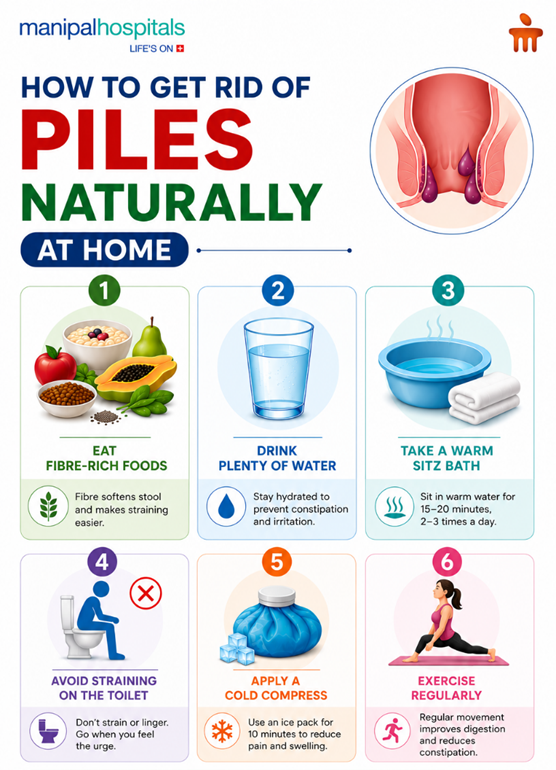
1. Include a Fibre-Rich Diet
Fibre softens stool and makes straining easier. Some fibre-rich foods include oats, brown rice, apples, pears, papaya, spinach, lentils, beans, and chia seeds. Doctors recommend 25-35 grams of fibre daily.
2. Drink Plenty of Water
Dehydration forces the colon to absorb water from your waste, making constipation worse and irritating existing haemorrhoids. Aim for 2 to 3 litres of fluids daily, including water, herbal teas, and clear broths. Avoid excessive alcohol and highly caffeinated drinks, which can dehydrate your system.
3. Warm Sitz Bath
A sitz bath is one of the most effective ways to experience immediate relief from pain and swelling. Fill a shallow basin or your bathtub with warm water and sit in it for 15–20 minutes, repeating 2–3 times a day. The warm water relaxes the sphincter muscles and improves localised blood circulation.
4. Avoid Straining on the Toilet
Forcing a bowel movement puts intense pressure on your rectal veins. Keep toilet trips short, avoid lingering with your phone, and never ignore the urge to go. Delaying only makes stools harder and much more difficult to pass later.
5. Apply a Cold Compress
An ice pack works great for numbing sharp pain and bringing down swelling. Just wrap it in a clean cloth and hold it gently against the area for 10 minutes. Never put bare ice straight onto your skin.
6. Exercise Regularly
Regular movement improves digestion and reduces constipation. Recommended activities include walking, yoga, swimming, and light stretching. Even 30 minutes of walking daily can help improve symptoms.
Best Foods for Piles Recovery
Your diet dictates the texture of your stool, making it the ultimate tool for a natural cure.
-
Foods to Enjoy: Fresh fruits (with skins), cruciferous vegetables, whole grains, lentils, natural yoghurt (for probiotics), nuts, and seeds.
-
Foods to Strictly Limit: Highly spicy dishes, deep-fried foods, heavily processed snacks, excessive red meat, and refined flour (like white bread and pastries).
How to Get Rid of External Piles Safely
Because external piles interact constantly with clothing and movement, they require specific attention. If you want to know how to remove external piles, your approach must scale with the severity of the condition:
-
Mild External Piles: These can generally be managed at home using targeted over-the-counter soothing ointments, sitz baths, meticulous hygiene (using damp wipes instead of dry paper), and a high-fibre diet.
-
Severe External Piles: If a blood clot forms inside an external haemorrhoid (known as a thrombosed haemorrhoid), it can become incredibly painful and feel like a hard lump. This requires immediate medical evaluation, as a doctor may need to perform a simple, quick incision to drain the clot and provide instant relief.
Medical Treatments for Piles
Home remedies may not always work, especially in advanced stages. Medical evaluation becomes important if symptoms persist.
Non-Surgical Treatments
People often ask about how to get rid of piles. There are some minimally invasive options.
Common Non-Surgical Procedures
|
Treatment |
How It Works |
Recovery Time |
|
Rubber Band Ligation |
A small band cuts off the blood supply to the pile, causing it to drop off naturally. |
Few days |
|
Sclerotherapy |
A chemical solution is injected to shrink the swollen blood vessels. |
Minimal (1–2 days) |
|
Infrared Coagulation |
Infrared light/heat is used to scar and shrink internal pile tissue. |
Quick |
|
Laser Treatment |
A precise laser beam vaporizes and shrinks the swollen tissues. |
Fast recovery with minimal pain |
These treatments are less painful than traditional surgery.
When Is Surgery Needed?
Surgical intervention is typically reserved for advanced or unresponsive cases, such as:
-
Very Large Piles: Advanced internal piles that remain permanently prolapsed (protruding outside the anus).
-
Severe, Continuous Bleeding: Bleeding that cannot be controlled through diet or lifestyle modifications.
-
Recurring Piles: Cases that continually return and disrupt your quality of life.
-
Thrombosed Haemorrhoids: Severe, painful blood clots that cannot be resolved with conservative care.
Common Surgery Choices:
-
Haemorrhoidectomy: The traditional surgical removal of excess hemorrhoidal tissue. It is definitive and highly effective for severe cases.
-
Stapled Haemorrhoidopexy: A modern procedure where prolapsed tissue is safely stapled back into its normal anatomical position, reducing blood flow to the piles.
Daily Habits That Prevent Piles
Prevention is always more comfortable than treatment. Protect your vascular health with these daily habits:
-
Maintain Regular Bowel Movements: Keep your digestive routine steady by staying consistent with your diet.
-
Stay Active: Avoid sitting for hours at a time. If you have a desk job, stand up and stretch every hour to relieve pressure points.
-
Avoid Heavy Lifting Strains: Use your legs, not your back and abdomen, if you must lift heavy items.
-
Maintain a Healthy Weight: Reducing excess body weight directly lowers the pressure on your pelvic veins.
-
Ditch the Phone in the Bathroom: Avoid reading or browsing your phone while sitting on the toilet, as this unknowingly prolongs straining time.
When Should You See a Doctor?
Do not hesitate to seek professional healthcare advice if you experience:
-
Heavy or continuous bleeding from your back passage.
-
Severe, throbbing pain that makes it impossible to sit or walk.
-
Long-term constipation that doesn't get better after changing your diet.
-
A fever you can't explain, alongside swelling or discharge down there.
-
A large, firm lump that you can't gently push back inside.
Conclusion
Living with piles can be disruptive, but the condition is highly treatable. While mild cases recover well with early dietary and lifestyle changes, modern medical interventions ensure that severe cases are handled quickly, safely, and with minimal downtime.
Exceptional clinical care is available locally at Manipal Hospitals, meaning you can access advanced medical piles treatment near Salem without the need to travel far. Their specialised departments provide comprehensive care, offering everything from non-surgical therapies to advanced laser procedures.Consulting a colorectal specialist early is the best way to secure a personalised treatment plan and achieve long-term relief.
FAQ's
Yes, mild piles often improve naturally with fibre-rich diets, hydration, regular exercise, proper toilet habits, and avoiding constipation consistently.
Walking comfortably heals piles. Walking aids digestion, prevents constipation, improves blood circulation, and also decreases pressure on the rectal veins.
Nighttime itching is worse because there are fewer distractions to occupy the mind and take it away from the irritation. Sweating and sitting for long periods may worsen the discomfort temporarily.
Stress can affect digestion and increase the risk of constipation. It can also lead to unhealthy eating habits. All of these factors can indirectly worsen the discomfort of piles and bowel irregularities to a great extent.
Sleeping on your side relieves pressure on swollen veins, increases comfort, and may reduce irritation from prolonged direct pressure.
Share this article on: