7 Min Read
Headaches are among the most common neurological complaints worldwide, yet many people struggle to identify the exact cause of their pain. Understanding the difference between migraine and tension headaches is essential because each condition has distinct triggers, symptoms, and headache treatment approaches.
While some headaches are mild and temporary, others may indicate more severe headache causes that require medical attention. Recognising headache types early can help patients receive faster diagnosis, better headache relief, and improved quality of life.
At Manipal Hospitals, our neurologists in Patiala evaluate a wide range of headache disorders using advanced neurological assessment and personalised treatment strategies to identify the underlying severe headache causes affecting each patient.
Synopsis
- Understanding Severe Headache Causes and Different Headache Types
- Migraine Symptoms: How Migraines Differ From Other Severe Headache Causes
- Tension Headache Symptoms and Their Common Causes
- Severe Headache Causes: Warning Signs You Should Never Ignore
- Migraine vs Tension Headache: Key Differences Explained
- How Severe Headache Causes Are Diagnosed
- Headache Treatment Options for Migraine and Tension Headaches
- Natural Remedies for Headache Relief
- When Should You See a Neurologist for Headaches?
- Conclusion
Understanding Severe Headache Causes and Different Headache Types
Headaches are broadly classified into primary and secondary headache types.
Primary Headaches
These occur independently and are not caused by another disease. Common primary headaches include:
-
Migraine
-
Tension headaches
-
Cluster headaches
Secondary Headaches
These develop due to underlying medical conditions such as:
-
Sinus infections
-
Head injuries
-
Brain infections
-
Neurological disorders
Identifying severe headache causes is important because certain symptoms may signal potentially serious health conditions that need urgent evaluation.
Among all headache types, migraines and tension headaches remain the two most frequently diagnosed conditions.
Migraine Symptoms: How Migraines Differ From Other Severe Headache Causes
Migraines are neurological headaches that often produce intense, throbbing pain, usually affecting one side of the head. Unlike ordinary headaches, migraine symptoms may interfere significantly with daily activities.
Common migraine symptoms include:
-
Pulsating or throbbing head pain
-
Sensitivity to light and sound
-
Nausea and vomiting
-
Visual disturbances or aura
-
Fatigue
Migraine episodes may last from several hours to multiple days. Certain individuals also experience warning signs before the headache begins, including mood changes, food cravings, or visual flashes.
Common migraine triggers include:
-
Stress
-
Hormonal fluctuations
-
Sleep deprivation
-
Certain foods
-
Excess screen exposure
Because migraines are among the leading severe headache causes worldwide, proper diagnosis is important for long-term headache treatment and prevention.
Tension Headache Symptoms and Their Common Causes
Tension headaches are generally less severe than migraines but are far more common. They usually produce a dull, pressure-like pain that affects both sides of the head.
Typical tension headache symptoms include:
-
Tightness or pressure around the forehead
-
Mild to moderate intensity headache
-
Muscle tenderness in the scalp, shoulders, or neck
Unlike migraines, tension headaches usually do not cause nausea or visual aura.
Common headache causes linked to tension headaches include:
-
Emotional stress
-
Poor posture
-
Muscle strain
-
Eye strain
-
Fatigue
Many people ignore recurring tension headache symptoms, assuming they are harmless. However, persistent headaches may indicate chronic stress disorders or other underlying severe headache causes that require neurological assessment.
Our neurologists in Patiala often recommend a comprehensive evaluation for patients experiencing frequent or worsening headaches.
Severe Headache Causes: Warning Signs You Should Never Ignore
Not all headaches are harmless. Certain symptoms may indicate dangerous, severe headache causes requiring immediate medical attention.
Seek urgent evaluation if headaches are associated with:
-
Sudden explosive onset (“thunderclap headache”)
-
Loss of consciousness
-
Weakness or paralysis
-
Difficulty speaking
-
Vision loss
-
High fever
-
Seizures
-
Confusion
-
Head injury
These symptoms could point toward serious neurological emergencies such as stroke, meningitis, brain haemorrhage, or increased intracranial pressure.
If headaches become unusually intense or different from previous episodes, consult our brain doctor in Patiala for immediate assessment.
Migraine vs Tension Headache: Key Differences Explained
Understanding the distinction between migraines and tension headaches can help patients identify the likely source of pain.
|
Feature |
Migraine |
Tension Headache |
|
Pain Type |
Throbbing or pulsating |
Dull pressure or tightness |
|
Location |
Usually one-sided |
Typically both sides |
|
Severity |
Moderate to severe |
Mild to moderate |
|
Nausea |
Common |
Rare |
|
Light Sensitivity |
Common |
Uncommon |
|
Aura |
May occur |
Absent |
|
Duration |
Hours to days |
30 minutes to several hours |
Although both are common headache types, they differ significantly in terms of triggers, neurological involvement, and headache treatment methods.
How Severe Headache Causes Are Diagnosed
Accurate diagnosis begins with a detailed medical history and neurological examination.
Doctors may evaluate:
-
Frequency of headaches
-
Pain pattern
-
Trigger factors
-
Associated neurological symptoms
-
Family history
In some cases, imaging tests such as MRI or CT scans may be recommended to rule out structural or vascular severe headache causes.
At Manipal Hospitals, our neurologists in Patiala use advanced neurological evaluation methods to identify underlying headache causes and personalise treatment plans accordingly.
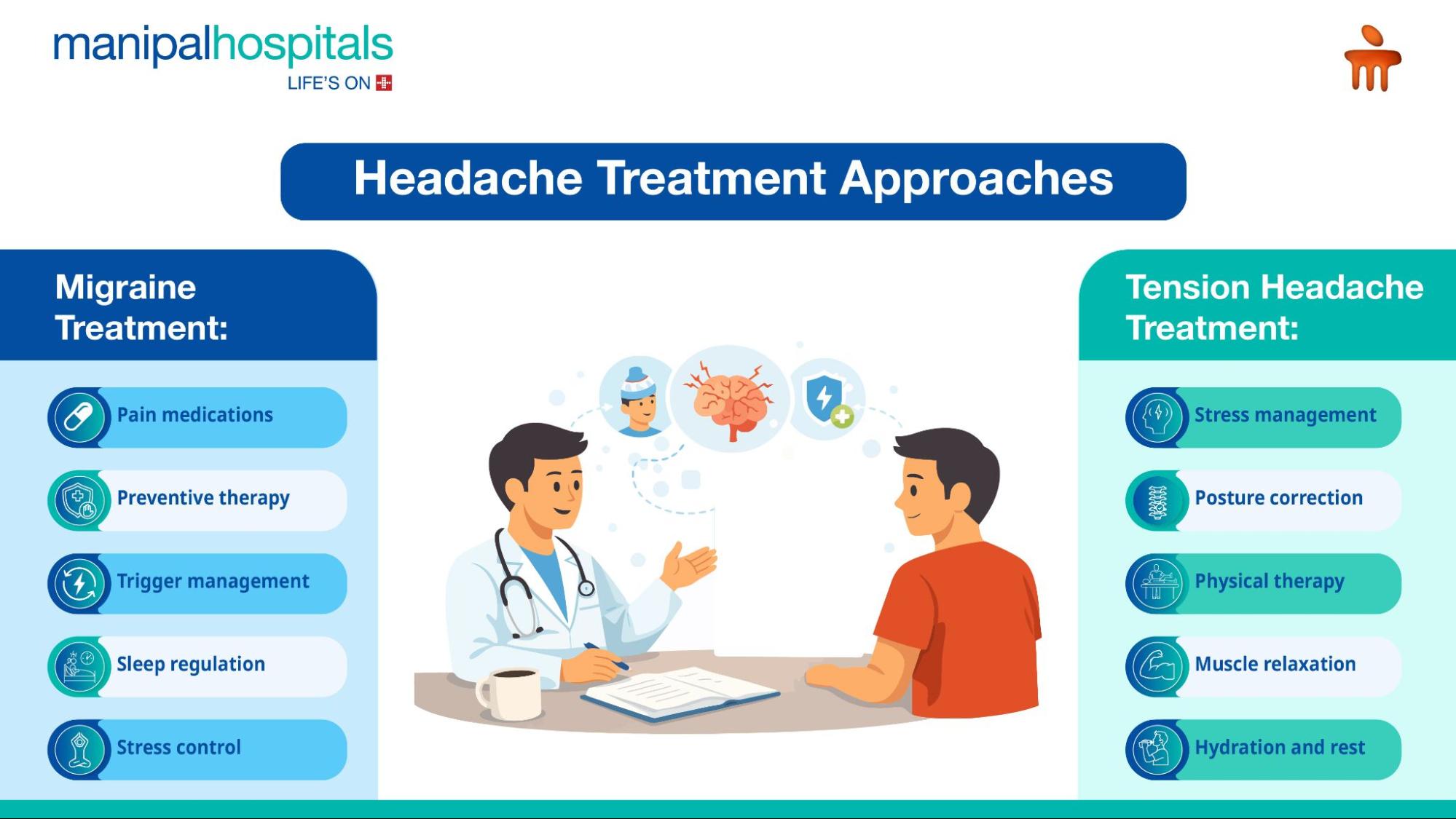
Headache Treatment Options for Migraine and Tension Headaches
The right headache treatment depends on the specific diagnosis and severity of symptoms.
Migraine Treatment
Treatment may include:
-
Pain-relieving medications
-
Anti-nausea medicines
-
Preventive migraine therapies
-
Lifestyle modification
-
Trigger management
Tension Headache Treatment
Management strategies often involve:
-
Stress reduction
-
Physical therapy
-
Posture correction
-
Adequate hydration
-
Sleep improvement
Patients with chronic headaches may require long-term headache treatment strategies to reduce frequency and severity.
Natural Remedies for Headache Relief
Certain lifestyle modifications and natural remedies for headache management may help reduce symptoms and improve overall neurological health.
Effective headache relief measures include:
-
Staying hydrated
-
Maintaining regular sleep schedules
-
Limiting caffeine intake
-
Practising stress management
-
Regular physical activity
-
Avoiding known dietary triggers
-
Using relaxation techniques
While natural remedies for headache relief can support symptom control, persistent or severe headaches should always be medically evaluated to exclude dangerous severe headache causes.
When Should You See a Neurologist for Headaches?
Many people self-medicate repeatedly without understanding the true cause of their headaches. Frequent headaches, worsening symptoms, or neurological warning signs should never be ignored.
Consult a neurologist if:
-
Headaches occur multiple times per week
-
Pain disrupts sleep or daily functioning
-
Over-the-counter medicines stop working
-
Neurological symptoms accompany headaches
-
Headaches become progressively severe
Early diagnosis can significantly improve headache treatment outcomes and prevent complications associated with serious severe headache causes.
Conclusion
Distinguishing between migraines and tension headaches is essential for accurate diagnosis and effective headache treatment. While tension headaches are often linked to stress and muscle tension, migraines involve complex neurological mechanisms that may require specialised care.
Recognising migraine symptoms, understanding tension headache symptoms, and identifying dangerous severe headache causes can help patients seek timely medical attention and achieve better long-term headache relief.
With proper evaluation, lifestyle management, and evidence-based treatment, most headache disorders can be successfully managed, improving both neurological health and quality of life.
FAQ's
Common severe headache causes include migraines, tension headaches, dehydration, stress, sinus infections, high blood pressure, and neurological disorders. In rare cases, severe headaches may also indicate stroke, meningitis, or brain haemorrhage.
Migraine symptoms often include throbbing pain, nausea, sensitivity to light, and visual aura. Tension headache symptoms usually involve dull pressure or tightness around the head without nausea or visual disturbances.
You should seek immediate medical attention if headaches are sudden, extremely severe, associated with weakness, confusion, seizures, fever, or vision changes. Persistent headaches also require a neurological evaluation.
Natural remedies for headache relief include hydration, stress reduction, proper sleep, regular exercise, posture correction, and avoiding known headache triggers such as caffeine excess or skipped meals.
Headache treatment may include medications, preventive therapies, stress management, lifestyle modification, physical therapy, and trigger control. Treatment depends on the underlying headache causes and symptom severity.
Share this article on: