6 Min Read
Kidney diseases often progress silently, but some inherited conditions begin affecting the body long before obvious warning signs appear. One such condition is Polycystic Kidney Disease (PKD), a genetic disorder that gradually damages the kidneys over time. Recognising polycystic kidney disease symptoms early can help prevent severe complications and improve long-term kidney health.
In this detailed guide, we explain everything you need to know about PKD, including causes, early warning signs, diagnosis, kidney disease treatment options, dietary care, and when to seek medical attention.
Synopsis
- What Is Polycystic Kidney Disease?
- Early Polycystic Kidney Disease Symptoms You Should Never Ignore
- How Genetics Influence Polycystic Kidney Disease
- How PKD Progresses Through Chronic Kidney Disease Stages
- Protein in Urine Causes: Why It Matters in PKD
- Diagnosis of Polycystic Kidney Disease
- Kidney Disease Treatment Options for PKD
- Best Kidney Disease Diet for PKD Patients
- Complications Associated with PKD
- When Should You Consult a Kidney Specialist?
What Is Polycystic Kidney Disease?
Polycystic Kidney Disease (PKD) is a hereditary disorder in which clusters of fluid-filled cysts develop inside the kidneys. Over time, these cysts enlarge and interfere with normal kidney function. As the disease progresses, the kidneys may become enlarged and lose their ability to filter waste effectively.
PKD is one of the most common inherited kidney disorders worldwide and can eventually lead to chronic kidney disease stages and kidney failure if left unmanaged.
There are two primary forms of PKD:
1. Autosomal Dominant PKD (ADPKD)
-
The most common form
-
Usually develops in adulthood
-
Often inherited from one affected parent
2. Autosomal Recessive PKD (ARPKD)
-
Rare but more severe
-
Typically affects infants or young children
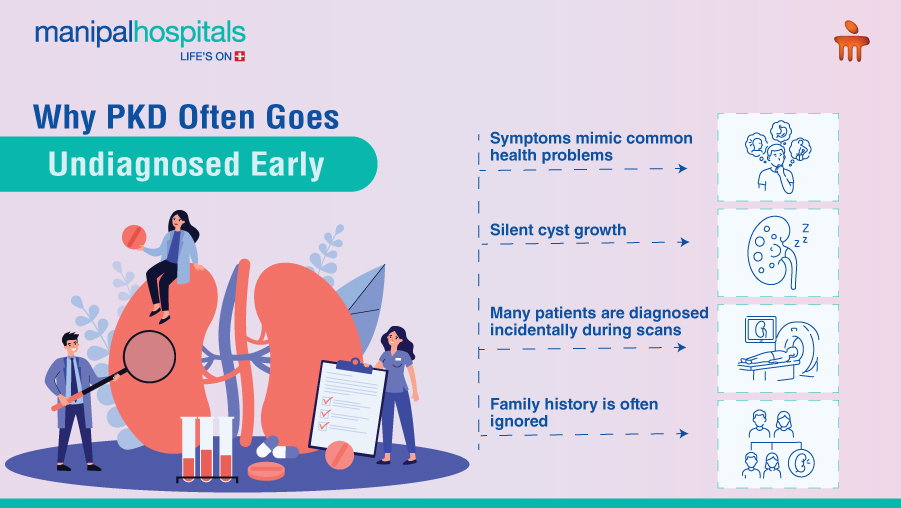
Understanding polycystic kidney disease symptoms early is essential because many people remain unaware of the condition until kidney damage has significantly progressed.
Early Polycystic Kidney Disease Symptoms You Should Never Ignore
Many patients do not notice symptoms in the early stages. However, as cysts enlarge, several warning signs may begin appearing gradually.
Common Polycystic Kidney Disease Symptoms
-
Persistent High Blood Pressure - One of the earliest and most common polycystic kidney disease symptoms is uncontrolled hypertension. Elevated blood pressure further damages kidney tissues and increases cardiovascular risk.
-
Pain in the Back or Sides - Dull or sharp pain around the lower back, abdomen, or sides may occur due to enlarged cysts or kidney enlargement.
-
Blood in Urine - Visible blood in urine can result from ruptured cysts or kidney infections.
-
Frequent Urinary Tract Infections - Repeated UTIs, especially those involving the kidneys, are commonly associated with PKD.
-
Enlarged Abdomen - As cysts increase in size, the abdomen may appear swollen or enlarged.
-
Kidney Stones - People with PKD are more prone to kidney stone formation, which may cause severe pain and urinary difficulties.
-
Fatigue and Weakness - Reduced kidney efficiency can lead to toxin accumulation in the body, causing exhaustion and low energy levels.
Recognising these polycystic kidney disease symptoms early allows timely intervention and better disease management.
How Genetics Influence Polycystic Kidney Disease
PKD is inherited genetically, meaning family history plays a major role. If one parent carries the abnormal gene for Autosomal Dominant PKD, each child has a 50% chance of inheriting the condition.
Because of this strong hereditary link, people with a family history of kidney disorders should undergo regular kidney screenings even before polycystic kidney disease symptoms appear.
Our nephrologists in Patiala strongly recommend early screening for individuals with a family history of kidney cysts, kidney failure, or unexplained hypertension.
How PKD Progresses Through Chronic Kidney Disease Stages
PKD gradually damages kidney tissues and may advance through different chronic kidney disease stages over time.
Stage 1–2
-
Mild kidney damage
-
Kidney function remains largely preserved
-
A few noticeable symptoms
Stage 3
-
Moderate reduction in kidney function
-
Fatigue, swelling, and blood pressure issues may begin
Stage 4
-
Severe decline in kidney performance
-
Increased toxin build-up and complications
Stage 5 (Kidney Failure)
-
Kidneys can no longer adequately filter blood
-
Dialysis or transplantation may become necessary
Monitoring chronic kidney disease stages regularly helps doctors decide the best kidney disease treatment strategy for each patient.
Protein in Urine Causes: Why It Matters in PKD
One important marker of kidney damage is excess protein leakage into urine.
Common Protein in Urine Causes PKD
-
Damaged kidney filters
-
High blood pressure
-
Progressive cyst enlargement
-
Chronic inflammation
When protein appears in urine, it often indicates worsening kidney function. Testing for proteinuria helps doctors monitor disease progression effectively.
Our kidney specialist in Patiala may advise routine urine tests and kidney imaging if persistent protein loss is detected.
Diagnosis of Polycystic Kidney Disease
Diagnosing PKD involves a combination of medical history, imaging tests, and laboratory investigations.
Common Diagnostic Methods
-
Ultrasound - The most widely used imaging test to identify kidney cysts.
-
CT Scan or MRI - Provides detailed imaging for cyst size and kidney structure assessment.
-
Blood Tests - Used to evaluate kidney function and electrolyte balance.
-
Urine Tests - Helpful for identifying infections, blood, and protein in urine.
-
Genetic Testing - May be recommended in families with a strong hereditary history.
Early diagnosis significantly improves the effectiveness of kidney disease treatment plans.
Kidney Disease Treatment Options for PKD
Although there is currently no complete cure for PKD, proper kidney disease treatment can slow disease progression and reduce complications.
-
Blood Pressure Control - Managing hypertension is one of the most important parts of PKD care.
-
Pain Management - Doctors may recommend safe pain-control methods for chronic discomfort.
-
Infection Treatment - Prompt antibiotic therapy helps control kidney infections.
-
Lifestyle Modification - Healthy weight management, exercise, hydration, and smoking cessation are highly beneficial.
-
Dialysis - Advanced chronic kidney disease stages may require dialysis to remove toxins from the blood.
-
Kidney Transplant - In severe cases, kidney transplantation offers long-term survival benefits.
Our nephrologists in Patiala customise kidney disease treatment plans according to each patient’s stage, symptoms, and overall health condition.
Best Kidney Disease Diet for PKD Patients
Diet plays a major role in preserving kidney function and slowing disease progression.
Important Kidney Disease Diet Tips
-
Reduce Salt Intake - Excess sodium worsens blood pressure and fluid retention.
-
Limit Processed Foods - Processed foods often contain excessive phosphorus and sodium.
-
Stay Hydrated - Adequate hydration may help reduce cyst-related complications.
-
Moderate Protein Intake - Excessive protein can strain damaged kidneys.
-
Eat Fresh Fruits and Vegetables - A balanced kidney disease diet supports overall kidney health.
-
Avoid Excess Sugar - High sugar intake increases metabolic complications.
Our nephrologists in Patiala often recommend personalised kidney disease diet plans based on kidney function levels and associated medical conditions.
Complications Associated with PKD
If unmanaged, PKD may lead to several serious complications:
-
Liver cysts
-
Heart valve abnormalities
-
Brain aneurysms
-
Chronic pain
-
Recurrent infections
-
Pregnancy-related complications
Timely identification of polycystic kidney disease symptoms can help reduce the risk of these complications substantially.
When Should You Consult a Kidney Specialist?
You should seek medical attention if you experience:
-
Persistent back or abdominal pain
-
Blood in urine
-
Swelling in the legs or feet
-
Frequent urinary infections
-
Family history of kidney disease
Early consultation improves long-term kidney outcomes significantly. Our nephrologists in Patiala provide comprehensive evaluation and advanced management for inherited kidney disorders, including PKD.
FAQ's
Early polycystic kidney disease symptoms may include high blood pressure, back pain, blood in urine, fatigue, and frequent urinary tract infections.
Yes, PKD is primarily a genetic disorder passed from parents to children through inherited abnormal genes.
Yes, untreated PKD can gradually progress through chronic kidney disease stages and eventually cause kidney failure.
Patients should avoid excessive salt, processed foods, sugary beverages, and very high-protein diets as part of a healthy kidney disease diet.
Currently, there is no permanent cure, but timely kidney disease treatment can slow progression and improve quality of life significantly.
Share this article on: