6 Min Read
Globally, NAFLD affects an estimated 25% of the adult population, making it the most common form of chronic liver disease. In India, its prevalence is also on the rise, mirroring global trends, largely due to changing lifestyles and dietary habits. Early detection and management are crucial to prevent its progression to more severe forms.
Synopsis
What is Non-Alcoholic Fatty Liver Disease (NAFLD)?
The liver is a vital organ that performs hundreds of essential functions, including detoxifying the body, producing proteins, and aiding digestion. However, when excessive fat accumulates in liver cells, it can lead to a condition known as fatty liver disease. Specifically, when this accumulation is not caused by heavy alcohol consumption, it's called nonalcoholic fatty liver disease (NAFLD). This condition is often silent in its early stages, making it a stealthy threat to liver health.
Types of Nonalcoholic Fatty Liver Disease
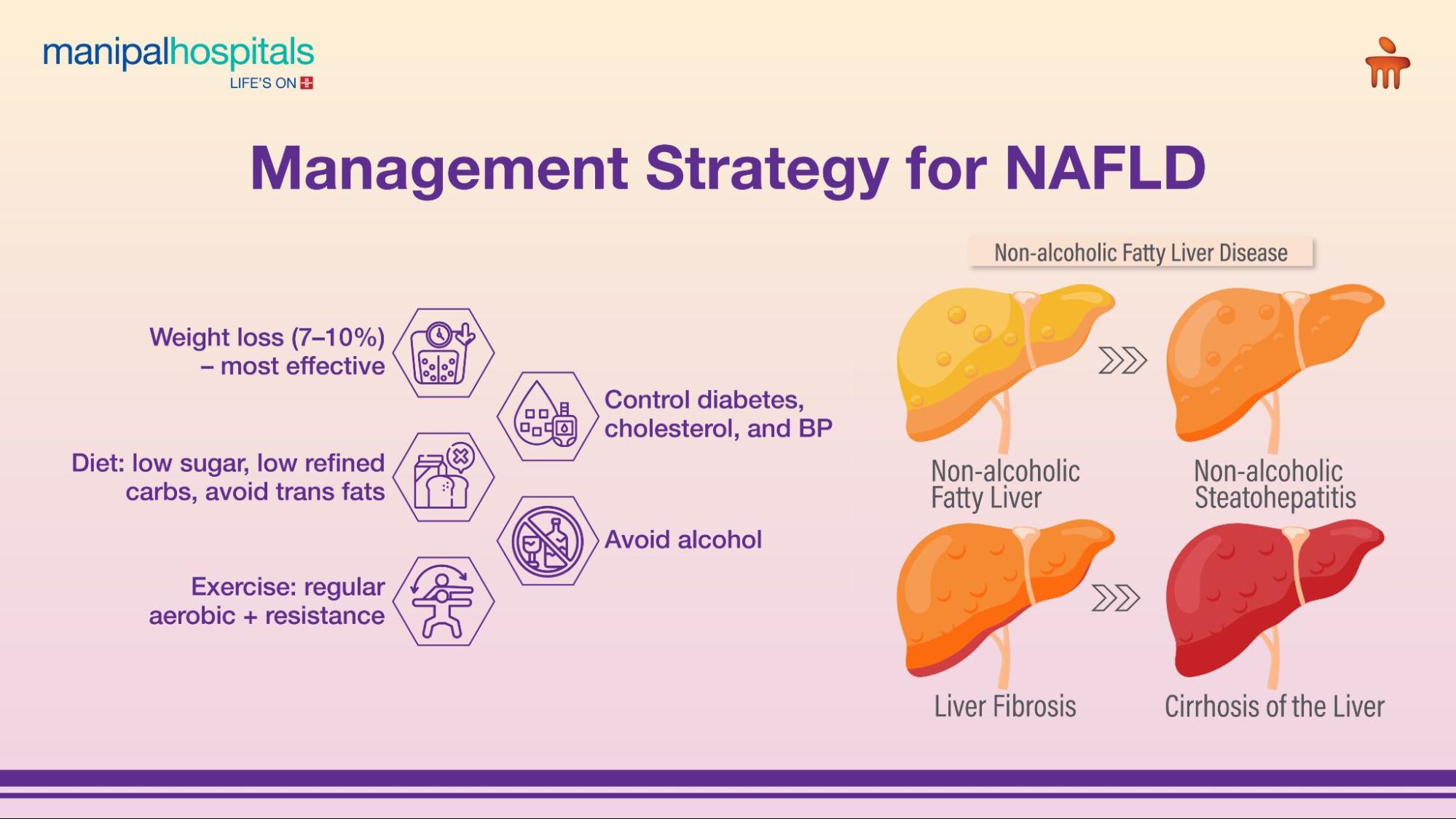
NAFLD exists on a spectrum, ranging from mild fat accumulation to severe inflammation and liver damage:
-
Simple Fatty Liver (Steatosis): This is the milder form, where there is fat in the liver but little to no inflammation or liver cell damage. While it's generally considered benign, a significant percentage of these cases can progress over time.
-
Nonalcoholic Steatohepatitis (NASH): This is a more aggressive form of nonalcoholic fatty liver disease. In NASH, there's not only fat in the liver but also inflammation and liver cell damage. This inflammation can lead to fibrosis (scarring) of the liver and, if unchecked, can progress to cirrhosis, liver failure, and even liver cancer.
It's estimated that about 20% of individuals with NAFLD will develop NASH. Recognising this progression is key to understanding the importance of early intervention.
Causes and Risk Factors for Nonalcoholic Fatty Liver Disease
The exact cause of nonalcoholic fatty liver disease is not fully understood, but it is strongly linked to metabolic syndrome and certain lifestyle factors. Key risk factors include:
-
Obesity: This is one of the most significant risk factors. Over 70% of individuals with NAFLD are overweight or obese.
-
Insulin Resistance: This is a condition where the body's cells don't respond properly to insulin, leading to high blood sugar levels. Many people with NAFLD also have insulin resistance.
-
Type 2 Diabetes: Individuals with type 2 diabetes are at a significantly higher risk of developing NAFLD, with studies showing up to 70% of diabetics may have some form of fatty liver.
-
High Cholesterol and Triglycerides: Elevated levels of certain fats in the blood can contribute to fat accumulation in the liver.
-
Metabolic Syndrome: A cluster of conditions, including central obesity, high blood pressure, high blood sugar, and abnormal cholesterol or triglyceride levels, dramatically increases the risk.
-
Rapid Weight Loss: Paradoxically, very rapid weight loss can sometimes trigger or worsen NAFLD.
-
Certain Medications: Some medications, though less common, can also contribute to the development of fatty liver.
Understanding these underlying conditions is vital for effective prevention and management of nonalcoholic fatty liver disease.
Silent Symptoms of Fatty Liver Disease
One of the most concerning aspects of nonalcoholic fatty liver disease is its often symptom-free nature in the early stages. This "silent" characteristic means that many people are unaware they have the condition until it has progressed significantly. When fatty liver disease symptoms do appear, they can be subtle and non-specific:
-
Fatigue and Weakness: Persistent tiredness that doesn't improve with rest.
-
Dull Pain or Discomfort in the Upper Right Abdomen: This is where the liver is located.
-
Unexplained Weight Loss: Although less common in early stages, it can occur as the disease progresses.
-
Yellowing of Skin and Eyes (Jaundice): A sign of more advanced liver disease.
-
Swelling in the Legs and Ankles (Oedema): Indicative of fluid retention due to liver dysfunction.
-
Enlarged Spleen or Fluid in the Abdomen (Ascites): Also a sign of advanced disease.
Because early fatty liver disease symptoms are so mild or absent, regular health check-ups and being aware of risk factors are crucial for early diagnosis.
Diagnosis and Treatment: Pathways to Liver Health
Diagnosing nonalcoholic fatty liver disease often begins with routine blood tests showing elevated liver enzymes. Further investigation may include:
-
Imaging Tests: Ultrasound, CT scan, or MRI can detect fat in the liver. Specialised tests like FibroScan (transient elastography) can measure liver stiffness, indicating fibrosis.
-
Liver Biopsy: This is the most definitive test, involving taking a small tissue sample from the liver for microscopic examination, especially to differentiate between simple fatty liver and NASH.
The cornerstone of fatty liver disease treatments and non-alcoholic fatty liver disease treatments revolves around lifestyle modifications:
-
Weight Loss: Losing even 5-7% of body weight can significantly improve liver enzyme levels and reduce liver fat in up to 70% of individuals with NAFLD. A gradual, sustained weight loss of 1-2 pounds per week is recommended.
-
Healthy Diet: Adopting a balanced diet rich in fruits, vegetables, whole grains, and lean proteins, while limiting processed foods, sugary drinks, and unhealthy fats, is paramount. The Mediterranean diet is often recommended.
-
Regular Exercise: Aim for at least 150 minutes of moderate-intensity aerobic exercise per week. Physical activity helps reduce liver fat, improve insulin sensitivity, and contribute to weight management.
-
Managing Underlying Conditions: Effectively controlling diabetes, high blood pressure, and high cholesterol is vital.
The good news is that with dedicated lifestyle changes, over 80% of patients with early-stage fatty liver can halt its progression, and many can even achieve significant reversal of liver damage and fat accumulation.
If you are experiencing symptoms or have risk factors for nonalcoholic fatty liver disease, it's crucial to seek timely medical advice. Book an appointment with our expert gastroenterologist in Patiala today. Our team is dedicated to providing comprehensive care, from accurate diagnosis to personalised non-alcoholic fatty liver disease treatment plans, helping you regain control of your liver health.
FAQ's
While there's no specific medication for NAFLD, significant lifestyle changes, especially weight loss and dietary modifications, can often reverse simple fatty liver and prevent the progression of NASH. Complete resolution is possible in many early-stage cases.
The healing time varies greatly depending on the severity of the condition and the consistency of lifestyle changes. Improvements in liver fat can be seen within months of dedicated effort, but complete healing can take longer, often 6-12 months or more.
While NAFLD itself is not directly hereditary like a genetic disorder, there can be a genetic predisposition. If family members have conditions like obesity, type 2 diabetes, or metabolic syndrome, the risk of developing NAFLD may be higher.
Diet plays a central role. A diet high in refined carbohydrates, sugary drinks, and unhealthy fats can promote fat accumulation in the liver. Conversely, a balanced diet is the primary treatment for managing and reversing NAFLD.
Yes, NAFLD is increasingly being diagnosed in children, primarily due to rising rates of childhood obesity and related metabolic issues. Early intervention in children is critical to prevent lifelong liver complications.
Share this article on: