7 Min Read
For many active individuals, particularly runners, knee pain can be a frustrating roadblock. Among the most common culprits is a condition known as Runner's Knee, or Patellofemoral Pain Syndrome (PFPS). This isn't just an inconvenience; it's a signal from your body that something needs attention. Our dedicated team of orthopaedics in Patiala understands the impact such conditions have on your daily life and performance. We are committed to providing comprehensive solutions for effective knee pain treatment, helping you get back on your feet and back to your passion.
Runner's knee affects an estimated 25% of all runners at some point in their careers, making it one of the most prevalent running-related injuries. But it's not exclusive to runners; cyclists, hikers, and even those with physically demanding jobs can experience it. The good news is that with proper diagnosis and tailored treatment, over 90% of individuals with Runner's Knee experience significant improvement and often full recovery. Understanding its causes, recognising the symptoms, and knowing how to prevent it are crucial steps towards maintaining an active, pain-free lifestyle.
Synopsis
Understanding Runner's Knee: What is it?
Runner's Knee refers to a dull, aching pain around or behind your kneecap (patella). It occurs when repetitive stress on the knee causes irritation or inflammation of the cartilage underneath the kneecap or the surrounding soft tissues. This can happen due to a variety of factors, often related to how the kneecap tracks in its groove at the end of the thighbone (femur).
Common Causes of Runner's Knee
Several factors can contribute to the development of Runner's Knee. Often, it's a combination of issues rather than a single cause. Identifying these factors is key to effective knee pain treatment.
-
Overuse or Sudden Increase in Activity: Rapidly increasing mileage, intensity, or duration of exercise without adequate conditioning or rest.
-
Improper Footwear: Worn-out shoes or footwear that doesn't provide adequate support can alter gait mechanics.
-
Weak Thigh Muscles: Weak quadriceps, especially the vastus medialis obliquus (VMO), can lead to improper tracking of the kneecap.
-
Tight Muscles: Tight hamstrings, quadriceps, IT band (iliotibial band), or calf muscles can pull the kneecap out of alignment.
-
Biomechanical Issues:
-
Flat feet (pronation) or high arches.
-
Misalignment of the patella.
-
Problems with hip or ankle stability.
-
-
High-Impact Activities: Repeated stress from activities like running, jumping, or prolonged stair climbing.
Recognising the Symptoms
The symptoms of Runner's Knee typically develop gradually and worsen over time if left unaddressed. Early recognition can prevent the condition from becoming chronic.
-
Pain Around or Behind the Kneecap: This is the hallmark symptom, often described as a dull ache.
-
Pain Worsened by Activity: Especially noticeable during or after running, climbing stairs, squatting, or prolonged sitting with bent knees (like in a car or movie theatre).
-
Clicking or Grinding Sensation: Sometimes, a crunching or grinding feeling (crepitus) can be felt when moving the knee.
-
Swelling: Mild swelling around the kneecap may occur in some cases.
-
Tenderness: The area around the kneecap might be tender to the touch.
Diagnosis at Manipal Hospitals
Diagnosing Runner's Knee involves a thorough physical examination by an experienced orthopaedic specialist. Our orthopaedics in Patiala will assess your knee's range of motion, observe your gait, check for muscle imbalances, and gently palpate the area to identify pain points. While imaging, such as X-rays or MRI, might be used to rule out other conditions, such as a knee ligament injury treatment need or early signs of osteoarthritis knee treatment, Runner's Knee is often diagnosed clinically. It's crucial to differentiate it from more severe injuries like a dislocated knee treatment, which requires immediate and specific intervention.
Effective Treatment Strategies for Runner's Knee
The primary goal of Runner's Knee treatment is to reduce pain and inflammation, correct underlying biomechanical issues, and restore full function. A multi-pronged approach is often most effective.
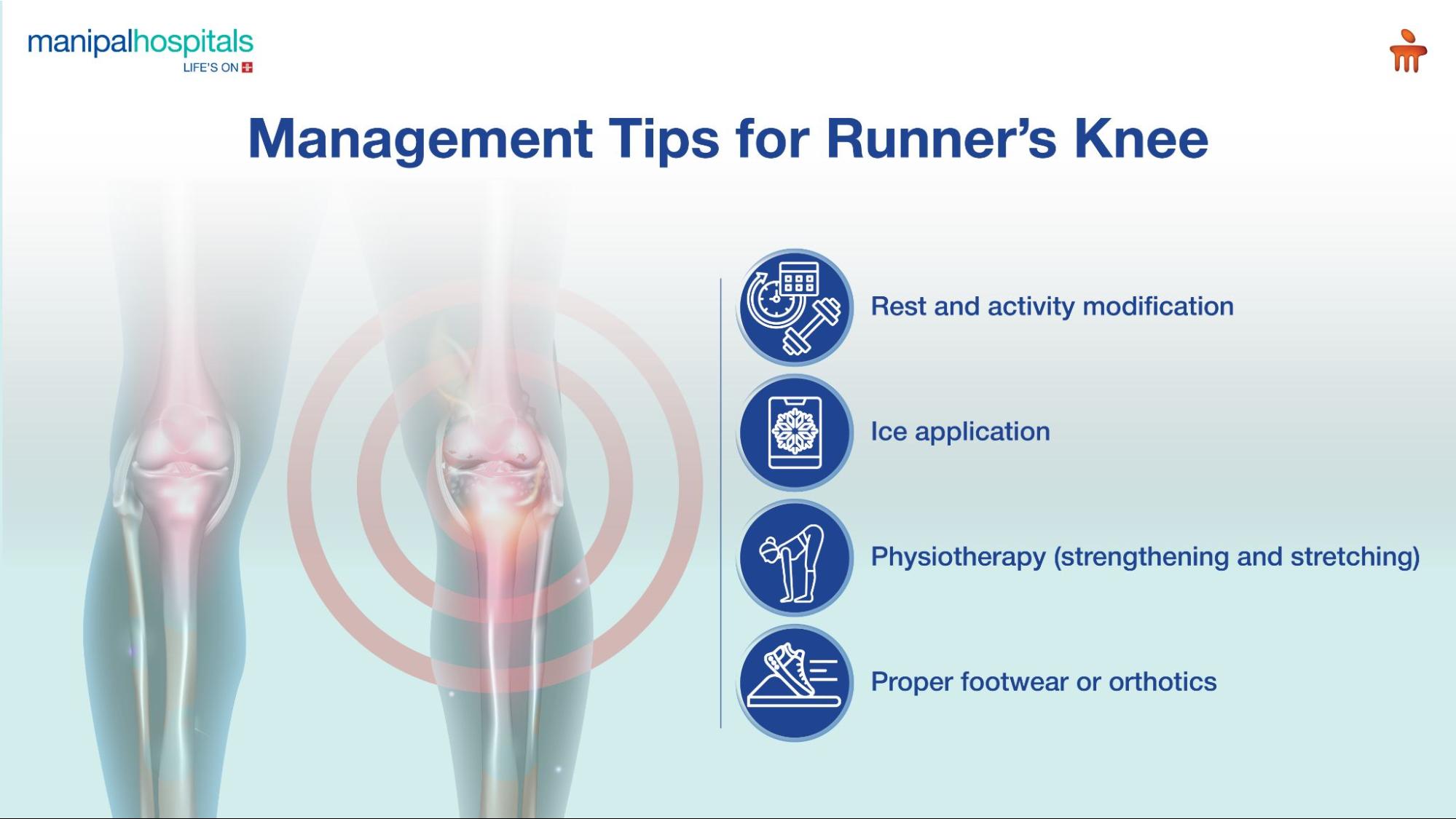
Initial Self-Care & Conservative Management
For mild cases, initial steps can often provide significant relief:
-
RICE Protocol:
- Rest: Reduce or temporarily stop activities that aggravate your knee pain. This is paramount for healing.
- Ice: Apply ice packs to the affected area for 15-20 minutes, several times a day, to reduce inflammation.
- Compression: A compression bandage can help manage swelling.
- Elevation: Elevate your leg when resting.
-
Over-the-Counter Pain Relief: Non-steroidal anti-inflammatory drugs (NSAIDs) can help manage pain and inflammation.
-
Stretching and Strengthening: Gentle stretches for tight muscles (quads, hamstrings, and IT band) and strengthening exercises for weak muscles (quads and glutes) are vital.
Physical Therapy and Rehabilitation
When self-care isn't enough, professional guidance is invaluable. Our physiotherapists work closely with our orthopaedics in Patiala to create personalised rehabilitation plans. Physical therapy is often the cornerstone of successful knee pain treatment for Runner's Knee, with studies showing an 85% success rate for patients adhering to a structured programme.
-
Targeted Exercises: Focusing on strengthening the quadriceps, hip abductors, and core muscles to improve knee stability and patellar tracking.
-
Flexibility Training: Specific stretches to improve flexibility in tight muscle groups.
-
Gait Analysis: Identifying and correcting improper running mechanics or walking patterns.
-
Footwear and Orthotics: Recommendations for appropriate running shoes or custom orthotics to correct foot mechanics.
-
Taping Techniques: Patellar taping can help reduce pain and improve kneecap alignment during activity.
In rare, persistent cases where conservative treatments fail, your specialist might discuss other options. However, surgical intervention for Runner's Knee is highly uncommon and typically considered only after extensive non-surgical efforts. Our approach prioritises minimally invasive and conservative treatments wherever possible.
Runner's knee doesn't have to put an end to your active lifestyle. With the right approach to treatment and prevention, guided by our expert orthopaedics in Patiala at Manipal Hospitals, you can return to your favourite activities stronger and wiser. Remember, proactive care is key to long-term knee health.
If you are experiencing knee pain, it's crucial to seek timely medical advice. Book an appointment with our expert orthopaedics at Manipal Hospitals, Patiala, today.