7 Min Read
Open-heart surgery, a procedure that has saved countless lives, often requires the heart to be temporarily stopped to allow surgeons to repair it with precision. But what happens to the body when the heart isn't pumping blood, and the lungs aren't breathing? This is where the remarkable heart lung machine, also known as the cardiopulmonary bypass machine, plays its critical role. At Manipal Hospitals, we utilize state-of-the-art technology and expertise to ensure the safest and most effective outcomes for our patients.
Synopsis
- What is a heart-lung bypass machine?
- How the Heart-Lung Machine Works: The Perfusion Process
- Key Components of a Heart-Lung Bypass System
- When is a Heart-Lung Machine Used?
- Benefits and Considerations of Using a Bypass Machine
- ECMO vs. Heart-Lung Bypass Machine
- Recovery and Rehabilitation Post-Surgery
- Care Essentials: Do's and Don'ts
- Conclusion
What is a heart-lung bypass machine?
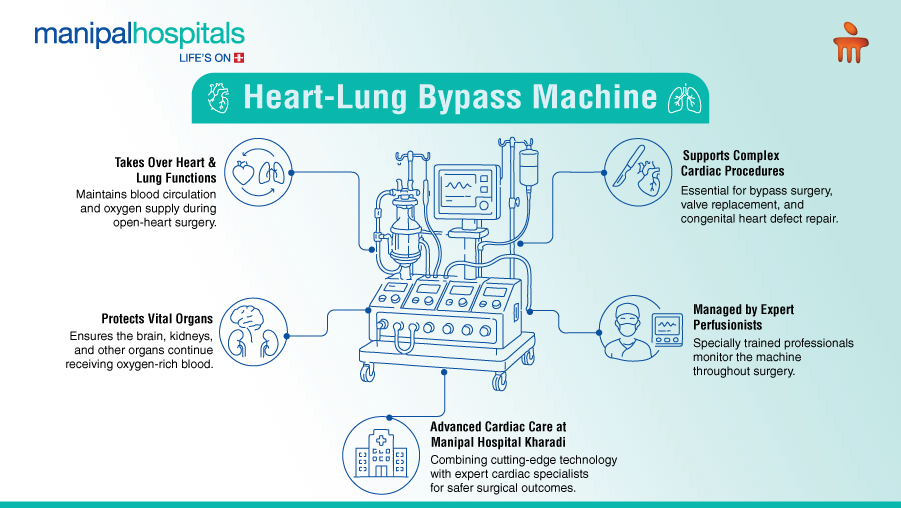
The heart-lung machine is an advanced medical device that temporarily takes over the function of the heart and lungs during certain types of surgery. It circulates and oxygenates the patient's blood outside the body, allowing surgeons to operate on a still, bloodless heart. This complex yet vital technology is a cornerstone of modern cardiac surgery, enabling intricate procedures that would otherwise be impossible.
-
It ensures continuous blood flow to vital organs.
-
It oxygenates blood, just like the lungs would.
-
It removes carbon dioxide from the blood.
How the Heart-Lung Machine Works: The Perfusion Process
The process of operating the heart lung machine is called perfusion, and the medical professionals who manage it are known as perfusionists. Understanding how the heart-lung machine works reveals a marvel of engineering and physiology:
During the procedure, blood is diverted from the patient's heart to the bypass machine through cannulae (tubes) placed in the large veins (vena cava). The machine then performs several key functions:
-
Blood Drainage: Deoxygenated blood from the body is gently drained into the machine.
-
Oxygenation: The blood passes through an oxygenator, which acts like artificial lungs, adding oxygen and removing carbon dioxide.
-
Temperature Control: The machine can warm or cool the blood, which is crucial for protecting organs during surgery. Cooling the body (hypothermia) reduces metabolic demand, offering protection during periods of reduced blood flow.
-
Filtration: Filters in the circuit remove any debris or air bubbles from the blood.
-
Return to Body: The oxygenated blood is then pumped back into the patient's aorta, the body's main artery, to be circulated throughout the body.
This entire process ensures that while the heart is temporarily stopped, the rest of the body, particularly the brain, kidneys, and other vital organs, continues to receive the oxygenated blood it needs. This meticulous operation allows surgeons to work on the heart with unparalleled precision, contributing to the high success rates of complex cardiac surgeries, often exceeding 95% at leading institutions like Manipal Hospitals.
Key Components of a Heart-Lung Bypass System
A typical heart lung machine setup involves several critical components working in harmony:
-
Pump Heads: Mimic the heart's pumping action, circulating blood through the circuit.
-
Oxygenator: The artificial lung that adds oxygen and removes carbon dioxide.
-
Heat Exchanger: Regulates blood temperature.
-
Reservoir: Collects and holds blood temporarily.
-
Filters: Remove particles and air bubbles from the blood.
-
Pressure Monitors: Ensure safe blood flow and pressure within the circuit.
When is a Heart-Lung Machine Used?
The bypass machine is indispensable for various cardiac and vascular surgeries, including:
-
Coronary Artery Bypass Grafting (CABG): To restore blood flow to the heart muscle. Approximately 500,000 CABG procedures are performed annually worldwide, many utilizing this technology.
-
Heart Valve Repair or Replacement: To fix or replace damaged heart valves.
-
Correction of Congenital Heart Defects: Repairing structural problems present at birth.
-
Aortic Aneurysm Repair: To repair weakened areas in the aorta.
-
Heart Transplants: Providing support during the implantation of a new heart.
Benefits and Considerations of Using a Bypass Machine
The primary benefit of the heart-lung machine is that it enables complex, life-saving surgeries. However, like any advanced medical intervention, there are considerations:
Benefits:
-
Allows for a still, bloodless surgical field, crucial for delicate repairs.
-
Maintains vital organ function while the heart is non-functional.
-
Facilitates a wider range of complex cardiac procedures.
Considerations:
-
Potential for inflammation or blood clotting activation.
-
Risk of air embolisms, though modern systems significantly reduce this.
-
Skilled perfusionists are essential for safe operation.
Modern advances in perfusion technology and surgical techniques have significantly minimized these risks, leading to excellent patient outcomes. At Manipal Hospitals, our multidisciplinary team, including highly trained cardiac surgeons and experienced perfusionists, works tirelessly to ensure patient safety and successful recovery.
ECMO vs. Heart-Lung Bypass Machine
While both are extracorporeal (outside the body) life support systems, there's a key distinction when discussing ecmo vs heart lung machine:
-
Heart-Lung Bypass Machine (Cardiopulmonary Bypass - CPB): Primarily used for short-term support (hours) during open-heart surgery, directly assisting the heart and lungs to allow surgical intervention. It's designed for active surgical procedures.
-
ECMO (Extracorporeal Membrane Oxygenation): Used for longer-term support (days to weeks) when a patient's heart and/or lungs are failing but cannot be surgically repaired immediately. ECMO provides time for the organs to heal or for other interventions, acting as a bridge to recovery or transplant.
Both technologies are critical in critical care and cardiac surgery but serve different purposes based on the patient's condition and the required duration of support.
Recovery and Rehabilitation Post-Surgery
After a surgery involving a heart-lung machine, recovery is a gradual but rewarding process. Patients typically spend a few days in the intensive care unit (ICU) for close monitoring, followed by transfer to a regular ward. Rehabilitation often begins early, focusing on regaining strength and mobility. Over 80% of patients who undergo successful open-heart surgery with bypass experience significant improvement in their quality of life within six months.
Care Essentials: Do's and Don'ts
Do's:
-
Follow Medical Advice: Strictly adhere to all post-operative instructions from your healthcare team regarding medications, wound care, and activity levels.
-
Engage in Rehabilitation: Participate actively in prescribed cardiac rehabilitation programs to rebuild strength and endurance.
-
Maintain a Healthy Lifestyle: Adopt a heart-healthy diet, quit smoking, and manage stress effectively.
-
Monitor Symptoms: Be vigilant for any unusual symptoms like fever, increased pain, or wound infection, and report them promptly.
-
Attend Follow-up Appointments: Regular check-ups are crucial for monitoring your recovery and overall heart health.
Don'ts:
-
Lift Heavy Objects: Avoid strenuous activities and lifting heavy items for several weeks as advised by your doctor to protect your sternum.
-
Ignore Pain: Do not dismiss persistent or worsening pain. It could be a sign that needs medical attention.
-
Skip Medications: Do not stop or alter your prescribed medications without consulting your doctor.
-
Rush Recovery: Understand that recovery takes time. Don't push yourself too hard too soon.
-
Hesitate to Ask Questions: Always ask your healthcare provider about anything you don't understand regarding your care or recovery.
Conclusion
At Manipal Hospitals Kharadi, our dedicated rehabilitation specialists work hand-in-hand with patients, guiding them through every step of their recovery journey, aiming for a successful return to a fulfilling life.
If you are experiencing heart-related symptoms or have been recommended for cardiac surgery, understanding the tools and techniques involved can bring peace of mind. Our team at Manipal Hospitals is committed to providing world-class cardiac care with empathy and expertise.
If you have concerns about your heart health or need expert consultation, it's crucial to seek timely medical advice. Book an appointment with our expert cardiologists in Kharadi and cardiac surgeons at Manipal Hospitals today.
FAQ's
Yes, the heart lung machine is considered very safe due to advanced technology, rigorous safety protocols, and the expertise of highly trained perfusionists. Risks are continuously monitored and minimized.
Typically, the bypass machine is used for a few hours during surgery. For longer-term support (days to weeks) in critical conditions, ECMO (extracorporeal membrane oxygenation) is used instead.
No, you will be under general anesthesia and fully asleep during any surgery that requires the heart-lung machine. You will not be aware of its operation.
Modern heart-lung machines are designed to minimize trauma to blood cells. While some minor changes can occur, the benefits of the machine far outweigh these minimal risks, and any effects are typically temporary.
The perfusionist is a highly specialized healthcare professional responsible for operating and managing the bypass machine. They monitor blood flow, oxygenation, temperature, and administer medications during surgery, ensuring the patient's vital signs are stable.
Share this article on: