6 Min Read
A stroke is one of the most serious medical emergencies, often striking without warning and leaving lasting consequences. It occurs when the blood supply to a part of the brain is interrupted, depriving brain cells of oxygen and nutrients. Within minutes, these cells begin to die, which is why timely and advanced brain stroke treatment is critical.
With rapid advancements in neurology, modern stroke care has significantly improved survival rates and reduced disability. At Manipal Hospital Kharadi, patients now have access to cutting-edge stroke management techniques focused on preserving brain function and improving quality of life.
Synopsis
What is a stroke?
A stroke happens when there is either a blockage or rupture of blood vessels supplying the brain. Understanding the types of stroke and their treatments helps recognise symptoms early and act fast.
1. Ischemic Stroke
This is the most common type, caused by a clot blocking blood flow to the brain. It accounts for nearly 80–85% of all strokes.
2. Hemorrhagic Stroke
This occurs when a blood vessel in the brain ruptures, leading to bleeding within or around the brain. Immediate hemorrhagic stroke treatment is required to control bleeding and reduce pressure on the brain.
3. Transient Ischemic Attack (TIA)
Often called a “mini-stroke,” TIA is temporary but serves as a warning sign for a future stroke.
Why Time Matters in Stroke Care
In stroke treatment, there is a simple but powerful phrase: “Time is brain.”
For every minute a stroke is left untreated, nearly 1.9 million brain cells can be lost. Early diagnosis and prompt treatment for stroke patients can prevent permanent disability and even death.
Modern stroke centres, like those at Manipal Hospital Kharadi, are designed to respond quickly with rapid imaging, diagnosis, and intervention.
Early Warning Signs of Stroke
Recognising symptoms early can save lives. The easiest way to remember stroke signs is the FAST method:
-
F – Face drooping
-
A – Arm weakness
-
S – Speech difficulty
-
T – Time to call emergency services
Other symptoms may include sudden confusion, severe headache, vision problems, dizziness, or loss of balance.
Advanced Brain Stroke Treatment Options
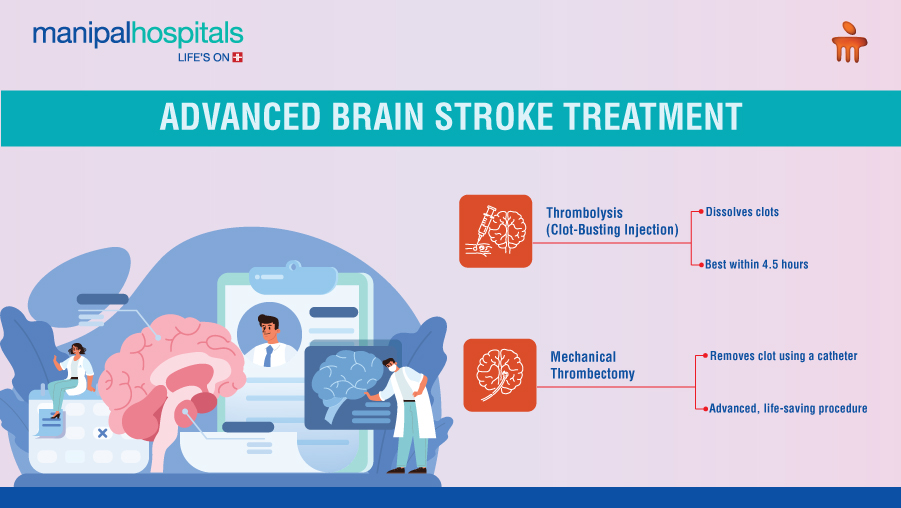
Modern medicine has transformed brain stroke treatment, making it more effective and targeted than ever before.
1. Thrombolysis (Clot-Busting Therapy)
This is one of the most effective treatments for ischemic stroke. A medication is administered intravenously to dissolve the clot and restore blood flow.
-
Works best if given within 4.5 hours of symptom onset
-
Significantly improves recovery outcomes
2. Mechanical Thrombectomy
A revolutionary procedure used in severe stroke cases. Doctors insert a catheter into the blocked artery and physically remove the clot.
-
Can be performed up to 24 hours in select patients
-
Minimally invasive with high success rates
This is often considered when discussing what the best treatment for stroke in advanced care settings is.
3. Advanced Imaging Techniques
Modern stroke care relies heavily on imaging, such as CT scans and MRI, to quickly identify the type and severity of stroke.
-
Helps differentiate between ischemic and hemorrhagic stroke
-
Guides the treatment plan effectively
4. Hemorrhagic Stroke Treatment
Treatment for bleeding strokes focuses on controlling the bleeding and reducing brain pressure.
Key approaches include:
-
Blood pressure management
-
Surgical intervention (in severe cases)
-
Medications to prevent further bleeding
Specialised neurocritical care units at Manipal Hospital Kharadi ensure continuous monitoring and support.
5. Neurocritical Care and ICU Support
Patients with severe stroke often require intensive monitoring. Advanced ICUs provide:
-
Continuous brain monitoring
-
Ventilator support if needed
-
Prevention of complications like infections or swelling
This level of care plays a vital role in improving outcomes for treatment for stroke patients.
Rehabilitation: The Key to Recovery
Stroke recovery does not end with emergency treatment. Rehabilitation is essential to regain lost functions and independence.
Types of Rehabilitation
-
Physiotherapy: Helps restore movement and strength
-
Speech therapy: Improves communication and swallowing
-
Occupational therapy: Assists in daily activities
Early rehabilitation significantly improves long-term outcomes and reduces disability.
Preventing Future Strokes
Prevention is just as important as treatment. Lifestyle changes and medical management can reduce the risk of recurrence.
Key Preventive Measures
-
Control blood pressure
-
Manage diabetes and cholesterol
-
Quit smoking
-
Maintain a healthy diet
-
Exercise regularly
-
Take prescribed medications consistently
Regular health check-ups at Manipal Hospital Kharadi can help detect risks early.
What is the best treatment for stroke?
There is no single answer to what the best treatment for a stroke, as it depends on the following:
-
Type of stroke
-
Severity
-
Time since onset
-
Patient’s overall health
However, the best outcomes are achieved when patients receive:
-
Immediate medical attention
-
Advanced diagnostic support
-
Personalised treatment plans
-
Comprehensive rehabilitation
Why Choose Manipal Hospital Kharadi for Stroke Care?
Manipal Hospital Kharadi is equipped with advanced neurological infrastructure and a multidisciplinary team dedicated to stroke care.
Key Highlights
-
24/7 emergency stroke response team
-
Advanced imaging and diagnostic tools
-
Experienced neurologists and neurosurgeons
-
Comprehensive rehabilitation services
-
Patient-centred care approach
The hospital focuses on early intervention, precise treatment, and holistic recovery.
Real-Life Perspective
Consider a 58-year-old patient who experienced sudden weakness on one side of the body. Reaching the hospital within an hour made all the difference. With immediate thrombolysis and timely care, the patient regained mobility within weeks.
Such outcomes highlight how modern brain stroke treatment can truly save brain function and lives.
Conclusion
Stroke is a medical emergency that demands immediate attention, but with advancements in modern medicine, outcomes have improved significantly. From thrombolysis to mechanical thrombectomy and comprehensive rehabilitation, today’s treatment for stroke patients is more effective than ever.
The key lies in early recognition, rapid response, and access to advanced care. At Manipal Hospital Kharadi, patients benefit from world-class stroke management designed to protect brain function and ensure better recovery.
FAQ's
The first step in stroke treatment is stabilising the patient and performing imaging tests. In ischemic stroke, clot-busting drugs may be given immediately.
Treatment should ideally begin within the first few hours. The earlier the intervention, the better the chances of recovery.
Yes, many patients recover fully, especially with early treatment and proper rehabilitation.
Hemorrhagic stroke treatment focuses on stopping the bleeding, reducing brain pressure, and preventing complications.
Maintain a healthy lifestyle, control blood pressure, manage chronic conditions, and undergo regular health check-ups.
Share this article on: