
Cataract Surgery
Manipal Hospitals Jaipur provides advanced cataract surgery in Jaipur, offering precise lens replacement procedures to restore clearer vision. Skilled ophthalmologists use modern phacoemulsification techniques to remove clouded lenses safely. The hospital maintains a structured approach to pre-operative evaluation, surgery, and recovery. Patients benefit from dedicated eye care facilities, personal counselling, and tailored lens options. This specialised service ensures reliable outcomes for individuals seeking trusted cataract management in Jaipur, supported by consistent clinical guidance.
How It Works
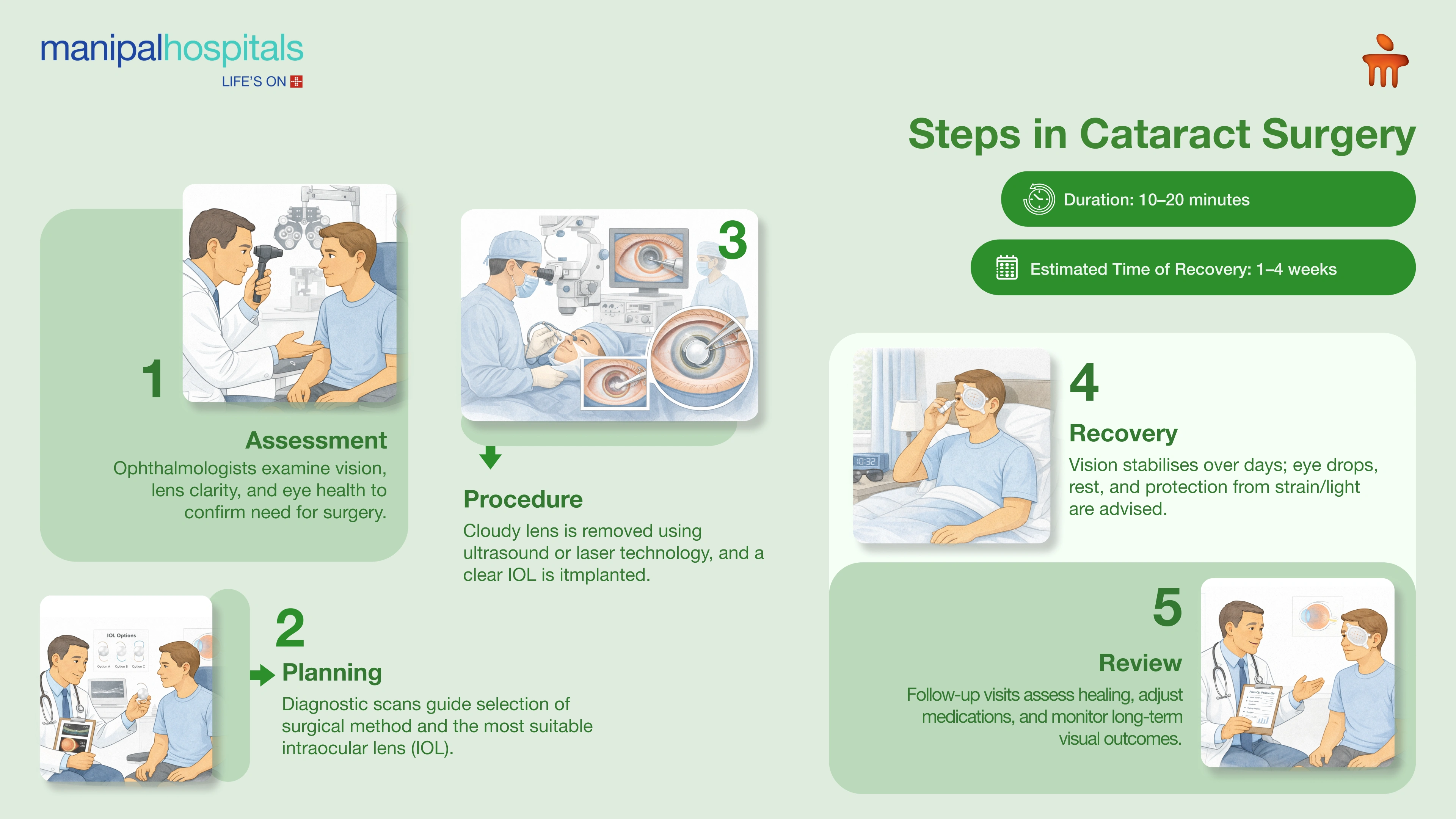
A cataract eye operation in Jaipur at Manipal Hospitals follows a structured, precise, and safety-focused approach to restore clear vision. The process begins with a comprehensive pre-operative evaluation that includes visual acuity testing, slit-lamp examination, retinal checks, and biometry measurements to determine the most suitable intraocular lens (IOL). Doctors also discuss lens choices—monofocal, multifocal, or toric—based on lifestyle needs and refractive goals.
On the day of surgery, numbing eye drops are applied to ensure a painless experience. A tiny, self-sealing corneal incision is made to access the clouded lens. Through this micro-opening, the surgeon performs phacoemulsification, where ultrasound energy breaks the cataract into fine fragments. These are gently removed while preserving the natural lens capsule.
A folded artificial IOL is then inserted through the same incision and positioned securely, where it unfolds naturally inside the eye.
The incision typically seals without stitches, allowing faster healing and reduced discomfort. The entire procedure lasts 15–30 minutes and is completed as a day-care surgery. After the operation, patients rest briefly before discharge and receive protective shielding and medicated drops. Vision improves within a few days, and scheduled follow-ups ensure a smooth, stable recovery.
Didn’t find what you were looking for?
Request a CallbackBenefits
Cataract surgery at Manipal Hospitals Jaipur offers multiple advantages:
-
Precise phacoemulsification techniques for accurate lens removal
-
Advanced IOL options tailored to visual needs
-
Sterile, well-equipped operation theatres ensuring safety
-
Experienced ophthalmic surgeons guiding each step
-
Quick, day-care procedure with fast visual recovery
-
Structured follow-ups for stable, long-term clarity
-
Comfortable recovery areas and supportive nursing care
-
Integrated diagnostics for accurate lens power calculation
What to Expect
Assessment Phase
The process begins with a comprehensive eye evaluation. Specialists assess visual clarity, lens opacity, retinal condition, and eye pressure. Advanced diagnostic tools, including biometry and corneal scans, help determine the most suitable intraocular lens (IOL). Any associated conditions, such as dry eyes or diabetes-related changes, are also reviewed to ensure personalised planning.
Preparation
Before surgery, patients may be advised to use prescribed antibiotic drops. On the procedure day, the eye is numbed with anaesthetic drops, and all steps are explained to reduce anxiety. Lens measurements are rechecked for accuracy.
During the Procedure
The cataract eye operation in Jaipur typically lasts 15–30 minutes. Through a tiny incision, the surgeon performs ultrasound-based phacoemulsification and implants a new lens. Patients may feel light pressure, but significant pain is unlikely.
Immediate Recovery
A protective eye shield is placed temporarily. Mild blurriness is expected as the eye adjusts.
Short-Term Healing and Follow-Ups
Eye drops support healing, and follow-up visits at days 1, 7, and 30 monitor progress. Vision gradually stabilises, offering clearer, more comfortable sight over the following weeks.
Why Manipal Hospitals?
Manipal Hospitals Jaipur has a well-established reputation in ophthalmic care, offering advanced facilities and modern technology for comprehensive cataract management. The department is led by experienced surgeons skilled in phacoemulsification and premium intraocular lens options, ensuring accurate and safe procedures. The hospital maintains sterile, well-equipped operation theatres supported by integrated diagnostics such as slit-lamp imaging, biometry systems, and retinal evaluation tools. Patients receive structured pre-operative assessments, clear guidance on lens choices, and close monitoring during recovery. A collaborative, multidisciplinary approach strengthens coordination between diagnostics, surgery, and rehabilitation, promoting seamless continuity of care. With a strong focus on safety, precision, and patient comfort, Manipal Hospitals Jaipur continues to be a trusted destination for high-quality cataract treatment in the region.
Centre of Excellence
The Ophthalmology Department at Manipal Hospitals Jaipur, specialises in comprehensive eye care with a complete focus on cataract management. Surgeons use advanced ultrasound and laser-assisted techniques where applicable for precise lens replacement. The team supports regular screenings, early diagnosis, and structured follow-up to maintain long-term visual health for patients across the region.
Services Offered
Manipal Hospitals provides a comprehensive range of ophthalmic services designed to support accurate diagnosis, advanced treatment, and seamless visual recovery.
-
Detailed cataract evaluation and screening
-
Phacoemulsification surgery for lens removal
-
Premium IOL implantation for customised correction
-
Toric lens options for astigmatism
-
Post-operative rehabilitation and vision counselling
-
Follow-up visits for stable recovery
Facilities & Services
The hospital ensures a patient-centred experience through modern infrastructure, skilled clinical teams, and advanced diagnostic systems.
-
Modern operation theatres with microscope-guided systems
-
Diagnostic suites with slit-lamp and imaging tools
-
Comfortable recovery areas for outpatient care
-
On-site pharmacy for immediate medication support
-
Sterile surgical environments with strict protocols
-
Coordinated assistance throughout pre- and post-surgery stages
Frequently Asked Questions
Cataracts occur when proteins in the lens clump together, reducing clarity. Ageing is the most common cause, though diabetes, UV exposure, or injury can contribute. Early diagnosis helps in planning timely treatment.
Most patients resume daily activities within a few days, with vision improving over several weeks. Eye drops reduce inflammation, and protective measures prevent strain. Regular follow-ups help track healing progress effectively.
Usually, surgeries are performed separately to ensure safe recovery. The second eye is scheduled after the first stabilises. This approach lowers risk and supports balanced visual outcomes during the healing period.
Options include monofocal lenses for distance, multifocal lenses for near and far vision, and toric lenses for astigmatism. Each offers different advantages. Surgeons help patients select the most suitable choice.
Individuals with uncontrolled infections, severe eye inflammation, untreated retinal issues, or very advanced systemic diseases may not be ideal candidates. A detailed evaluation at Manipal Hospitals ensures safe and appropriate cataract surgery in Jaipur for each patient.
Consult our Experts



You’re on Our Indian Website
Visit the Global site for International patient services
'Click' to chat with us
