7 Min Read
When a doctor suspects a problem related to blood, immunity, or certain cancers, a bone marrow test often becomes an essential step. Though the idea may sound intimidating, understanding the purpose, process, and recovery can make it much less overwhelming.
At Manipal Hospital Jaipur, specialists frequently guide patients through this test with clarity and care, ensuring both safety and comfort.
Synopsis
- What is a bone marrow test?
- Why is a Bone Marrow Test Done?
- Bone Marrow Biopsy Procedure: Step-by-Step
- Does the Bone Marrow Test Hurt?
- Bone Marrow Aspiration vs Biopsy
- Preparation Tips for the Test
- Recovery Time After Bone Marrow Test
- Possible Side Effects
- Results and What They Mean
- When Should You Seek Medical Advice?
- A Patient’s Perspective
What is a bone marrow test?
A bone marrow test is a medical procedure used to examine the soft, spongy tissue inside your bones called bone marrow. This tissue plays a crucial role in producing blood cells, including:
-
Red blood cells (oxygen carriers)
-
White blood cells (infection fighters)
-
Platelets (clotting agents)
There are two main types of tests:
-
Bone marrow aspiration – removal of the liquid portion
-
Bone marrow biopsy – removal of a small solid piece of marrow
-
Both are often performed together to give a complete picture of your health.
Why is a Bone Marrow Test Done?
Doctors recommend a bone marrow test when routine blood tests show abnormalities or when certain conditions are suspected. Some common reasons include:
1. Diagnosing Blood Disorders
If you have unexplained anaemia, low platelet count, or abnormal white blood cell levels, this test helps identify the cause.
2. Detecting Cancer
It plays a key role in diagnosing cancers like
-
Leukaemia
-
Lymphoma
-
Multiple myeloma
3. Monitoring Cancer Treatment
Doctors use it to check how well chemotherapy or other treatments are working.
4. Investigating Fever or Infections
In some cases, persistent unexplained fever or infections may require a deeper look into bone marrow.
5. Checking Iron Levels and Storage Diseases
It helps evaluate how well your body stores iron or if metabolic disorders are present.
At Manipal Hospital Jaipur, this test is often advised after careful evaluation, ensuring it is truly necessary for accurate diagnosis.
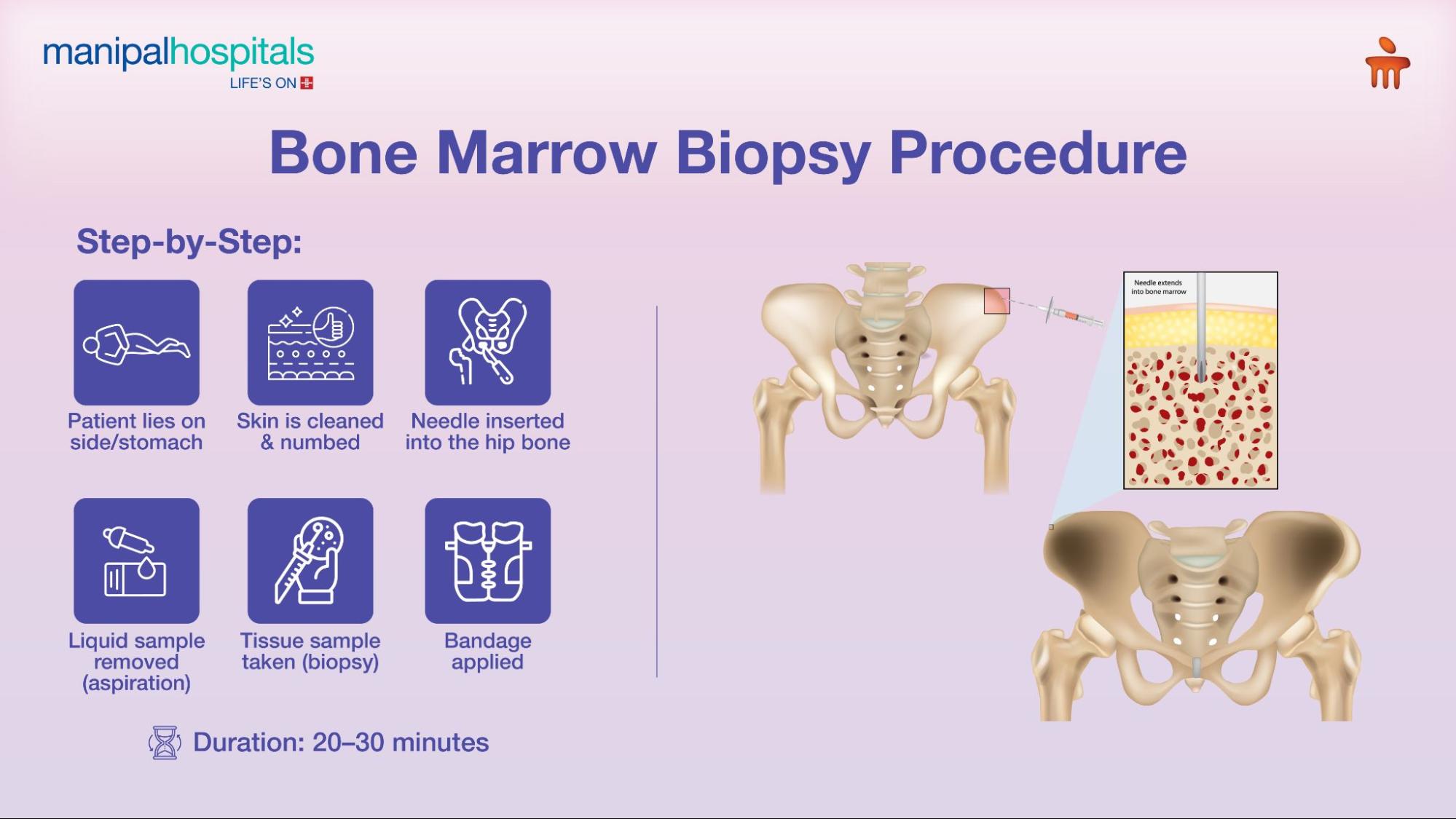
Bone Marrow Biopsy Procedure: Step-by-Step
Understanding the bone marrow biopsy procedure can ease anxiety. Here’s what typically happens:
Before the Test
-
You may be asked to stop certain medications
-
Blood tests are reviewed
-
Consent is taken after explaining the procedure
During the Procedure
The test usually takes 20–30 minutes and is performed under local anesthesia.
-
Positioning: You will lie on your side or stomach. The most common site is the back of the hip bone.
-
Cleaning and numbing. - The skin is cleaned, and a local anesthetic is injected to numb the area.
-
Bone Marrow Aspiration- needle is inserted into the bone to withdraw a liquid sample. You may feel a brief, sharp pain or pressure.
-
Bone Marrow Biopsy- slightly larger needle is used to collect a small core of bone marrow tissue.
-
Bandaging - Pressure is applied to stop bleeding, and the site is covered with a sterile dressing.
Does the Bone Marrow Test Hurt?
This is one of the most common concerns. The truth is:
-
You may feel pressure and brief discomfort during the aspiration
-
Pain is usually short-lived
-
Local anaesthesia minimises pain significantly
Some patients describe it as uncomfortable but manageable. At experienced centres like Manipal Hospital Jaipur, doctors ensure the process is as gentle as possible.
Bone Marrow Aspiration vs Biopsy
|
Feature |
Aspiration |
Biopsy |
|
Sample Type |
Liquid marrow |
Solid marrow tissue |
|
Purpose |
Cell analysis |
Structure and architecture |
|
Sensation |
Brief sharp pain |
Pressure feeling |
Both tests together provide a complete diagnosis.
Preparation Tips for the Test
Here are a few simple steps to prepare:
-
Inform your doctor about medications (especially blood thinners)
-
Eat light before the test unless advised otherwise
-
Arrange for someone to accompany you
-
Stay calm—knowing the process helps reduce anxiety
Recovery Time After Bone Marrow Test
The bone marrow test recovery time is usually quick and uncomplicated.
Immediately After
-
You may feel soreness at the test site
-
Rest for a few hours
-
Avoid strenuous activity for 24 hours
Within 1–2 Days
-
Mild pain or bruising may continue
-
Over-the-counter pain relief may be prescribed
After 48 Hours
-
Most patients return to normal activities
-
Keep the area clean and dry
Possible Side Effects
Bone marrow tests are generally safe, but mild side effects may include:
-
Pain or tenderness at the site
-
Minor bleeding
-
Bruising
Rare complications:
-
Infection
-
Prolonged bleeding
If you notice swelling, fever, or excessive pain, consult your doctor immediately.
Results and What They Mean
Results are typically available within a few days. They help doctors:
-
Confirm or rule out diseases
-
Stage cancer (if present)
-
Decide on the next course of treatment
Your doctor will explain the findings in simple terms and guide you on the next steps.
When Should You Seek Medical Advice?
Contact your doctor if you experience:
-
Severe or increasing pain
-
Continuous bleeding
-
Fever or chills
-
Redness or discharge at the test site
Prompt attention ensures quick recovery and prevents complications.
A Patient’s Perspective
Many patients walk into the procedure room feeling nervous but walk out relieved. One patient at Manipal Hospital, Jaipur, shared that the anticipation was far worse than the actual test. Within a day, they were back to their routine, grateful for the clarity the test provided.
A bone marrow test is a powerful diagnostic tool that helps detect serious conditions early and accurately. Whether it is for diagnosing blood disorders, evaluating cancer, or monitoring treatment, this test provides crucial insights that guide life-saving decisions.
While the thought of a bone marrow biopsy procedure may seem daunting, it is a quick, safe, and manageable process with minimal recovery time. With expert care and proper guidance, such as that provided at Manipal Hospital Jaipur, patients can undergo the procedure with confidence and peace of mind.
FAQ's
It is done to diagnose blood disorders, cancers, infections, and to monitor treatment effectiveness.
The procedure usually takes about 20–30 minutes.
You may feel brief discomfort, but local anaesthesia helps minimise pain.
You may feel brief discomfort, but local anaesthesia helps minimise pain.
Most people recover within 24–48 hours and resume normal activities.
Risks are minimal and may include mild pain, bleeding, or, rarely, infection.
Share this article on: