7 Min Read
An elbow dislocation can be a frightening and painful experience, often occurring unexpectedly due to falls or sports injuries. While it's a serious injury, understanding the signs, knowing the correct first aid, and following a structured recovery plan can significantly improve outcomes.
Synopsis
- What is a Dislocated Elbow?
- Types of Elbow Dislocation
- Signs and Symptoms of a Dislocated Elbow
- Causes of Elbow Dislocation
- First Aid for a Dislocated Elbow
- Diagnosis of a Dislocated Elbow
- Dislocated Elbow Treatment
- Dislocated Elbow Recovery Time
- Preventing Elbow Dislocations
- When to Seek Medical Attention
What is a Dislocated Elbow?
An elbow joint dislocation occurs when the bones of the forearm (radius and ulna) are forced out of alignment with the bone of the upper arm (humerus) at the elbow joint. This joint, crucial for many arm movements, is primarily stabilised by ligaments, muscles, and the joint capsule. When these structures are overstretched or torn, the joint can become unstable and dislocate. It is one of the most common major joint dislocations after the shoulder, affecting individuals of all ages, though it's particularly prevalent in athletes and children.
Types of Elbow Dislocation
Elbow dislocations are classified based on the direction of the forearm bones relative to the humerus. The most common form is a posterior elbow dislocation, where the forearm bones are displaced backwards. Other, less common types include:
-
Anterior Dislocation: The forearm bones move forward.
-
Medial or Lateral Dislocation: The forearm bones move sideways.
-
Divergent Dislocation: The radius and ulna separate from each other, and both dislocate from the humerus.
Understanding the specific types of elbow dislocation helps in accurate diagnosis and tailored treatment.
Signs and Symptoms of a Dislocated Elbow
Look out for these indicators of a dislocated elbow:
-
Severe Pain: Intense, immediate pain at the elbow joint.
-
Obvious Deformity: The elbow may look visibly misshapen, bent at an unusual angle, or appear swollen.
-
Swelling and Bruising: Rapid onset of swelling around the joint, often followed by bruising.
-
Inability to Move: Difficulty or complete inability to bend or straighten the arm.
-
Numbness or Tingling: Sensation changes in the hand or fingers, indicating potential nerve involvement.
-
Weakness: A feeling of weakness in the forearm or hand.
Causes of Elbow Dislocation
Most elbow dislocations are the result of trauma. Common causes include:
-
Falls: Falling onto an outstretched arm is the most frequent cause, especially if the arm is slightly bent.
-
Sports Injuries: High-impact sports like football, rugby, gymnastics, or wrestling can lead to dislocations.
-
Motor Vehicle Accidents: Direct trauma to the elbow during a collision.
First Aid for a Dislocated Elbow
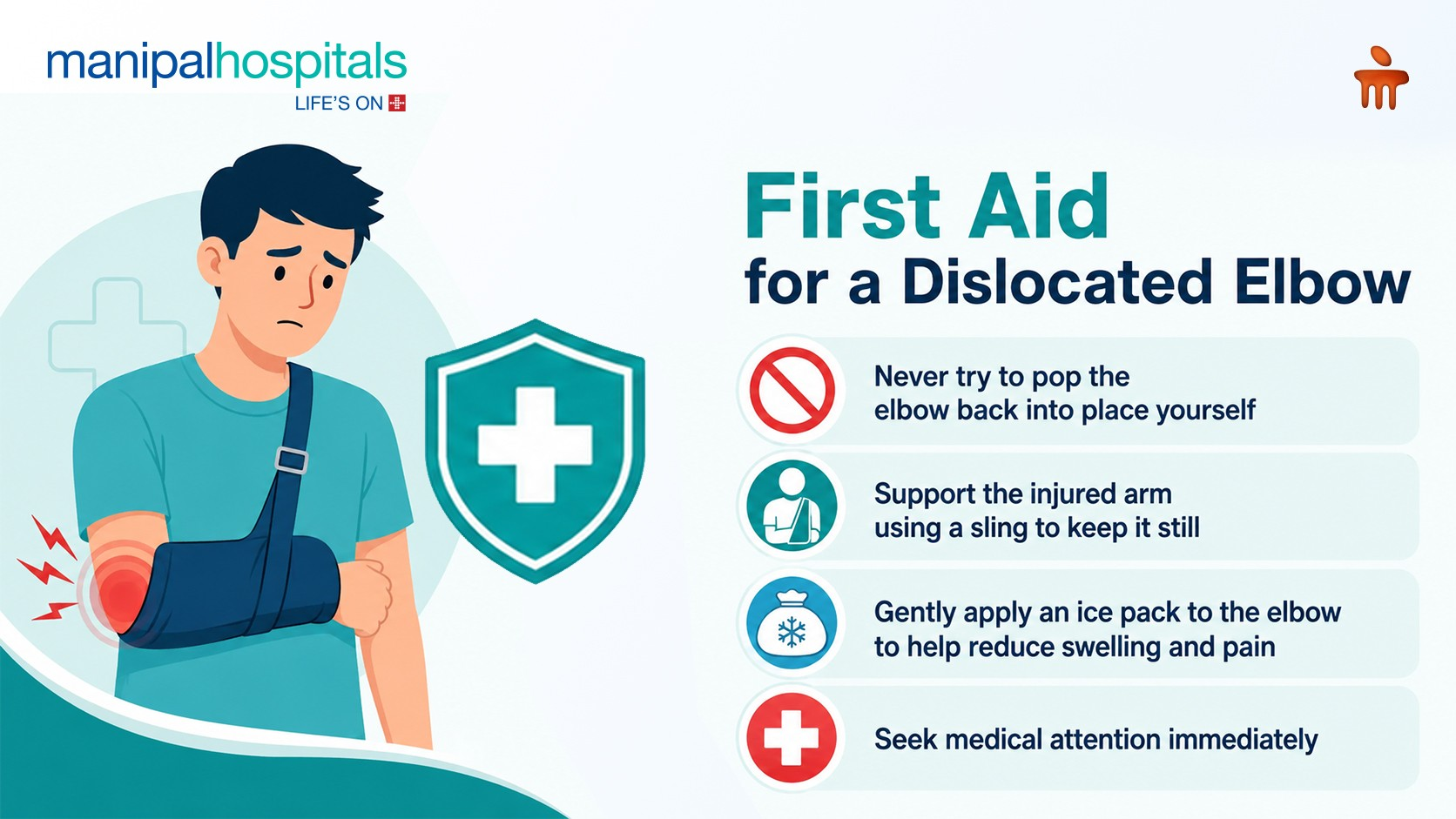
Immediate and correct first aid can prevent further injury and manage pain. Remember these critical steps:
-
Do Not Attempt to Reduce It: Never try to pop the elbow back into place yourself. This can cause severe damage to nerves, blood vessels, and surrounding tissues.
-
Immobilise the Arm: Support the injured arm in the position it was found. Use a sling, a towel, or even clothing to keep it still.
-
Apply Ice: Gently apply an ice pack (wrapped in a cloth) to the elbow to help reduce swelling and pain. Do this for 15-20 minutes at a time.
-
Seek Medical Attention Immediately: Go to the nearest emergency room or call for medical help. Prompt professional care is vital for a good outcome.
Diagnosis of a Dislocated Elbow
Upon arrival at a medical facility, a doctor will perform a physical examination to assess the injury, check for nerve or blood vessel damage, and evaluate the range of motion. X-rays are crucial to confirm the elbow joint dislocation and rule out any associated fractures. In some complex cases, a CT scan or MRI may be used to get a more detailed view of the soft tissues and bone structures.
Dislocated Elbow Treatment
The primary goal of dislocated elbow treatment is to safely return the bones to their correct position and restore normal function.
Reduction: The first step is usually a procedure called elbow dislocation reduction. This involves gently manipulating the bones back into their proper alignment. This is always performed by a trained medical professional and orthopaedician, often under sedation or anaesthesia, to ensure patient comfort and prevent further injury. With prompt and professional care, the success rate of non-surgical elbow dislocation reduction is remarkably high.
Post-Reduction Care: After the reduction, the elbow will be immobilised in a splint or brace for a short period (usually 1-3 weeks) to allow initial healing and protect the joint. Pain management will also be provided.
Rehabilitation: Physical therapy is a cornerstone of recovery. A customised rehabilitation program will focus on:
-
Restoring range of motion.
-
Strengthening the muscles around the elbow.
-
Improving stability and coordination.
Dislocated Elbow Recovery Time
The dislocated elbow recovery time can vary depending on several factors, including the severity of the dislocation, the presence of associated fractures, patient's age, and adherence to the rehabilitation program. Generally:
-
Initial Healing (1-3 weeks): This phase involves immobilisation and managing pain and swelling.
-
Cast or Splint Removal: Cast removal, splint, or brace is typically done after 1–3 weeks based on healing progress, followed by supervised exercises to regain elbow movement and strength.
-
Early Rehabilitation (3-6 weeks): Focus shifts to gentle range-of-motion exercises under the guidance of a physiotherapist.
-
Strengthening and Functional Recovery (6 weeks to 3-6 months): Progressive strengthening exercises are introduced, and the patient gradually returns to normal activities. Most patients experience significant improvement within 4-6 weeks with dedicated rehabilitation.
-
Full Return to Activity: High-impact sports or heavy lifting may require 3-6 months or even longer, depending on the individual's progress and the advice of their surgeon and therapist.
Consistency in physical therapy and patience are key to achieving optimal recovery and preventing recurrent dislocations.
Preventing Elbow Dislocations
While not all dislocations are preventable, you can reduce your risk:
-
Strengthen Surrounding Muscles: Regular exercise that strengthens the arm, shoulder, and core muscles can provide better joint stability.
-
Improve Balance and Coordination: Good balance can prevent falls.
-
Use Proper Technique in Sports: Learn and practice correct techniques, especially in sports that involve a risk of falls or impacts.
-
Wear Protective Gear: In high-risk sports, consider wearing appropriate elbow guards.
-
Maintain a Safe Environment: Remove tripping hazards at home and work.
When to Seek Medical Attention
Any suspected dislocated elbow requires immediate medical attention. Patients experiencing severe elbow pain, visible deformity, swelling, or difficulty moving the arm should seek prompt evaluation from the Orthopaedics Department to ensure accurate diagnosis and timely treatment. Do not delay seeking help if you experience:
-
Severe pain and visible deformity of the elbow.
-
Inability to move the arm.
-
Numbness, tingling, or coldness in the hand or fingers.
-
An audible "pop" at the time of injury followed by intense pain.
A dislocated elbow can be a challenging injury, but with prompt diagnosis, expert treatment, and a dedicated rehabilitation program, a full recovery is highly achievable. At Manipal Hospital, Goa our experts at the Department of Orthopaedics are here to provide comprehensive care tailored to your needs, ensuring you get back to your active life as quickly and safely as possible.
FAQ's
No, an elbow joint dislocation requires immediate medical intervention for proper reduction. Attempting to let it heal on its own can lead to permanent damage, chronic instability, or severe functional impairment.
A dislocated elbow means the bones have come out of alignment at the joint, while a fractured elbow means one or more of the bones in the elbow have broken. Both can occur simultaneously and require medical assessment, typically with X-rays, for accurate diagnosis.
Return to sports depends on the severity of the injury, the effectiveness of rehabilitation, and your specific sport. It typically takes 3 to 6 months, and often requires clearance from your orthopaedic surgeon and physical therapist. Rushing back can increase the risk of re-dislocation.
If not treated properly or if rehabilitation is neglected, potential long-term complications can include chronic pain, stiffness, limited range of motion, recurrent dislocations, and early onset arthritis. However, with appropriate treatment and rehabilitation, most people achieve excellent long-term outcomes.
Preventing recurrence involves completing your full rehabilitation program to strengthen the surrounding muscles and ligaments, avoiding activities that put your elbow at risk until fully healed, and sometimes using a brace during high-risk activities as advised by your doctor.
Share this article on: