8 Min Read
In moments of chest pain or suspected cardiac distress, an Electrocardiogram (ECG or EKG) is often the first diagnostic test performed. It's a quick, non-invasive procedure that provides a snapshot of your heart's electrical activity. But can an ECG detect a heart attack definitively? While an ECG is an indispensable tool in emergency cardiac care, its ability to pinpoint a heart attack is nuanced.
Synopsis
Understanding the Electrocardiogram (ECG)
An ECG records the electrical signals as they travel through your heart. These signals control the heart's pumping action. Small electrodes are placed on your chest, arms, and legs, which detect and amplify these electrical impulses, displaying them as waves on a monitor or paper printout. A trained medical professional can interpret these wave patterns to assess various aspects of heart health, including heart rate, rhythm, and the presence of any damage to the heart muscle.
An ECG looks for irregularities in the electrical flow that could indicate stress or damage to the heart muscle making it an essential diagnostic tool in emergency settings.
How an ECG Helps Detect a Heart Attack
During a heart attack, blood flow to a part of the heart muscle is severely reduced or blocked, leading to damage. This damage affects the heart's electrical activity, which an ECG can often pick up. Specific changes on an ECG tracing are tell-tale signs of a heart attack:
-
ST-Segment Elevation: This is a critical indicator of a severe type of heart attack known as an ST-elevation myocardial infarction (STEMI). When the ST segment, a specific part of the ECG waveform, is elevated, it strongly suggests a complete blockage of a coronary artery, demanding immediate medical intervention. Studies show that ECGs accurately identify STEMIs when presented acutely.
-
T-Wave Inversion: The T-wave represents the heart's electrical recovery. An inverted T-wave can suggest myocardial ischemia (reduced blood flow) or an evolving heart attack.
-
Pathological Q-Waves: These are deeper and wider Q-waves than normal and typically indicate that a significant amount of heart muscle has been damaged, often from a previous heart attack.
When these changes are observed, it means the ECG showing heart attack is highly probable, allowing for rapid initiation of life-saving treatments.
When an ECG Might Not Show a Heart Attack
While an ECG is highly valuable, it's not foolproof. There are scenarios where an ECG might not immediately detect a heart attack:
-
Early Stages: In the very early minutes of a heart attack, the electrical changes might not yet be significant enough to register on an ECG.
-
Non-ST Elevation Myocardial Infarction (NSTEMI): Some heart attacks, known as NSTEMIs, involve a partial blockage or less severe damage. These may not show the classic ST-segment elevation on an ECG, making them harder to detect solely by this method.
-
Previous Heart Conditions: Pre-existing heart conditions or prior heart attacks can alter the baseline ECG, making new changes more difficult to interpret.
-
Intermittent Symptoms: If the heart attack symptoms are intermittent or fleeting, an ECG taken during a symptom-free period may appear normal.
A normal ECG does not always rule out a heart attack, especially if symptoms persist.
Other Diagnostic Tools with ECG
Given the limitations, medical professionals often use an ECG in conjunction with other diagnostic tests to get a complete picture and confirm a diagnosis. These include:
-
Blood Tests (Cardiac Markers): Levels of specific enzymes and proteins, such as troponin, are released into the bloodstream when the heart muscle is damaged. These markers can confirm heart muscle injury, even when ECG changes are subtle or absent.
-
Echocardiogram: An ultrasound of the heart that shows its structure and how well it's pumping. It can identify areas of the heart muscle that are not moving correctly due to damage.
-
Coronary Angiography: This invasive procedure uses X-rays and a special dye to visualise the coronary arteries, identifying blockages directly. This is often the definitive diagnostic and interventional step for a confirmed heart attack.
This comprehensive approach ensures that individuals experiencing symptoms receive the most accurate diagnosis and timely care.
Recognising Heart Attack Symptoms
Regardless of what a diagnostic test might show, recognising the symptoms of a heart attack and seeking immediate medical attention is paramount. Common symptoms include:
-
Chest pain or discomfort that may feel like pressure, squeezing, fullness, or aching.
-
Pain that spreads to your shoulder, arm, back, neck, jaw, or stomach.
-
Sweating, nausea, or lightheadedness.
Important caveat to remember – around 25% of the patients who have heart attack may not have any symptoms. This condition is known as silent myocardial infarction. The presence of damage or blockage may show up during the course of investigations for other conditions.
Women may experience more subtle symptoms like unusual fatigue, sleep disturbance, or indigestion. Early detection and treatment significantly improve outcomes. For instance, patients receiving prompt treatment have a much higher chance of survival, with studies showing an improvement in recovery rates.
Who Should Consider an ECG Test?
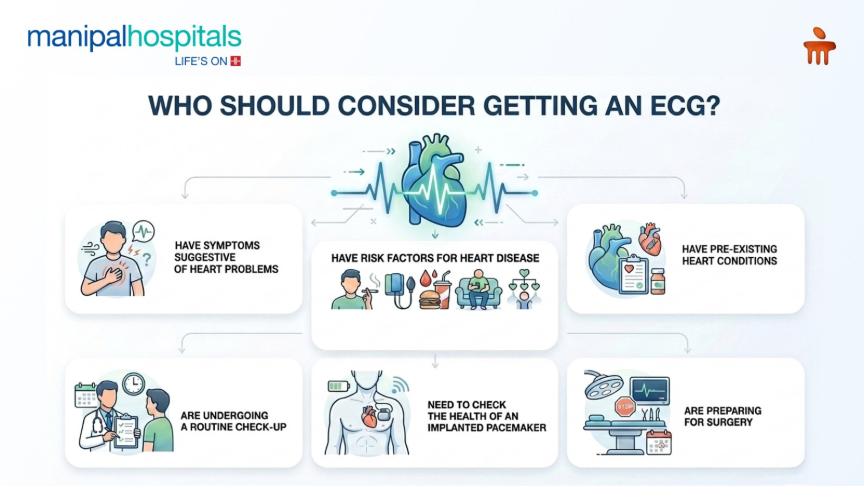
An ECG is a valuable diagnostic tool, and your doctor may recommend one for several reasons. Generally, an ECG is considered if you:
-
Experience symptoms suggestive of heart problems, such as chest pain, shortness of breath, dizziness, or palpitations.
-
Have risk factors for heart disease, including high blood pressure, high cholesterol, diabetes, a family history of heart disease, or a history of smoking.
-
Are undergoing a routine check-up, especially if you are above a certain age or have pre-existing conditions.
-
Need to monitor the effectiveness of certain heart medications or the health of an implanted pacemaker or defibrillator.
-
Are preparing for surgery, as a pre-operative cardiac assessment.
Even if you don't have immediate symptoms, regular check-ups that include an assessment of your cardiac health can be beneficial, particularly as you age or if risk factors are present.
Heart Attack Treatment and Recovery
When a heart attack is diagnosed, prompt treatment is crucial to restore blood flow to the heart muscle. Modern interventions, such as angioplasty with stent placement, have remarkable success rates, with most patients achieving restored blood flow to the affected area. Medications are also vital for managing symptoms, preventing further clots, and improving long-term heart health.
Conclusion
At Manipal Hospital, Goa, we offer advanced and comprehensive heart attack treatment. Our team of expert cardiologists in goa, cardiac surgeons, and support staff are dedicated to providing world-class care, from emergency intervention to rehabilitation, ensuring the best cardiologist in goa for best possible outcomes for our patients.
FAQ's
An ECG can show changes indicative of a heart attack within minutes of onset, especially for severe types like STEMI. However, in the very early stages or for less severe types, changes might not be immediate.
No, a normal ECG does not completely rule out a heart attack, especially if you have ongoing symptoms. Other tests like blood markers (troponin) are crucial to confirm or rule out a heart attack.
Besides heart attacks, an ECG can detect arrhythmias (irregular heartbeats), enlargement of the heart chamber and chamber walls, inflammation of the heart sac (pericarditis), and issues with electrolyte balance.
No, an ECG is a non-invasive and painless procedure. You might feel a slight tug when the electrodes are removed.
The frequency of ECGs depends on your age, risk factors, and existing health conditions. Your doctor will advise you on whether and how often you need an ECG as part of your regular check-ups or for specific symptoms.
Share this article on: