6 Min Read
Knee pain is a common ailment, but when it specifically flares up while bending, it can be particularly debilitating, affecting daily activities from walking to climbing stairs. The knee is a complex joint, crucial for movement and supporting body weight. When you experience knee pain when bending, it signals an issue within its bones, ligaments, tendons, and cartilage. This discomfort can range from a dull ache to sharp, intense pain, often accompanied by other symptoms.
Synopsis
Causes of Knee Pain When Bending
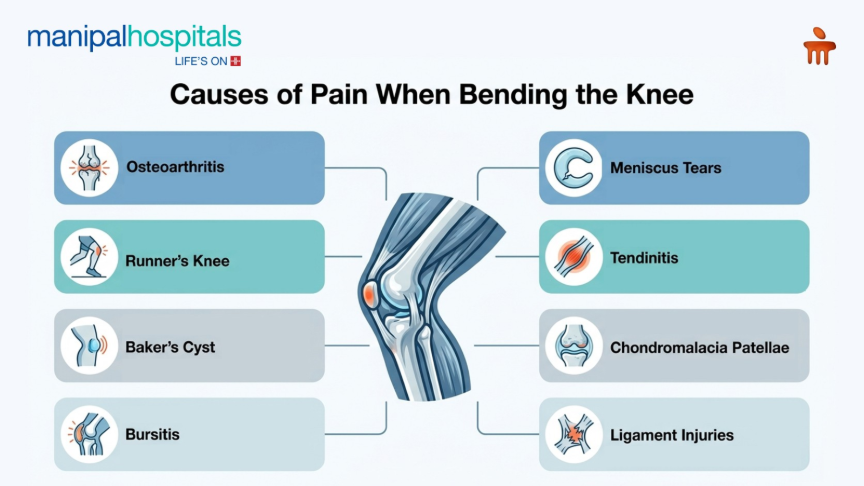
Several conditions can lead to knee pain when bending. Identifying the exact cause is the first step towards effective treatment. Some common causes include:
-
Osteoarthritis: This degenerative joint disease is a leading cause, particularly affecting the cartilage. Patients often describe a deep ache or pain on the inside of the knee when bending and straightening as the cartilage wears down. It accounts for a significant portion of chronic knee pain cases.
-
Meniscus Tears: The meniscus ligament acts as a shock absorber in the knee. A tear can cause sharp pain, especially when the knee is twisted or fully bent, and might manifest as pain on the inside or side of the knee.
-
Patellofemoral Pain Syndrome (Runner's Knee): Often felt around or behind the kneecap, this condition causes knee pain when bending the leg, especially during activities like running, climbing stairs, or prolonged sitting. It's particularly common among athletes.
-
Tendinitis: Inflammation of the tendons (like the patellar or quadriceps tendon) can cause pain, often isolated to the front of the knee, which worsens when bending or squatting.
-
Bursitis: Inflammation of the bursae (small fluid-filled sacs that cushion the joint) can lead to localised tenderness and pain with movement.
-
Ligament Injuries: Sprains or tears to circulate ligaments like the ACL, PCL, MCL, or LCL can cause instability and pain, including side knee pain when bending, depending on the affected ligament.
-
Baker's Cyst: A fluid-filled sac that forms at the back of the knee, often associated with other knee problems, can cause fullness, tightness, and pain in the back of the knee when bending.
-
Chondromalacia Patellae: Softening and breakdown of the cartilage on the underside of the kneecap, leading to pain around the kneecap, particularly with bending motions.
Common Symptoms to Look Out For
Beyond the primary symptom of knee pain when bending, be aware of these accompanying signs:
-
Sharp or dull aching pain that worsens with movement.
-
Swelling and tenderness around the knee joint.
-
Stiffness, especially after periods of inactivity or in the morning.
-
Clicking, popping, or grinding sensations when bending or straightening the knee.
-
Limited range of motion or difficulty fully bending or straightening the leg.
-
A feeling of weakness or instability in the knee.
Diagnosing Knee Pain
An accurate diagnosis is essential for effective treatment. Some of the strategies for diagnosing knee pain especially when bending include:
-
Detailed Medical History and Physical Examination: The doctor will ask about your symptoms, medical history, and perform a thorough physical assessment of your knee's range of motion, stability, and tenderness.
Imaging Tests:
-
X-rays: To visualise bone structures and identify issues like arthritis or fractures.
-
MRI (Magnetic Resonance Imaging): Provides detailed images of soft tissues, including ligaments, tendons, cartilage, and meniscus, which are crucial for diagnosing conditions like meniscus tears or ligament injuries.
Effective Treatment Options for Knee Pain When Bending
The usual course of treatment for knee pain that occurs when bending includes either non-surgical management techniques or surgical procedures. The Orthopedics Department plays an important role in evaluating knee pain and determining the most appropriate treatment approach for each patient.
Conservative Management
For many patients, non-surgical treatments are highly effective, leading to significant improvements and avoiding the need for surgery. These include:
-
RICE Protocol: Rest, Ice, Compression, and Elevation can help reduce inflammation and pain, especially after an acute injury or flare-up of knee pain when bending the leg.
-
Physical Therapy: Physiotherapy strengthens the muscles supporting the knee, improves flexibility, and corrects biomechanical issues.
-
Bracing: Knee braces can provide support, stability, and help offload stress from affected areas, aiding in pain relief and healing.
-
Medications: Non-opioid pain relievers and anti-inflammatory medications can help manage pain and reduce swelling.
-
Injections: Depending on the diagnosis, options such as specific anti-inflammatory injections or lubrication injections can provide targeted pain relief and improve joint function.
Surgical Interventions
When conservative treatments do not yield sufficient results, or for severe injuries, surgical options may be considered. Our skilled orthopaedic surgeons specialise in advanced procedures:
-
Arthroscopy: A minimally invasive procedure using a small camera to diagnose and treat problems inside the knee, such as repairing meniscus tears or removing loose bodies. Arthroscopic procedures lead to improved function and reduced knee pain when bending post-surgery.
-
Partial or Total Knee Replacement: For severe arthritis or extensive joint damage, replacing part or all of the knee joint can dramatically alleviate chronic knee pain when bending and restore mobility. These procedures significantly enhance patients' quality of life. At Manipal Hospital, Goa, our experts perform these procedures along with robotic knee replacement (total and partial). Our dedicated specialists use advanced technologies to help reduce your knee pain when bending, so that you can move around with ease.
Conclusion
Living with knee pain when bending can significantly affect your daily life and overall well-being. At Manipal Hospital, Goa, our orthopaedic experts are dedicated to providing advanced care, from accurate diagnosis to personalised treatment plans, ensuring you receive the most effective solutions for your condition. Don't let knee pain hold you back; take the first step towards a pain-free life by consulting our specialists.
FAQ's
Not always. It can be due to minor strains or overuse. However, persistent pain, swelling, or instability warrant medical evaluation as it could indicate a more serious underlying condition. Early diagnosis often leads to faster and more effective recovery.
Maintaining a healthy weight, strengthening leg muscles, wearing appropriate footwear, warming up before exercise, and avoiding sudden, strenuous movements can help prevent knee pain when bending.
Consult a doctor if your knee pain when bending is severe, prevents you from putting weight on your leg, is accompanied by significant swelling, redness, warmth, or if the pain persists for more than a few days despite home care.
Recovery time varies greatly depending on the cause and severity of the condition. Minor strains might heal in a few weeks with conservative treatment, while more complex issues like ligament tears or severe arthritis requiring surgery can take several months. Most patients undergoing physical therapy for common causes like patellofemoral pain syndrome see significant improvement within 6-12 weeks.
Absolutely. Lifestyle changes such as weight management, regular low-impact exercise, and proper posture can significantly alleviate pain in back of knee when bending, especially if it's related to conditions like Baker's cyst or hamstring tightness. Many patients report reduced symptoms with these adjustments.
Yes, specific exercises focusing on strengthening the vastus medialis obliquus (VMO) muscle, improving hip and core stability, and gentle stretching can be very beneficial for pain on inside of knee when bending and straightening. A physiotherapist can design a tailored program.
Share this article on: