
 6 Min Read
Women often put their health last. They manage home, work and family. Small health changes are ignored. Fatigue is blamed on stress. Weight gain is blamed on age. Mood swings are blamed on hormones.
But sometimes, the real cause is the thyroid gland. On Women’s Day 2026, it is important to speak about thyroid symptoms in women and why early testing matters.
Synopsis
- What is the Thyroid and Why is It Important?
- Why Are Thyroid Problems Common in Women?
- Thyroid Levels in Women
- Thyroid Symptoms in Women You Should Not Ignore
- Hyperthyroidism in Women
- Hypothyroidism in Women
- Causes of Thyroid in Women
- Why Women Should Get Tested
- How Are Thyroid Problems Treated?
- Can Thyroid Problems Be Managed?
- Conclusion
What is the Thyroid and Why is It Important?
The thyroid is a small gland in the front of the neck. It controls how the body uses energy. It affects heart rate, body temperature, mood and metabolism. When the thyroid does not work properly, many body functions slow down or speed up. This leads to symptoms that may look common but are not normal. Thyroid problems are more common in women than in men. Hormonal changes play a big role.
Why Are Thyroid Problems Common in Women?
Thyroid problems are more common in women mainly because of hormonal changes throughout life. The female body goes through several natural transitions. These changes can affect how the thyroid gland functions.
-
Hormonal changes during puberty: During puberty, hormone levels rise quickly. This shift can sometimes disturb thyroid balance and trigger early thyroid issues.
-
Pregnancy: Pregnancy increases the body’s demand for thyroid hormones. If the thyroid cannot meet this demand, symptoms may appear.
-
After childbirth: Some women develop thyroid imbalance after delivery. This is called postpartum thyroid dysfunction. It may be temporary, but it still needs monitoring.
-
Perimenopause and menopause: During this stage, hormone levels fluctuate again. These changes can affect thyroid function and may worsen existing symptoms.
-
Autoimmune conditions: Women are more likely than men to develop autoimmune disorders. In these conditions, the immune system mistakenly attacks the thyroid gland.
-
Family history: If thyroid disease runs in the family, the risk is higher. Genetics plays an important role.
Women experience multiple hormonal shifts during life, and thyroid balance can be easily disturbed. Regular screening helps detect problems early and ensures timely treatment.
Thyroid Levels in Women
Doctors check thyroid function through a blood test. This test measures thyroid hormone levels and TSH.
Normal thyroid levels in women help maintain energy, mood and weight balance. If the levels are too high or too low, symptoms begin to appear.
-
Low thyroid function is called hypothyroidism.
-
High thyroid function is called hyperthyroidism.
Both conditions need medical attention.
Thyroid Symptoms in Women You Should Not Ignore
Many women live with thyroid problems for years without knowing. The symptoms are often mild at first. Here are common thyroid symptoms in women:
-
Unexplained Weight Changes: Sudden weight gain without lifestyle changes may signal low thyroid levels. Unexpected weight loss may point to an overactive thyroid.
-
Constant Fatigue: Feeling tired all the time, even after proper sleep, is a common sign. Many women ignore this symptom.
-
Hair Thinning or Hair Fall: Hair becoming thin, dry or falling more than usual may be related to thyroid imbalance.
-
Irregular Periods: Changes in menstrual cycle, heavy bleeding or missed periods can be linked to thyroid problems.
-
Mood Changes: Anxiety, low mood, irritability or sudden mood swings may be related to thyroid imbalance.
-
Dry Skin: Rough, dry or pale skin can be a sign of low thyroid function.
-
Sensitivity to Cold or Heat: Feeling unusually cold may indicate hypothyroidism. Feeling too hot or sweaty may suggest hyperthyroidism.
-
Swelling in the Neck: A visible swelling at the front of the neck may indicate thyroid enlargement.
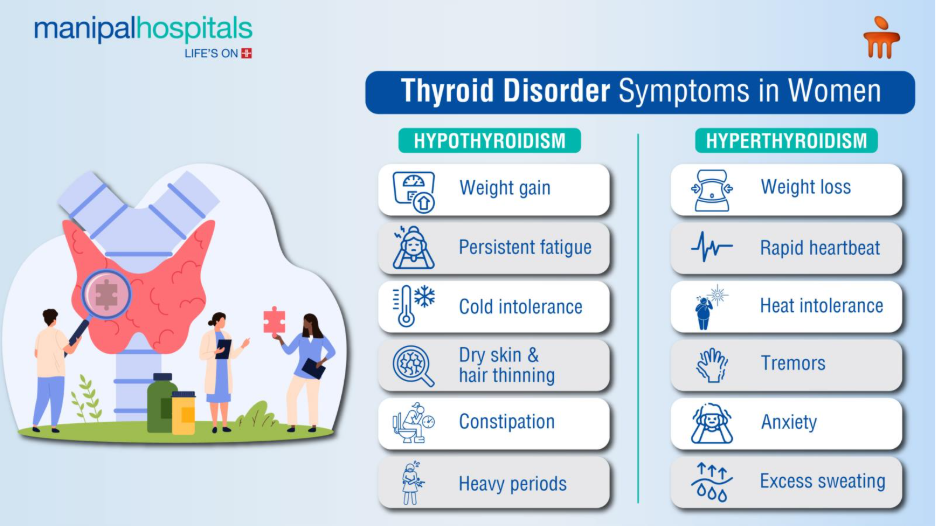
Hypothyroidism in Women
Hypothyroidism means the thyroid is underactive. It does not produce enough hormones.
Common symptoms include:
-
Weight gain
-
Slow heart rate
-
Constipation
-
Depression
-
Puffy face
-
Slow thinking
This condition is common in middle-aged women. It may also occur after pregnancy.
Hypothyroidism in Women
Hyperthyroidism means the thyroid is overactive. It produces too much hormone.
Common symptoms include:
-
Weight loss
-
Fast heartbeat
-
Anxiety
-
Sweating
-
Shaky hands
-
Sleep problems
Causes of Thyroid in Women
Thyroid imbalance can develop for different reasons. Some are linked to health conditions. Others are related to lifestyle or nutritional factors. Knowing the causes helps women stay alert to early changes.
-
Autoimmune conditions - In certain conditions, the body’s defence system targets the thyroid by mistake. This ongoing attack can slowly change how the gland produces hormones.
-
Pregnancy-related changes - The body works harder during and after pregnancy. This can sometimes place extra strain on the thyroid and reveal an underlying imbalance.
-
Iodine imbalance - Iodine is essential for making thyroid hormones. Both deficiency and excess intake can disturb hormone production and affect thyroid levels.
-
Family history - Genetics can increase vulnerability. Women with close relatives who have thyroid disorders should be more cautious and consider regular screening.
-
Stress - Long-term emotional or physical stress can interfere with overall hormone regulation. This may aggravate existing thyroid issues or trigger symptoms earlier.
Understanding these causes of thyroid issues in women helps in early detection and prevention.
Why Women Should Get Tested
Many women ignore symptoms for months. Some think it is normal ageing. Others feel it is stress. A simple blood test can check thyroid levels in women. Early diagnosis makes treatment easy. Untreated thyroid problems can affect fertility, heart health and bone strength.
Women who should consider testing include:
-
Those with a family history
-
Women planning pregnancy
-
Women with irregular periods
-
Women above 35
-
Those with persistent fatigue
How Are Thyroid Problems Treated?
Treatment depends on the type of thyroid problem.
-
For Hypothyroidism: Doctors usually prescribe thyroid hormone tablets. These replace the missing hormone. The medicine is simple and effective when taken regularly.
-
For Hyperthyroidism: Treatment may include medicines to reduce hormone production. In some cases, other therapies may be advised.
Regular follow-up is important. Doctors monitor thyroid levels and adjust treatment when needed.
Can Thyroid Problems Be Managed?
Yes. Most thyroid conditions can be managed well with treatment. Women can lead normal lives with proper care.
Simple lifestyle steps help:
-
Balanced diet
-
Regular exercise
-
Stress control
-
Regular health check-ups
-
Taking medicines as prescribed
Conclusion
This Women’s Day 2026, choose to prioritise yourself. Your health deserves attention, not postponement. Small symptoms may seem harmless, but they can be early warning signs.
Recognising thyroid symptoms in women at the right time helps prevent long-term complications. A simple blood test can provide clarity and peace of mind. At Manipal Hospitals, our women’s health check packages are designed to support early detection and preventive care. These packages include essential screenings, including thyroid evaluation, tailored to different age groups and health needs.
FAQ's
Yes, thyroid imbalance can affect ovulation and menstrual cycles. This may make it difficult to conceive. Proper treatment and controlled thyroid levels in women often improve fertility outcomes.
Thyroid problems can occur at any age. However, they are more common after the age of 30. The risk increases during pregnancy and around menopause due to hormonal changes.
Not always. Weight gain can have many causes. However, if weight gain happens along with fatigue, dry skin and irregular periods, it may be linked to thyroid imbalance and needs evaluation.
Women with no symptoms may check thyroid levels as part of routine health screening after the age of 30 or if there is a family history. Those on treatment should follow their doctor’s advice for regular monitoring.
Lifestyle changes support overall health but may not correct thyroid hormone imbalance completely. Most women with thyroid disease need medical treatment along with healthy habits to maintain stable thyroid levels.
Share this article on: