


 8 Min Read
As we approach Women’s Day 2026, Manipal Hospitals reaffirms its commitment to women’s health, shining a light on conditions that subtly yet significantly impact daily lives. One such pervasive yet often overlooked issue is iron deficiency, particularly its prevalence and the iron deficiency symptoms in women. It's a silent epidemic that can drain energy, diminish focus, and impact overall well-being. Understanding the signs of iron deficiency in women is not just about recognising symptoms; it's about empowering ourselves to seek timely medical attention.
Globally, it's estimated that approximately 30-40% of women of reproductive age suffer from iron deficiency anaemia, making it one of the most widespread nutritional deficiencies affecting women's health worldwide. This Women's Day, let’s commit to prioritising our health by understanding when to pay attention to subtle cues and when to seek a crucial blood test.
Synopsis
What is Iron Deficiency and Why is it Common in Women?
Iron is a vital mineral that plays a crucial role in forming haemoglobin, a protein in red blood cells that carries oxygen from your lungs to the rest of your body. When your body doesn't have enough iron, it can't produce enough healthy red blood cells, leading to a condition known as iron deficiency anaemia. This can leave you feeling exhausted and weak.
The reasons for iron deficiency in women are manifold and often linked to physiological factors unique to the female body:
-
Menstruation: Monthly menstrual blood loss is the most common cause of iron deficiency in premenopausal women. Heavy periods can significantly deplete iron stores over time.
-
Pregnancy and Childbirth: The body requires significantly more iron during pregnancy to support the growing foetus and placenta, as well as to increase the mother's blood volume. Childbirth itself can also lead to substantial blood loss.
-
Dietary Factors: Insufficient intake of iron-rich foods, especially in vegetarian or vegan diets, can contribute to low iron levels.
-
Gastrointestinal Issues: Conditions like celiac disease or inflammatory bowel disease can hinder iron absorption.
-
Fibroids: Uterine fibroids can cause heavy menstrual bleeding, increasing the risk of iron deficiency.
Early detection and appropriate treatment can lead to a significant improvement in quality of life, with many women reporting substantial symptom relief within 4-6 weeks of starting treatment.
Subtle Iron Deficiency Symptoms in Women
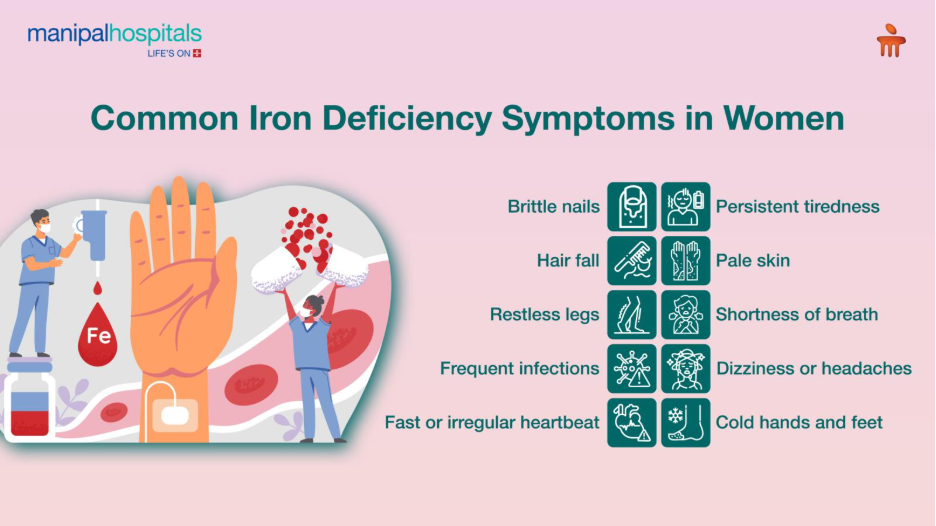
The signs and symptoms of iron deficiency can be subtle at first and often go unnoticed or are dismissed as general fatigue. However, as the deficiency progresses, these symptoms become more pronounced. Recognising these cues is critical for timely intervention.
Common Physical Signs of Iron Deficiency in Women -
-
Persistent Fatigue and Weakness: This is often the earliest and most common symptom. Feeling unusually tired, even after adequate rest, is a key indicator. You might find it difficult to perform daily tasks or exercise.
-
Pale Skin: Reduced haemoglobin levels can make your skin, lips, and the inside of your lower eyelids appear paler than usual.
-
Shortness of Breath: Even with minimal exertion, you might experience breathlessness as your body struggles to get enough oxygen.
-
Dizziness or Light-headedness: Insufficient oxygen to the brain can cause feelings of dizziness, especially when standing up quickly.
-
Cold Hands and Feet: Poor circulation due to a lack of oxygen-rich blood can lead to chronically cold extremities.
-
Headaches: Iron deficiency can lead to headaches, often accompanied by light-headedness.
Significant Iron Deficiency Symptoms in Women
-
Brittle Nails: Nails might become fragile, break easily, or even develop a spoon-like shape (koilonychia) in severe cases.
-
Inflammation or Soreness of the Tongue: Your tongue might appear swollen, smooth, or unusually pale.
-
Restless Legs Syndrome: An irresistible urge to move your legs, especially at night, which can interfere with sleep.
-
Unusual Cravings (Pica): A desire to eat non-food items like ice, dirt, or clay.
-
Hair Loss: Noticeable thinning or shedding of hair, particularly when combined with other symptoms.
-
Frequent Infections: A weakened immune system due to iron deficiency can make you more susceptible to illnesses.
-
Heart Palpitations: The heart has to work harder to pump oxygen-poor blood, leading to noticeable heartbeats.
When is a Blood Test Necessary?
If you experience several of the iron deficiency symptoms in women mentioned above, especially persistent fatigue, paleness, or shortness of breath, it’s imperative to consult a healthcare professional. A simple blood test is the most definitive way to diagnose iron deficiency. Key tests include:
-
Complete Blood Count (CBC): Measures red blood cell count, haemoglobin, and haematocrit levels.
-
Serum Ferritin: This is the most sensitive test for iron deficiency, as ferritin is a protein that stores iron. Low ferritin levels usually indicate low iron stores.
-
Serum Iron and Total Iron-Binding Capacity (TIBC): These tests provide further details on iron levels in the blood and how well your body can transport iron.
Delaying diagnosis can lead to more severe health complications. Regular check-ups and open communication with your doctor are vital, especially if you have risk factors for iron deficiency in women.
Impact of Untreated Iron Deficiency in Women
Ignoring the signs of iron deficiency in women can have significant repercussions beyond just fatigue. Untreated, it can lead to:
-
Severe Anaemia: Leading to extreme fatigue, heart problems, and increased risk during pregnancy.
-
Heart Problems: The heart has to pump more blood to compensate for the lack of oxygen, potentially leading to an enlarged heart or heart failure.
-
Problems During Pregnancy: Iron deficiency in pregnant women can lead to premature birth, low birth weight, and developmental delays in the child. Approximately 20-30% of pregnant women globally experience iron deficiency anaemia.
-
Impaired Immune Function: Making you more susceptible to infections.
-
Poor Cognitive Function: Affecting concentration and memory.
Care Essentials: Do's and Don'ts
|
Do's |
Don'ts |
|
Consult a Doctor: If you suspect iron deficiency, get a professional diagnosis and guidance. |
Self-Diagnose: Do not assume you have an iron deficiency without a blood test. |
|
Eat Iron-Rich Foods: Incorporate lean red meat, poultry, fish, beans, lentils, spinach, fortified cereals, and dark chocolate into your diet. |
Self-Medicate: Do not take iron supplements without a doctor's recommendation, as too much iron can be harmful. |
|
Pair Iron with Vitamin C: Vitamin C enhances iron absorption. Consume citrus fruits, bell peppers, tomatoes, and broccoli alongside iron-rich meals. |
Ignore Symptoms: Don't dismiss persistent fatigue or paleness as just stress or aging. |
|
Regular Follow-ups: If diagnosed, follow your doctor's recommendations for treatment and monitor your iron levels. |
Consume Iron with Calcium: Avoid taking calcium supplements or eating calcium-rich foods (like milk) at the same time as iron, as calcium can inhibit iron absorption. |
|
Listen to Your Body: Pay attention to persistent fatigue or other subtle changes in your health. |
Overlook Heavy Periods: If you experience unusually heavy menstrual bleeding, discuss it with your doctor. |
Conclusion
Iron deficiency in women is common, yet often ignored. Many women continue to manage fatigue, hair fall or breathlessness without knowing the real cause. A simple blood test can provide answers and prevent long-term complications. This Women’s Day, take a step towards informed and preventive care. Early diagnosis not only improves energy and focus but also protects heart health, pregnancy outcomes and overall well-being.
At Manipal Hospitals, our comprehensive women’s health check packages are designed to detect nutritional deficiencies, including iron deficiency, at an early stage. These packages offer essential blood tests, expert consultation and personalised guidance together. Prioritise your health with timely screening and expert support. A proactive approach today can help you lead a stronger, healthier tomorrow.
FAQ's
The time to recover varies depending on the severity of the deficiency and the treatment plan. Generally, symptoms may begin to improve within a few weeks of starting treatment, but it can take several months to fully replenish iron stores. Your doctor will monitor your progress with follow-up blood tests.
Yes, absolutely. Iron deficiency symptoms in women can include irritability, difficulty concentrating, and even symptoms of depression or anxiety due to the impact on brain function and energy levels. Addressing the deficiency can often lead to improvements in mood and cognitive function.
Yes, focus on a balanced diet rich in iron. Include both heme iron (from animal sources like lean meats, poultry, fish) and non-heme iron (from plant sources like beans, lentils, spinach, fortified grains). Remember to pair non-heme iron sources with Vitamin C to boost absorption.
While iron deficiency itself is usually acquired, certain genetic conditions can affect iron metabolism, leading to either iron overload (hemochromatosis) or conditions that make one more prone to iron deficiency, such as certain types of inherited anemias or absorption disorders. However, for most women, it's related to dietary intake or blood loss.
Yes, excessive iron (hemochromatosis) can be harmful and lead to organ damage, particularly in the liver, heart, and pancreas. This is why it's crucial not to self-medicate with iron supplements and to only take them under medical supervision after a confirmed diagnosis of iron deficiency.
Share this article on:






