
 5 Min Read
Have you ever noticed your tongue turning dark suddenly? Understanding the causes of the black tongue can help ease concern, as the condition is usually harmless and reversible.
This blog explains what black hairy tongue is, its common causes, why it is more common in older adults, its symptoms, and how it can be effectively treated.
Synopsis
What is Black Tongue?
Black tongue, clinically known as black hairy tongue (BHT), is a benign condition in which the filiform papillae on the tongue grow longer than normal instead of shedding. These elongated papillae trap debris, bacteria, fungi, and pigments from food and drinks, giving the tongue a dark, hairy appearance.
BHT is more common in males and older adults, and although its symptoms are usually easy to reverse, its unusual appearance often raises concern.
What Causes a Black Tongue?
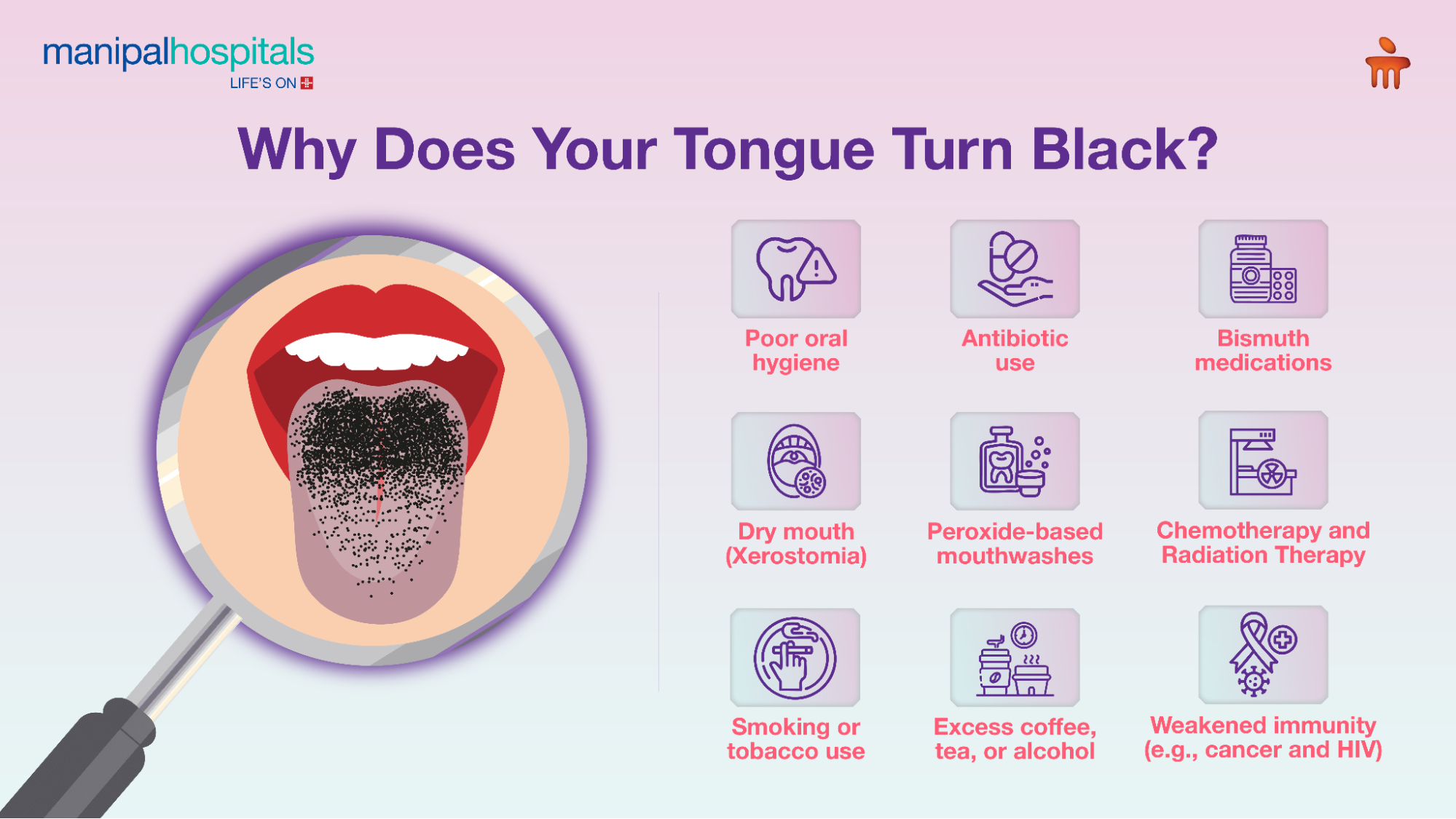
Common causes for a black tongue include:
-
Poor oral hygiene: Inadequate cleaning allows accumulation of bacteria, debris, and dead cells on the tongue surface.
-
Antibiotic use: Disrupts the normal oral microbiome, promoting overgrowth of chromogenic bacteria or fungi.
-
Bismuth-containing medications: Compounds like bismuth subsalicylate can react with sulphur in saliva to form black deposits on the tongue.
-
Tobacco use: Reduces normal shedding of papillae and contributes to pigment deposition.
-
Excessive coffee, tea, or alcohol: These can stain and accumulate on elongated papillae, contributing to discolouration.
-
Dry mouth (xerostomia): Reduced saliva impairs natural cleansing and antimicrobial action, allowing debris and microorganisms to accumulate.
-
Irritating mouthwashes (especially peroxide-based): May irritate the oral mucosa and interfere with normal epithelial shedding.
-
Cancer treatments (chemotherapy or radiation): Can alter oral flora and reduce saliva production.
-
Immunocompromised states (e.g., cancer, HIV): Increase susceptibility by altering oral microbial balance.
Why Is Black Tongue More Common in Older Adults?
The causes of black tongue in elderly individuals often involve multiple overlapping factors, making it more common with age and important to identify for early prevention and management.
-
Polypharmacy: Multiple medications (e.g., antidepressants, antihypertensives) can reduce saliva flow.
-
Dry mouth (xerostomia): Reduced saliva impairs the natural cleansing of the tongue.
-
Ageing: Slower cell turnover and reduced immunity increase susceptibility.
-
Soft diets or missing teeth: Reduced friction from food limits the natural cleaning of the tongue.
-
Reduced tongue mobility: Weakness or neurological conditions impair the natural shedding of papillae.
-
Poor dexterity: Makes effective brushing and tongue cleaning difficult.
-
Debilitating illnesses: Reduce tongue movement and mechanical cleansing.
Symptoms of Black Tongue
Black hairy tongue is usually painless but can cause noticeable changes in appearance and sensation, including:
-
Dark, hairy appearance (black, brown, yellow, or green)
-
Bad breath (halitosis)
-
Altered or metallic taste
-
Nausea or a gagging sensation in some cases
-
Rarely, a burning sensation
Diagnosis of Black Tongue
Diagnosis is usually clinical. A dentist will examine your tongue and review your medical history, medications, and lifestyle habits.
In some cases, gentle scraping may be done to rule out similar conditions. These may include oral candidiasis (fungal infection), hairy leukoplakia (white, fuzzy patches), or oral melanoma (a rare pigmented lesion).
How to Treat Black Tongue
Once the black tongue reason is identified, treatment focuses on addressing the underlying cause and improving oral hygiene.
Lifestyle and Oral Care
-
Brush teeth and tongue twice daily using a soft-bristle toothbrush
-
Use a tongue scraper to remove bacteria and dead cells
-
Stay well hydrated to prevent dry mouth and support natural cleansing
-
Avoid tobacco and excessive staining foods or drinks (coffee, tea, alcohol)
-
Brush about 30 minutes after consuming dark foods or beverages to reduce staining
-
Use non-irritating mouthwashes (avoid peroxide-based products)
-
Maintain regular dental check-ups
Medical Management
-
Review medications with your doctor; do not stop or change them without consultation
-
Antifungal treatment may be prescribed if fungal overgrowth is confirmed
-
In rare, persistent cases, topical treatments (e.g., retinoids) may be considered
-
Very rarely, minor procedures may be needed to remove overgrown papillae
Conclusion
Black tongue is a common oral condition that can arise from a variety of everyday factors. Most black tongue causes, such as poor oral hygiene, medications, or dry mouth, can be easily managed with simple measures.
In older adults, factors like multiple medications and reduced saliva often play a key role. Early attention and good oral hygiene can help prevent recurrence and ensure quick recovery.
At Manipal Hospitals, dental specialists can help with evaluation and personalised care for various oral health concerns.
FAQ's
No, black tongue is usually a benign and reversible condition. However, persistent, flat, dark patches that do not improve should be evaluated to rule out rare conditions such as oral melanoma.
Most cases resolve within a few days to two weeks once the underlying cause is addressed. Good oral hygiene and removing triggers can speed up recovery.
Yes, it can often be prevented with good oral hygiene and lifestyle habits. Regular tongue cleaning, staying hydrated, and avoiding tobacco and excessive staining foods can help reduce the risk.
Older adults are more prone due to multiple medications, chronic dry mouth, reduced immunity, and softer diets. These factors promote the accumulation of debris and reduced shedding of papillae.
You should consult a dentist if the condition persists beyond 2–3 weeks or is associated with pain, bleeding, or discomfort. Medical advice is also important if the patches are flat, spreading, or if you have risk factors like tobacco use or weakened immunity.
Share this article on: