



 5 Min Read
Have you ever brushed off heavy periods, pelvic pressure, or bloating as “just one of those things”? For many women, these changes can quietly point toward uterine fibroid symptoms in females, a condition that often develops without obvious warning signs.
Uterine fibroids are very common, non-cancerous growths that develop in or around the uterus during the reproductive years. Globally, fibroids may affect up to 70–80% of women by age 50, making them the most common benign tumours detected in reproductive-age women. In India, improved awareness and imaging access have increased detection rates, although many fibroids remain unnoticed because they cause no symptoms.1 Although rarely dangerous, fibroids can interfere with comfort, daily activities, and emotional well-being and are often discovered during routine check-ups or pregnancy scans.
Synopsis
What Are Uterine Fibroids?
Fibroids (also called leiomyomas or myomas) are solid, benign growths made of smooth muscle and fibrous tissue that develop in the uterus. They can be microscopic or grow large enough to enlarge or distort the normal shape of the uterus. Some women have a single fibroid, while others may develop multiple fibroids at the same time.
Fibroids are non-cancerous and only very rarely transform into cancer. Rare uterine cancers such as sarcomas are separate conditions and are not caused by fibroids.
Types of Uterine Fibroids
Fibroids are classified by where they grow in or around the uterus, which helps explain why symptoms vary from woman to woman.
-
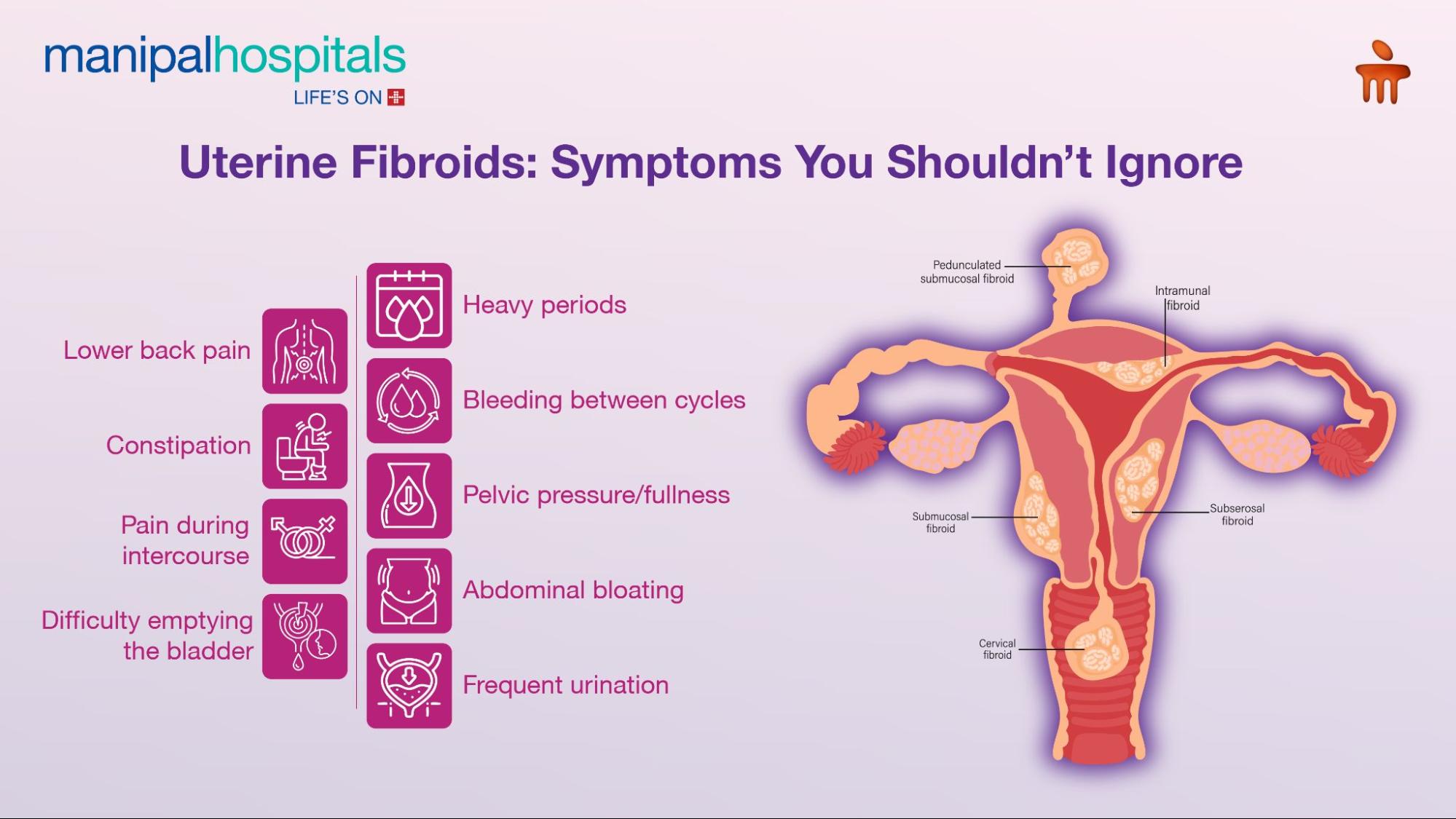
Intramural fibroids grow within the uterine muscle and are the most common type.
-
Submucosal fibroids develop beneath the uterine lining and may cause heavy menstrual bleeding.
-
Subserosal fibroids grow on the outer surface of the uterus and can press on nearby organs.
-
Pedunculated fibroids are attached by a stalk and may cause sudden pain if torsion occurs.
Symptoms can range from none at all to noticeable discomfort, depending on the size and location of the fibroids.
Common Symptoms to Look Out For
Many small fibroids cause no problems at all. Larger fibroids, however, may lead to noticeable symptoms, including:
-
Heavy, prolonged, or painful menstrual periods
-
A feeling of fullness or pressure in the lower abdomen
-
Bloating or visible abdominal enlargement
-
Frequent urination due to pressure on the bladder
-
Pain during sex
-
Lower back pain
-
Constipation or pressure on the rectum
-
Difficulty fully emptying the bladder
Symptoms often ease after menopause as hormone levels naturally fall in most women. However, fibroids that continue to grow or cause new symptoms after menopause should be medically evaluated.
What Causes Uterine Fibroids?
The exact fibroids in the uterus are not fully understood, but their development is strongly linked to hormonal and genetic influences. Oestrogen and progesterone stimulate fibroid growth, explaining why fibroids are most common during the reproductive years. They may enlarge during pregnancy due to hormonal changes and typically shrink after menopause as hormone levels decline. A family history also increases the likelihood of developing them. Overall, fibroids are believed to result from an interaction between hormones and genetic factors within uterine tissue.
Management and Treatment Options
Not all uterine fibroids require active treatment. Many are monitored when small and do not cause symptoms. Treatment is recommended when fibroids interfere with daily life, cause significant bleeding, pain, fertility concerns, or other complications.
The uterine fibroid treatment approach depends on the size, number, and location of fibroids, symptom severity, age, and future pregnancy plans. These include:
-
Medications may help control bleeding, pain, or temporarily shrink fibroids.
-
Minimally invasive procedures, such as uterine artery embolisation or focused ultrasound, reduce fibroid size by cutting the blood supply or using targeted energy.
-
Surgery to remove fibroids (myomectomy) may be advised for severe symptoms.
-
Hysterectomy (removal of the uterus) may be considered when other treatments are unsuitable, and pregnancy is not desired.
A doctor will recommend the most appropriate option based on individual health needs and preferences.
Conclusion
Uterine fibroids often go unnoticed at first, especially when symptoms are mild or absent. However, ongoing issues like heavy periods, pelvic pressure, or discomfort shouldn’t be ignored. Being aware of uterine fibroid symptoms in females and having regular check-ups can support early diagnosis and timely care. If symptoms begin to affect quality of life, seeking medical advice can make management easier and improve overall well-being. Manipal Hospitals offers expert gynaecology care and personalised treatment plans to support accurate diagnosis, effective management, and long-term women’s health.
FAQ's
Symptoms often depend on both size and location. Small fibroids may cause no symptoms, while larger ones can lead to heavy bleeding, pelvic pressure, bloating, or urinary problems. This explains why fibroid size symptoms can vary widely between women.
Some fibroids, especially those affecting the uterine cavity, may interfere with conception or pregnancy. However, many women with fibroids conceive naturally and have healthy pregnancies, depending on fibroid type, size, and location.
You should consult a doctor if uterine fibroid symptoms in females include heavy or irregular bleeding, pelvic pain, pressure, bloating, or urinary changes that affect daily life. Early assessment helps guide timely care and prevent complications.
Fibroids are usually diagnosed through a pelvic examination and imaging tests such as an ultrasound. In some cases, MRI or hysteroscopy may be used to better understand the size and location of the fibroids and guide treatment planning.
No. Many fibroids are managed with monitoring, medicines, or symptom control. Treatment is usually recommended only when symptoms are persistent, worsening, or interfering with your routine activities, fertility plans, or overall quality of life.
Share this article on:






