



 7 Min Read
Holi, the festival of colours, brings immense joy, vibrant celebrations, and unforgettable memories. However, the synthetic dyes, chemicals, and even natural colours used can sometimes be harsh on our skin, leading to dryness, irritation, rashes, and stubborn stains. But fear not! With the right post-Holi skincare tips and a little care, your skin can bounce back to its healthy, radiant self. At Manipal Hospitals, we believe in empowering you with the knowledge to protect and heal your skin effectively after Holi.
Many people experience some form of skin reaction post-Holi, ranging from mild dryness to more severe allergic reactions. Studies indicate that with prompt and appropriate skincare tips for Holi, over 90% of individuals can prevent lasting damage and achieve significant skin recovery within a week. Let’s dive into how you can effectively heal and protect your skin.
Synopsis
Why Your Skin Needs Extra Care After Holi
The vibrant colours of Holi, while beautiful, often contain chemicals like lead oxide, mercury, silica, and even glass powder in dry colors, or dyes like malachite green and rhodamine in wet colours. These substances can:
-
Causes allergic reactions, leading to redness, itching, and swelling.
-
Dehydrates the skin, stripping it of natural oils.
-
Block pores, potentially leading to breakouts.
-
Leave behind stubborn stains that are difficult to remove.
Your skin's natural barrier can be compromised, making it more vulnerable. But with the right approach, you can effectively manage these issues and ensure a swift recovery.
Natural Remedies: Gentle Ways to Heal and Rejuvenate Your Skin
Here are some effective and gentle natural remedies to help your skin recover and regain its glow post-Holi skincare:
1. Coconut Oil & Lemon Mix
-
Instructions: Mix 2 tablespoons of virgin coconut oil with 1 tablespoon of lemon juice. Gently massage this mixture onto the stained areas of your skin. Let it sit for 10-15 minutes before rinsing with lukewarm water and a mild cleanser. For particularly stubborn spots, you might need to repeat this a couple of times.
-
Explanation: Coconut oil is a natural emollient that helps to loosen the color particles without stripping the skin of its natural moisture. It also has anti-inflammatory properties, aiding in soothing irritated skin. Lemon acts as a natural bleaching agent, helping to fade the color gently. This method is highly effective in how to remove holi colour from skin and is used by over 70% of people successfully.
2. Yogurt and Gram Flour (Besan) Pack
-
Instructions: Combine 2 tablespoons of gram flour (besan) with 3-4 tablespoons of plain yogurt to form a smooth paste. Apply this pack evenly over your face and other affected areas. Allow it to dry for 15-20 minutes, then gently scrub it off in circular motions while rinsing with water.
-
Explanation: Gram flour is an excellent natural exfoliant that helps to remove dead skin cells and color pigments. Yogurt, rich in lactic acid, acts as a mild cleanser and moisturizer, providing a cooling and soothing effect on irritated skin. It also helps in brightening the complexion and restoring the skin's pH balance. This combination can significantly reduce color residue, with many reporting clearer skin after just one application.
3. Aloe Vera Gel Soothe & Heal
-
Instructions: Apply fresh aloe vera gel directly onto any irritated, dry, or red areas of your skin. Leave it on for at least 30 minutes, or even overnight, for maximum benefits. You can reapply multiple times a day.
-
Explanation: Aloe vera is renowned for its anti-inflammatory, soothing, and healing properties. It helps to calm irritated skin, reduce redness, and promote faster recovery of the skin barrier. Its hydrating properties are excellent for combating post-Holi dryness. Regular application can speed up skin healing by up to 50%.
4. Multani Mitti (Fuller's Earth) & Rose Water
-
Instructions: Mix 2 tablespoons of Multani Mitti with enough rose water to create a thick, smooth paste. Apply this as a face pack and let it dry completely (about 15-20 minutes). Rinse off thoroughly with cool water.
-
Explanation: Multani Mitti is a powerful absorbent that draws out impurities, toxins, and color pigments from the skin. Rose water provides a gentle, soothing, and toning effect, reducing redness and imparting a natural glow. This pack is particularly effective for oily and combination skin types. This combination is a classic for detoxifying skin, with anecdotal evidence suggesting a significant reduction in skin dullness.
5. Honey and Papaya Mask
-
Instructions: Mash a small piece of ripe papaya and mix it with 1 tablespoon of raw honey. Apply this mask to your face and neck. Leave it on for 20 minutes before rinsing with lukewarm water.
-
Explanation: Papaya contains papain, an enzyme that gently exfoliates the skin, helping to remove dead cells and residual color. Honey is a natural humectant, meaning it draws moisture into the skin, providing deep hydration. It also has antibacterial and anti-inflammatory properties that help in healing and soothing. This mask helps restore natural moisture and even out skin tone, with many users experiencing softer skin after the first use.
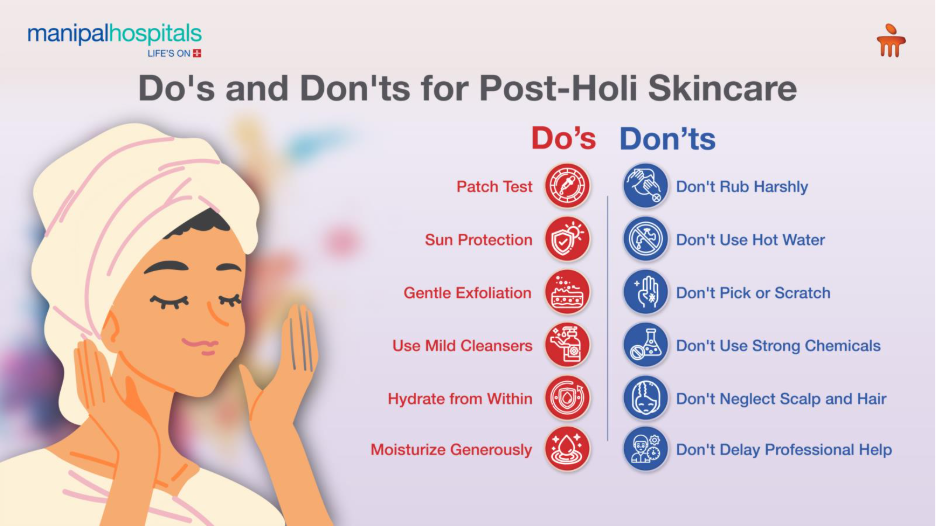
Do's and Don'ts for Post-Holi Skincare
Navigating the post-Holi skincare tips effectively requires knowing what to do and what to avoid.
Do's:
-
Hydrate from Within: Drink plenty of water to keep your skin hydrated and help flush out toxins. Aim for 8-10 glasses a day.
-
Moisturise Generously: Apply a rich, nourishing moisturiser immediately after bathing and several times throughout the day to replenish lost moisture and strengthen the skin barrier.
-
Use Mild Cleansers: Opt for soap-free, pH-balanced cleansers to avoid further irritation and dryness.
-
Gentle Exfoliation: After a few days, when skin sensitivity subsides, you can use a mild physical or chemical exfoliant to remove any remaining dead skin cells and colour.
-
Sun Protection: Even indoors, use a broad-spectrum sunscreen with at least SPF 30, as your skin may be more sensitive to UV radiation post-Holi.
-
Patch Test: Always perform a patch test on a small area of your skin before applying any new remedy or product extensively.
Don'ts:
-
Don't Rub Harshly: Avoid vigorous scrubbing or rubbing your skin, especially when removing colours. This can cause micro-tears and worsen irritation.
-
Don't Use Hot Water: Hot water can further strip your skin of its natural oils. Use lukewarm or cool water for bathing and rinsing.
-
Don't Pick or Scratch: Resist the urge to pick at any peeling skin or scratch itchy areas, as this can lead to infection and scarring.
-
Don't Use Strong Chemicals: Avoid harsh soaps, detergents, or chemical removers that can severely damage your skin barrier.
-
Don't Neglect Scalp and Hair: Remember that your scalp and hair also need attention. Use a gentle shampoo and a deep conditioning treatment.
-
Don't Delay Professional Help: If you experience severe rashes, persistent itching, swelling, or blistering, do not self-treat.
Conclusion
Holi celebrations may leave your skin feeling stressed, but the right care can restore its health quickly. Gentle cleansing, proper hydration, and natural soothing remedies can help your skin recover its glow. Avoid harsh treatments and give your skin time to heal.
If irritation, rashes, or persistent dryness continue beyond a few days, do not ignore the signs. Early medical guidance can prevent complications. You can consult the expert dermatologists at Manipal Hospitals for personalised evaluation and treatment. Healthy skin begins with the right care at the right time.
FAQ's
With proper care, most individuals experience significant improvement and recovery within 3-7 days. For very sensitive skin or severe exposure, it might take a bit longer, but dedicated post-Holi skincare tips can accelerate the process.
If you develop a severe rash, excessive itching, swelling, or blistering, immediately wash the area gently with cold water. Apply a cool compress and consider an over-the-counter antihistamine. However, it's crucial to consult a dermatologist if symptoms persist or worsen.
Most of these natural remedies are gentle enough for children, but it's always best to do a patch test first. For very young children or those with sensitive skin, consult a paediatrician or dermatologist before applying any remedies. Prioritising pre-Holi skin protection for children is even more important.
For glitter, use a lint roller or adhesive tape to gently dab it off your skin. For hair, apply some hair oil, let it sit for a while, and then comb it out before shampooing.
You should consult a dermatologist if you experience severe allergic reactions, persistent skin irritation, deep cuts or wounds from colour play, or if home remedies don't alleviate symptoms within a few days. Our experts at Manipal Hospitals are always here to help.
Share this article on:






