



 5 Min Read
A cough that worsens at night can disturb sleep and leave you feeling tired the next day. While an occasional nighttime cough may occur during a cold, persistent coughing may indicate an underlying condition. Understanding the causes is the first step in learning how to stop coughing at night.
Studies suggest that nocturnal cough (coughing that occurs or becomes worse during the night, particularly while sleeping or lying down) affects nearly 30% of adults worldwide. Although often considered minor, frequent nighttime coughing can significantly affect sleep quality and overall health.
This blog explains the common causes of dry cough at night, available treatment options, and simple home remedies that may help you sleep more comfortably.
Synopsis
Common Causes of Dry Cough at Night
Understanding the causes of dry cough at night helps in choosing the right treatment. Some of the most common causes include:
-
Post-Nasal Drip: It is the common cause of nighttime cough. When lying down, mucus from the nose or sinuses drips down the back of the throat, irritating the airways and triggering coughing.
-
Gastro-Oesophageal Reflux Disease (GORD/GERD): In GERD, stomach acid flows back into the oesophagus and irritates the throat. Symptoms often worsen when lying down, which can cause coughing at night, sometimes even without heartburn.
-
Asthma: This can cause coughing that worsens at night due to increased airway inflammation and sensitivity. In cough-variant asthma, a persistent dry cough or uncontrollable coughing at night may be the main symptom, often triggered by cold air, dust, or allergens.
-
Allergies and Dust Mites: Allergens such as dust mites, pet dander, and indoor mould in the bedroom can irritate the airways and trigger nighttime coughing.
-
ACE Inhibitor Medications: Certain blood pressure medicines called ACE inhibitors can cause a chronic dry cough in some people. If you suspect medication is causing the cough, consult your doctor before changing it.
-
Respiratory Infections: Coughing may continue for several weeks after a cold or respiratory infection due to lingering airway irritation, known as post-infectious cough.
Medical Treatments for Nighttime Cough
Treatment depends on identifying the underlying cause of the cough. After evaluation, doctors may recommend treatments such as:
-
Antihistamines or nasal steroid sprays for post-nasal drip
-
Inhalers or bronchodilators for asthma
-
Acid-reducing medications for GERD or reflux-related cough
-
Allergy treatments, including antihistamines or immunotherapy
-
Changing medications if an ACE inhibitor is causing the cough
Proper diagnosis is essential, as treating the underlying condition usually helps control nighttime coughing.
Home Remedies to Reduce Cough at Night
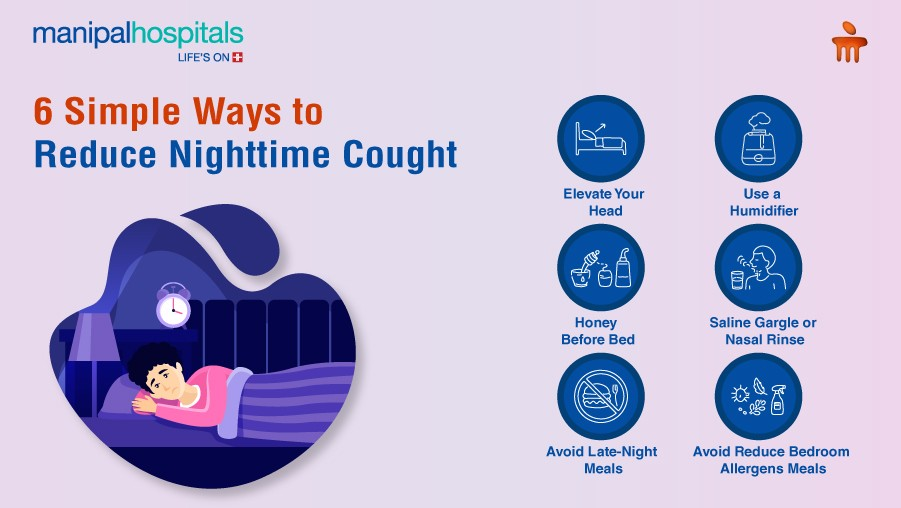
Along with medical treatment, simple lifestyle measures can help relieve nighttime cough and improve sleep.
-
Elevate Your Head While Sleeping: Sleeping with your head raised 15–20 cm (6–8 inches) using an extra pillow or wedge pillow may prevent mucus pooling in the throat. It may also reduce acid reflux.
-
Use a Humidifier: Maintaining comfortable humidity in the bedroom can help soothe dry airways, especially in air-conditioned rooms.
-
Honey Before Bed: Taking a teaspoon of honey in warm water before bedtime may help soothe throat irritation and reduce coughing. Avoid giving honey to children under one year of age.
-
Saline Gargles or Nasal Rinse: Warm saline gargles or nasal rinses can help clear irritants and mucus from the throat and nasal passages before sleep.
-
Avoid Eating Close to Bedtime: Skip eating within two to three hours before bedtime, as this can worsen reflux-related coughing.
-
Reduce Bedroom Allergens: Wash bedding regularly, use dust-mite-proof covers, and keep pets out of the bedroom to reduce allergen exposure.
Conclusion
A persistent nighttime cough should not be ignored, especially if it regularly disturbs sleep. Identifying the underlying cause is key to effective treatment. While simple home remedies may provide temporary relief, ongoing symptoms should be evaluated by a healthcare professional to understand how to stop coughing at night effectively.
At Manipal Hospitals, specialists in Pulmonology and Respiratory Medicine can diagnose the cause of nighttime cough and recommend appropriate treatment to improve breathing and sleep quality.
FAQ's
When you lie flat, mucus can collect at the back of the throat and irritate the airways, triggering coughing. Natural circadian changes at night can also increase airway sensitivity. These are common reasons for a dry cough at night.
Simple home remedies can help. Elevate your head while sleeping, use a humidifier, drink warm fluids such as honey in warm water, and avoid heavy meals before bedtime. If the cough persists, consult a doctor to identify and treat the underlying cause.
Consult a doctor if nighttime coughing lasts longer than three weeks. Medical evaluation is also needed if it occurs with breathlessness, wheezing, coughing up blood, chest pain, unexplained weight loss, persistent fever, or night sweats.
Yes. Silent reflux, also called Laryngopharyngeal Reflux (LPR), can irritate the throat without causing heartburn and may lead to nighttime dry cough.
Yes. In cough-variant asthma, a persistent dry cough may be the main symptom and often worsens at night or with triggers such as cold air, dust, or allergens.
Share this article on:






